

Budapest Thermal Baths: History, Culture and Hungarian Food

Széchenyi Thermal Bath is one of Budapest’s best-known thermal bath complexes and has welcomed bathers in City Park since 1913.
Posted October 20, 2026
Editor’s Note: This article was originally published in a much shorter format. It has been substantially rewritten, expanded and updated to reflect current information about Budapest’s historic thermal baths, including the temporary closure of Gellért Thermal Bath.
Few cities have turned bathing into an expression of culture quite like Budapest.
The Hungarian capital is famous for its Parliament building, bridges across the Danube and dramatic Buda skyline. But beneath the city lies another part of its identity: a network of thermal springs that has influenced Budapest for centuries.
The result is a bathing culture shaped by Romans, Ottoman rulers and the grand spa traditions of the Austro-Hungarian era.
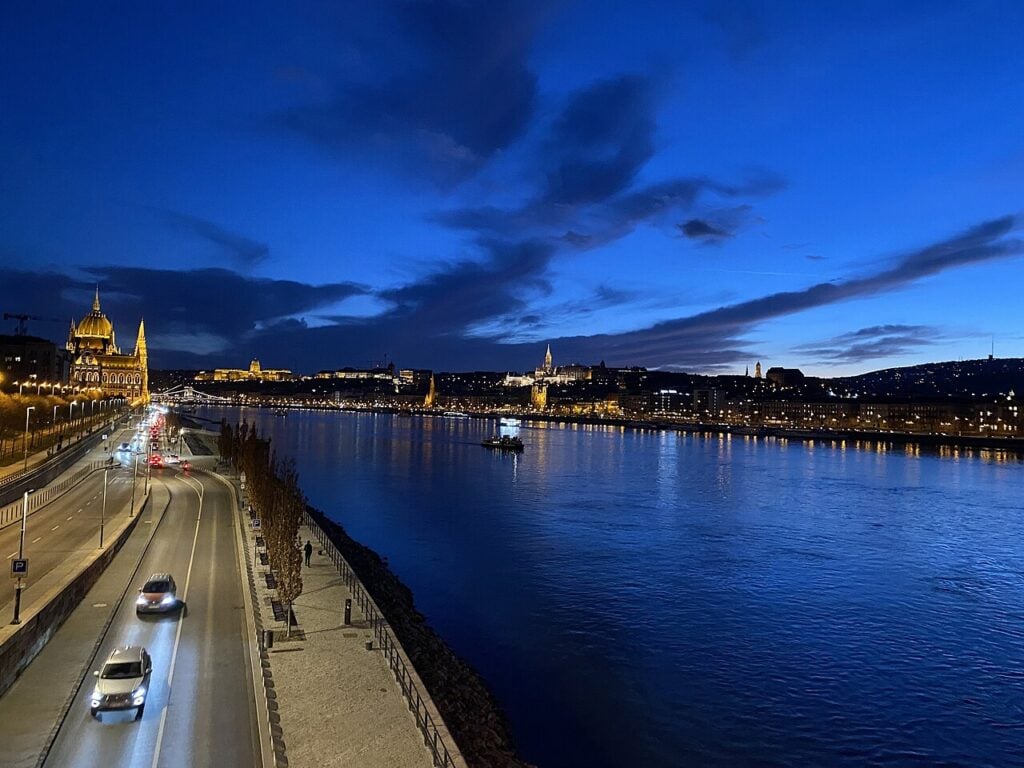
Budapest’s thermal bath culture developed alongside a city shaped by centuries of Roman, Ottoman and Austro-Hungarian influence. Photo: Furkan Akkurt/Wikimedia Commons, CC BY-SA 4.0
Visiting the thermal baths in Budapest is not simply about booking a spa treatment. You might soak beneath a centuries-old Turkish dome, swim outdoors while steam rises into cold winter air or watch Budapest residents play chess while sitting chest-deep in thermal water.
That combination of history, architecture and everyday life helps explain why Budapest remains one of Europe’s great spa cities.
Budapest’s Centuries-Old Bathing Tradition
Budapest’s relationship with its thermal waters stretches back nearly 2,000 years. The Romans were among the first to make use of the area’s natural hot springs, building public baths that served both practical and social purposes. Centuries later, Ottoman rule introduced Turkish bathing traditions, leaving behind domed bathhouses that remain part of the city’s landscape today.
The bathing culture continued to evolve during the Austro-Hungarian era, when grand bathhouses became showcases of architecture as well as places for relaxation and recreation. What began as a practical use of naturally heated water had grown into one of the city’s most enduring traditions.
That history is still very much alive. Budapest’s thermal baths are more than places to unwind after a day of sightseeing. They are part of the city’s social fabric, where generations of residents have gathered to swim, soak, socialize and enjoy the mineral-rich waters.
Visit Hungary offers more on Budapest’s bathing history.
Széchenyi Thermal Bath: Budapest’s Grand Spa Experience
For many first-time visitors, Széchenyi Thermal Bath is the image that defines Budapest’s thermal bath culture.
Located in City Park on the Pest side of the Danube, the sprawling complex looks more like a palace than a public bath. Its yellow buildings reflect the grandeur of the early 20th century, while its pools attract both international visitors and longtime local regulars.
Széchenyi has multiple indoor and outdoor pools, and one of its most recognizable traditions is also one of Budapest’s most photographed scenes: bathers playing chess while sitting in the thermal water.
The experience becomes especially memorable during colder months. While temperatures above the water can drop sharply, bathers remain immersed in warm outdoor pools as steam rises around them.
That makes a Budapest thermal bath in winter every bit as appealing as a summer visit.
Széchenyi is not intimate, and it is certainly not undiscovered. But if you want to understand the scale and social side of Budapest’s bath culture, it remains an obvious place to start.
Check current Budapest bath information and tickets.
Rudas Bath: Ottoman History Meets Modern Budapest
Cross the Danube to Buda and the experience changes considerably.
Rudas Thermal Bath dates to the Ottoman period. The bath was built in 1572, and its central Turkish bathing hall remains the heart of the complex more than four centuries later.
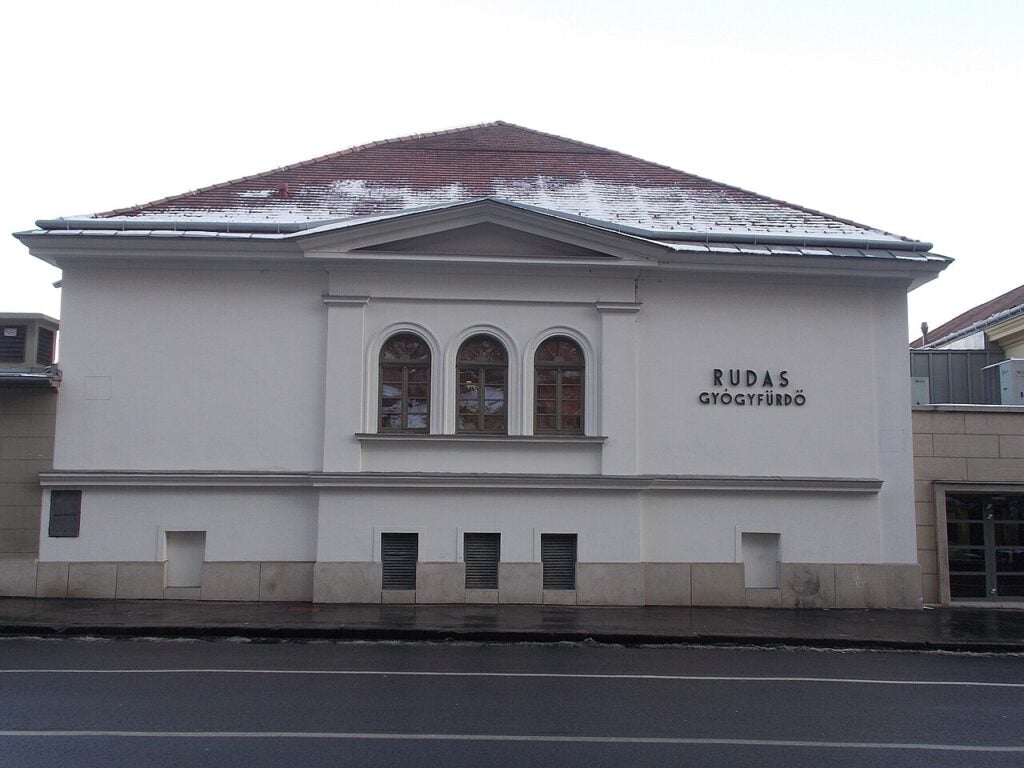
Rudas Thermal Bath preserves a bathing tradition dating to Ottoman Budapest while its modern rooftop pool overlooks the Danube. Photo: Globetrotter19/Wikimedia Commons
Its octagonal thermal pool sits beneath a traditional dome supported by columns, while small openings overhead allow shafts of light into the bathing chamber.
Yet Rudas is not frozen in the 16th century.
One of its modern additions is a rooftop panoramic pool overlooking the Danube and Budapest skyline. The juxtaposition is striking: Ottoman-era bathing downstairs and a contemporary pool looking across one of Europe’s great riverfronts.
Rudas has also taken on greater importance since the closure of Gellért Thermal Bath. Travelers should check current schedules before visiting, since access arrangements and bathing sessions can change.
Gellért Thermal Bath Is Temporarily Closed
For generations, Gellért Thermal Bath was one of Budapest’s signature spa experiences. Its turquoise ceramics, stained-glass windows, mosaics and Art Nouveau interiors made the building an attraction in its own right.
Today, however, visitors will have to wait to experience it. Gellért Thermal Bath closed on October 1, 2025, for an extensive restoration and is expected to reopen in 2028. That is an important change for travelers, since many older Budapest travel guides and articles still list Gellért among the city’s baths to visit.
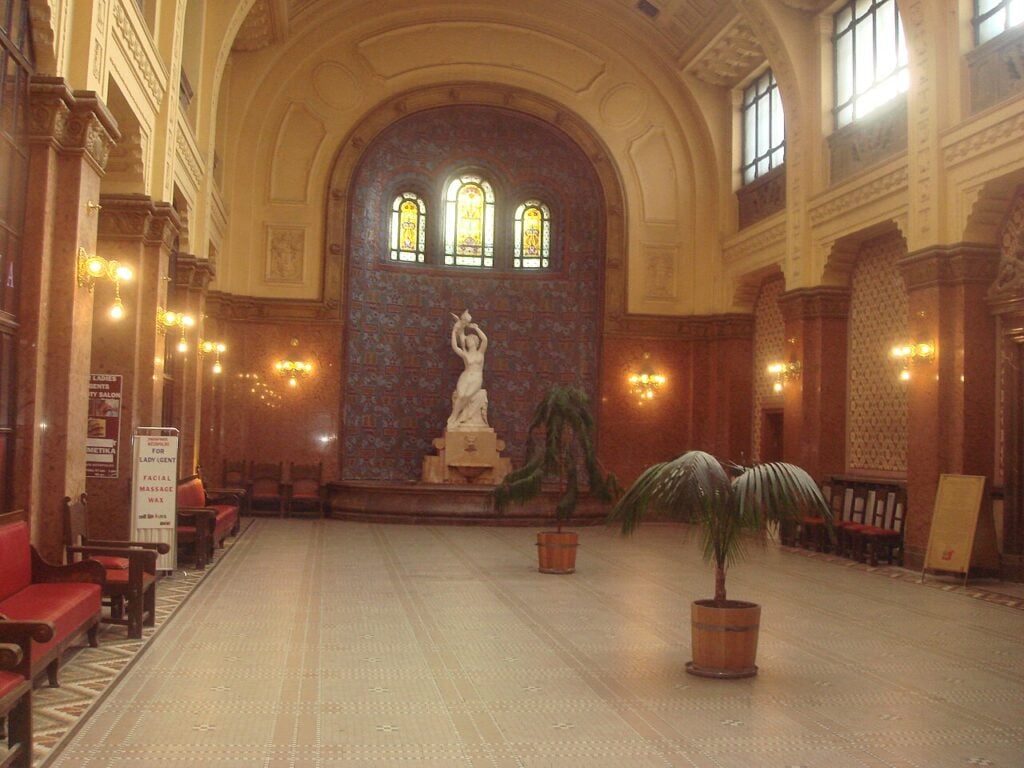
Gellért Thermal Bath is celebrated for its Art Nouveau design. The bath closed in October 2025 for extensive restoration and is expected to reopen in 2028. Photo: Bethmechlin/Wikimedia Commons, Public Domain
Its closure does not make Gellért irrelevant to Budapest’s spa story. Quite the opposite. The bath represents an important period when thermal waters, decorative art and grand architecture came together to shape Budapest’s international identity.
It simply is not a bath travelers can currently visit.
Lukács Bath: A More Local Alternative
Travelers who want to move beyond Budapest’s best-known baths should consider Lukács Thermal Bath.
Lukács has a long association with therapeutic bathing, but one of its most interesting features is outside the pools. The grounds contain memorial plaques left by people expressing gratitude for treatments and recoveries they attributed to the bath’s waters.
Compared with Széchenyi, Lukács has historically attracted fewer international visitors, although that is changing as travelers look for alternatives during Gellért’s closure.
It is also a useful reminder that Budapest’s thermal bath culture extends far beyond the city’s most photographed pools.
Bathing Customs in Budapest
Budapest’s bathhouses may be places to relax, but there are a few customs worth understanding. Visitors are expected to shower before entering the pools, and swimsuits and poolside footwear are standard. Swimming caps are required in designated swimming pools, though generally not in the thermal pools where most bathers spend their time.
Not every bathhouse follows the same admission policies. Some restrict access to thermal bathing facilities for children under 14, while opening hours and available pools can vary. At popular establishments such as Széchenyi, purchasing tickets in advance can help avoid long queues, especially during busy periods.
For current admission policies and bathing requirements, consult the official Budapest thermal bath guidelines and the individual bathhouse’s website.
A Taste of Budapest After the Baths
A long soak in Budapest’s thermal baths can work up quite an appetite, and Hungarian cuisine has no shortage of hearty dishes to satisfy it. Paprika is central to much of the country’s cooking, lending its distinctive flavor and color to everything from soups and stews to chicken paprikash.
One of Hungary’s best-known dishes, gulyás (goulash), may surprise visitors accustomed to the thick stew served elsewhere. Traditional Hungarian gulyás is actually a rich, paprika-seasoned soup made with beef, vegetables and potatoes. The thicker meat stew that many Americans recognize as goulash is closer to pörkölt, another Hungarian favorite.
For a quick bite, lángos is hard to resist. This popular street food consists of fried dough, often topped with garlic, sour cream and grated cheese. Those with a sweet tooth might prefer kürtőskalács, better known as chimney cake, a cylindrical pastry with a caramelized sugar crust. Budapest also has a longstanding café culture, where strudels and elaborate layered cakes reflect the city’s Austro-Hungarian heritage.
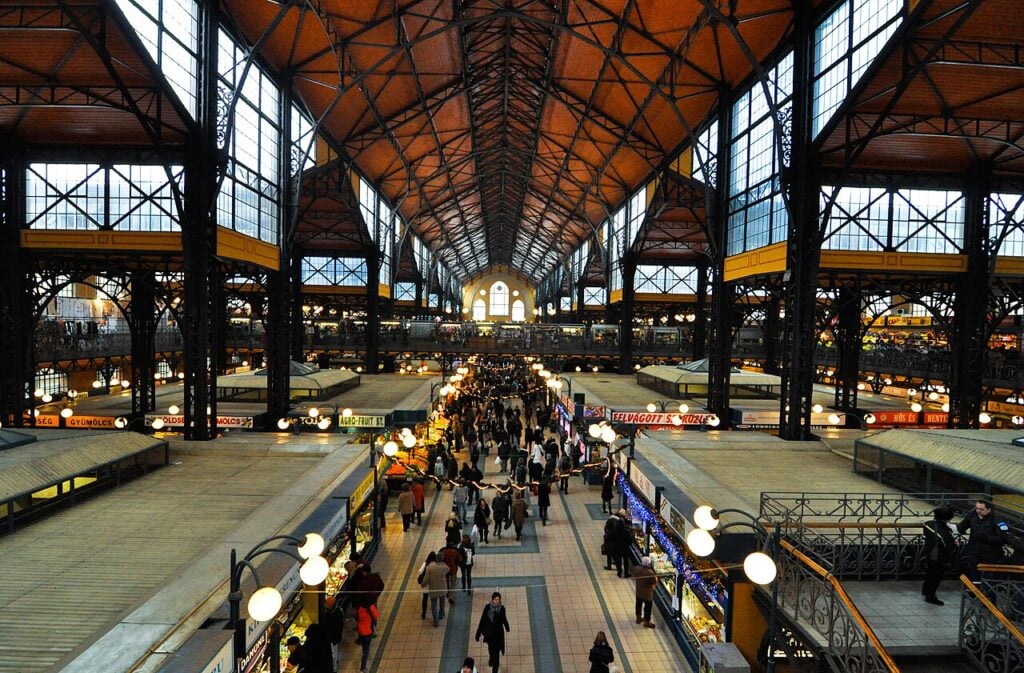
Budapest’s Great Market Hall brings together fresh produce, paprika, salami and other Hungarian specialties beneath its soaring 19th-century roof.
Much of Hungary’s culinary heritage comes together at Budapest’s Great Market Hall, which opened in 1897. Beneath its impressive iron-and-glass roof, stalls overflow with fresh produce, paprika, Hungarian salami, pastries and other local specialties. Although parts of the market now cater heavily to tourists, it remains a lively place to discover the ingredients and food traditions that have shaped Hungarian cooking for generations.
Learn more about Budapest’s Great Market Hall.
A Different Side of Budapest
At Széchenyi, it’s not unusual to see locals playing chess in the outdoor thermal pools, seemingly oblivious to the visitors around them. Others come to socialize, swim or simply relax in the warm mineral waters. These everyday rituals are as much a part of Budapest’s character as its magnificent architecture.
For visitors, the baths offer an opportunity to experience the city beyond its famous landmarks. The Hungarian Parliament Building, Buda Castle and Matthias Church reflect Budapest’s remarkable history, but its bathhouses reveal something about the daily lives of the people who call the city home. Amid the grandeur of these historic buildings, a centuries-old tradition continues without much ceremony.
There’s certainly plenty to discover throughout Budapest, but spending a few unhurried hours in its thermal waters offers a perspective that conventional sightseeing cannot.
Book Your Stay Now in Budapest
Search and compare hotels and vacation rentals across Budapest using the interactive map below. Move the map to explore different neighborhoods or use the filters to find accommodations near the city’s thermal baths, restaurants and major attractions.
Join the community!

Join our community to receive special updates (we keep your private info locked.)