

Green School Bali: Rethinking Education for the Future
Green School Bali
Posted June 27, 2026
In Abiansemal, a rural district north of Denpasar and west of Ubud in Bali, the Ayung River cuts through rocky gorges, winding past rice fields and jungle.
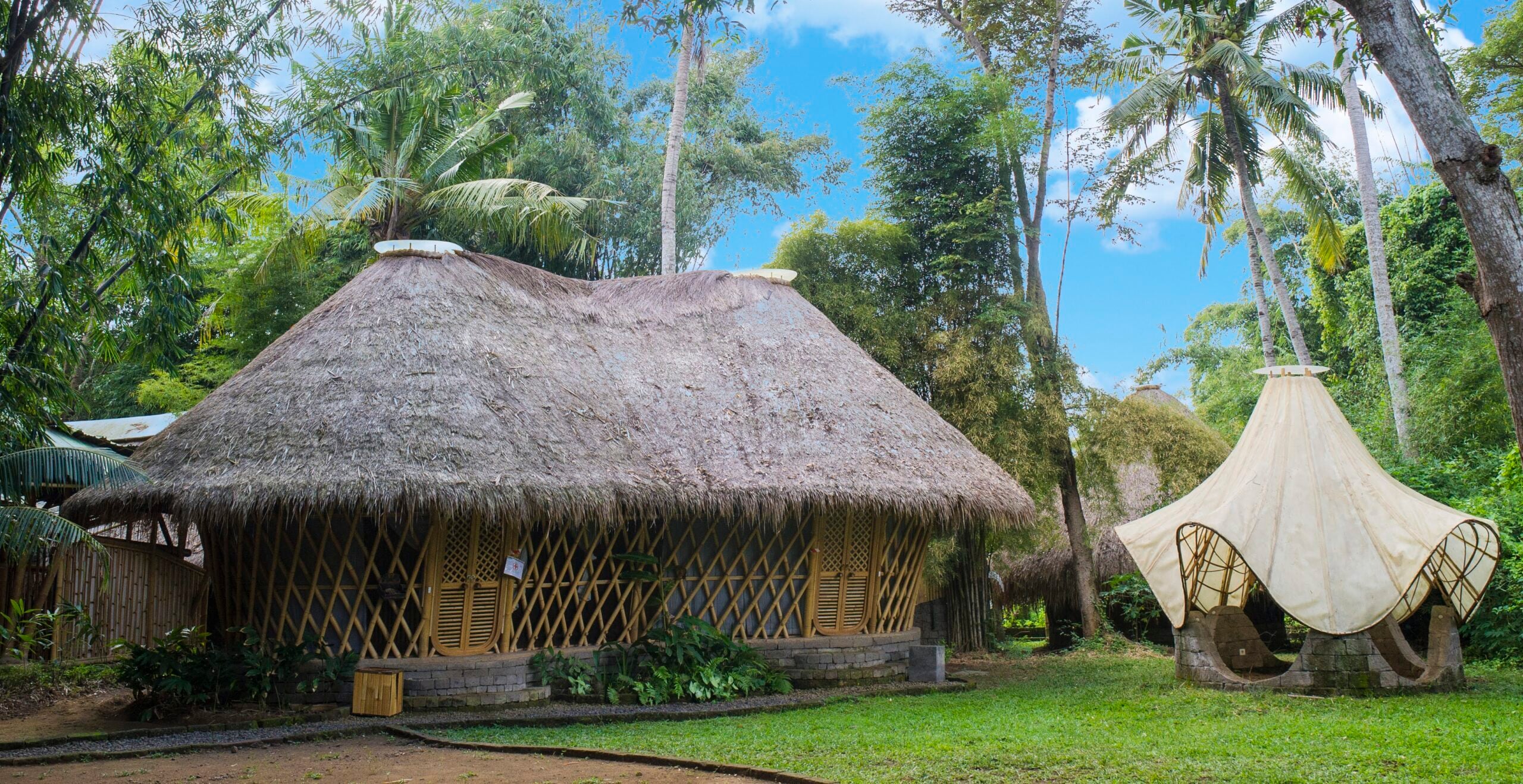
Down by the river, a spread of bamboo pavilions rises in a hug of palm trees and thick bushes, their wide thatched roofs fanning out like giant conical hats.
From above, the complex gives off the vibe of an eco-retreat in the middle of the jungle. But beneath the thatched roofs are open-air classrooms, designed to nurture young minds through an unconventional curriculum that could reimagine education as we know it.
Many people coming to Bali don’t realize they can visit the school!
A School in Nature
Green School Bali is an international school set in the jungle along the Ayung River, Bali’s longest river.
“It does not feel like a typical school at all. It feels open, alive and very connected to the land,” says Rama Ramadhan, Marketing Supervisor at Green School Bali.
Bamboo is the Campus Foundation
The moment you walk into the school compound, your eyes immediately get drawn to the abundance of bamboo structures.
Green School of Bali is built on a mission of environmental sustainability, and bamboo is a fast-growing plant that makes the best ecological alternative to wood. It became the natural choice for the campus foundation.
But what makes the school unique is not the bamboo. It’s the community.
Rama says, “Students here are empowered to think, question, create, and speak up from a young age. They are not only learning from books or in classrooms, but from real experiences, projects, nature, and the people around them.”
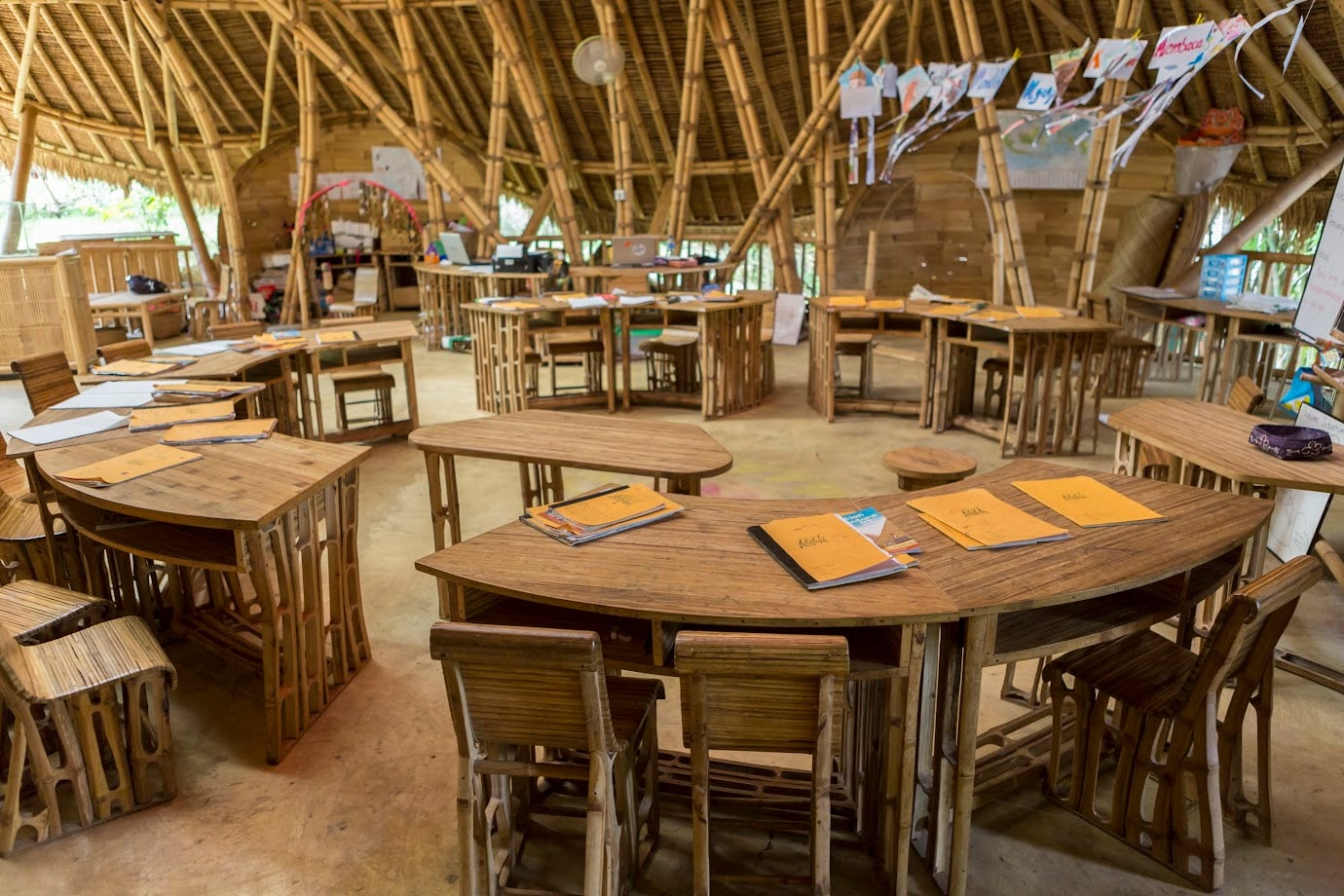
Unlike traditional schools, Green School Bali has open air bamboo classrooms Photo: Green School Bali
Openness and Freedom
Unlike a typical school, there is a sense of openness and freedom in the Green School campus. Students walk barefoot, play music, build things, work in the garden or have discussions in open-air classrooms.
In fact, the school is like a mirror of Bali itself, where nature, creativity, culture, ceremony and community all come together as one.
A School Unlike Any Other
There are so many activities here that you would not normally see in a regular school.
“Students can join activities like coral restoration, bamboo building, sustainable fashion, upcycling, gardening, cooking, pottery, music, blacksmithing or digital fabrication,” Rama says.
“What I love is that these are not just random extracurricular activities. Many of them are connected to real skills and real-world issues. Students are not only doing something fun, but also learning how to make things, solve problems, care for the environment, and contribute to their community,” Rama mentions.
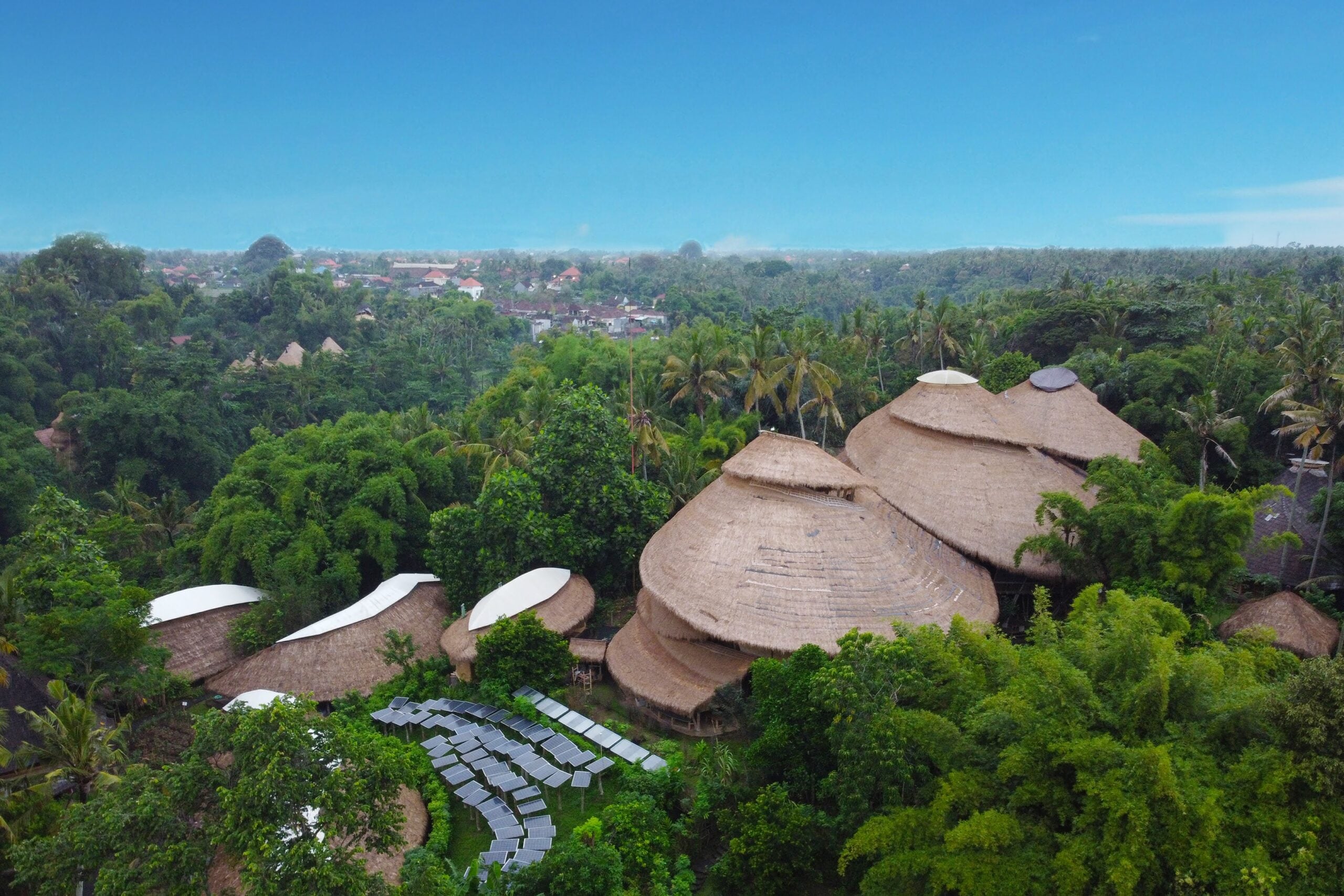
Green School From above, the campus looks like conical hats surrounded by nature Photo Green Scholl Bali
Hands-on Way of Learning
What the school encourages students to do is to get hands-on. For example, in coral restoration, they don’t just learn about marine ecosystems in class. They put themselves out there to help rehabilitate reefs.
In the Grade 12 capstone project Greenstone, students don’t just sit in class learning about what they care about. They dive in, turn it into a project, and share their journey in a TED-style talk.
In spaces like iHub and Mycelium Lab, students put on the hat of a scientist. They experiment with recycled materials, natural dyes, mycelium, algae, and other biomaterials. Just like scientists in a real laboratory, they tinker with ideas, make prototypes, fail, refine, and keep going.
Innovation Begins with Questions
In Green School Bali, students are encouraged to look at local problems and ask, “What can we do with this?”
Biobus is a good example. What started as an idea to turn waste cooking oil into biodiesel grew into a real way to fuel transportation.
Rama emphasizes, “Innovation is not always about high technology. Sometimes it is about looking at nature, waste, culture, or community differently and then creating something useful from that.”
Sustainability in Daily Life
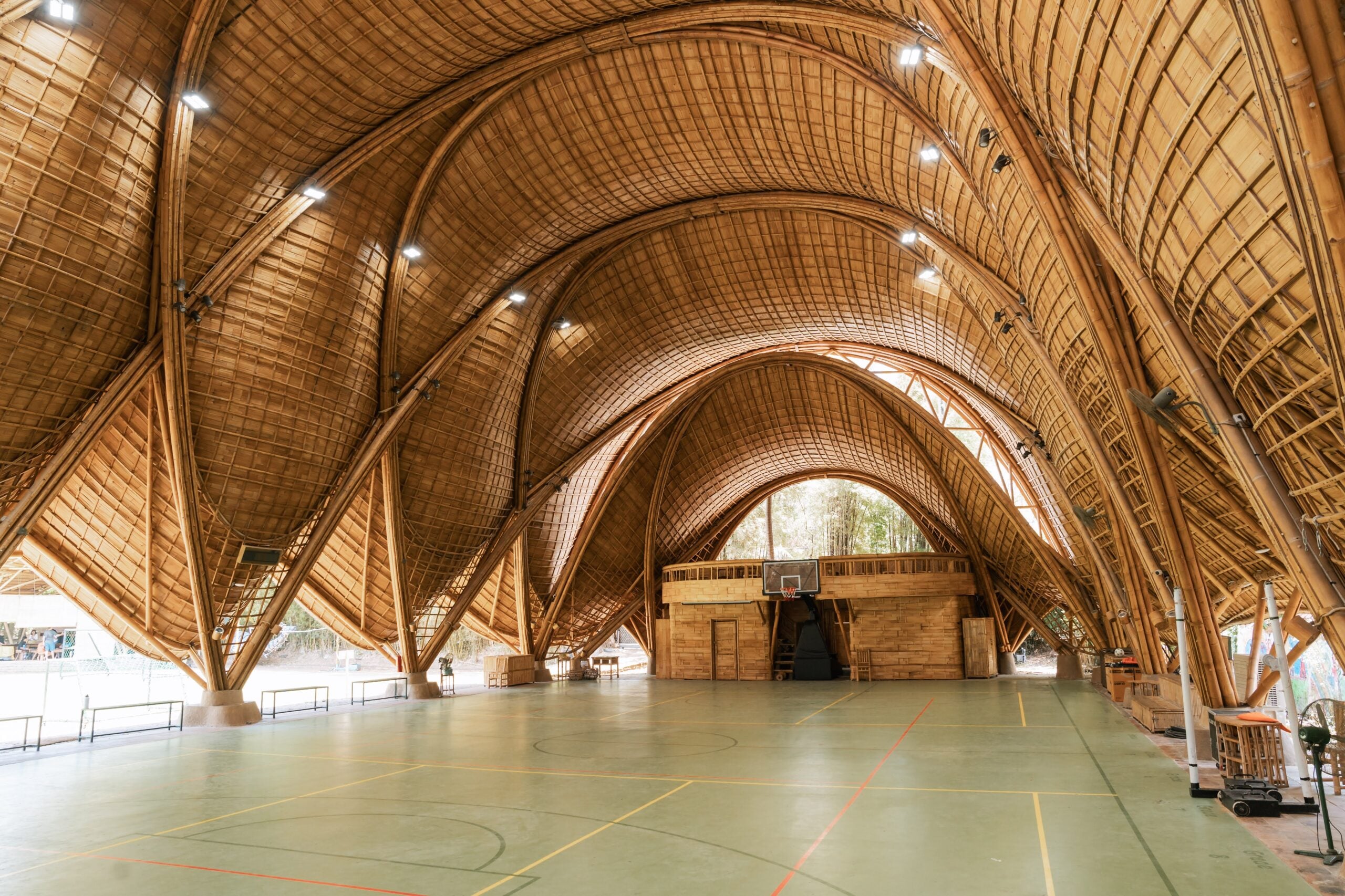
Basketball court under curved bamboo arches. Photo: Green School Bali
Sustainability touches almost every facet of life on campus. From composting and waste separation to gardening and reducing single-use plastic. Even the campus itself is a living classroom that constantly reminds everyone of their connection to nature.
But beyond the daily habits, what is powerful is how students start to think. They would start asking questions like, “Where does our waste go?” What can we do to protect the ocean? How can we use materials differently? How can we support the local community?
“That mindset often turns into real projects, from coral restoration and mangrove planting to river awareness, sustainable fashion and student-led community initiatives around Bali,” Rama says.
Environmental Issues in Focus
Environmental issues are also front and center in the classroom.
Rama points out that plastic pollution in Bali’s rivers and oceans is a good example. The students have explored this issue in many ways.
“From river clean‑up awareness to creative campaigns and student‑led action. What makes it powerful is that they are not just talking about plastic waste as some global issue; They are seeing how it directly impacts the waterways, beaches, and communities.”
“Some respond through advocacy and education, while others look at design solutions, upcycling or ways to reduce waste at the source.” Rama continues.
Guided Tours are Available
Visitors can join guided campus tours. The easiest way to sign up is to book ahead through the website or just drop an email.
Rama recommends booking at least a few days in advance, especially during peak travel seasons, as tours can book up quickly.
Some of the highlights of the tour include learning how bamboo is used as a primary building material, watching students work on hands-on projects, and learning about the philosophy behind the school curriculum.
The tour will walk through various parts of the school, including the iconic bamboo structures, open-air classrooms, and spaces like The Arc and the innovation hubs.
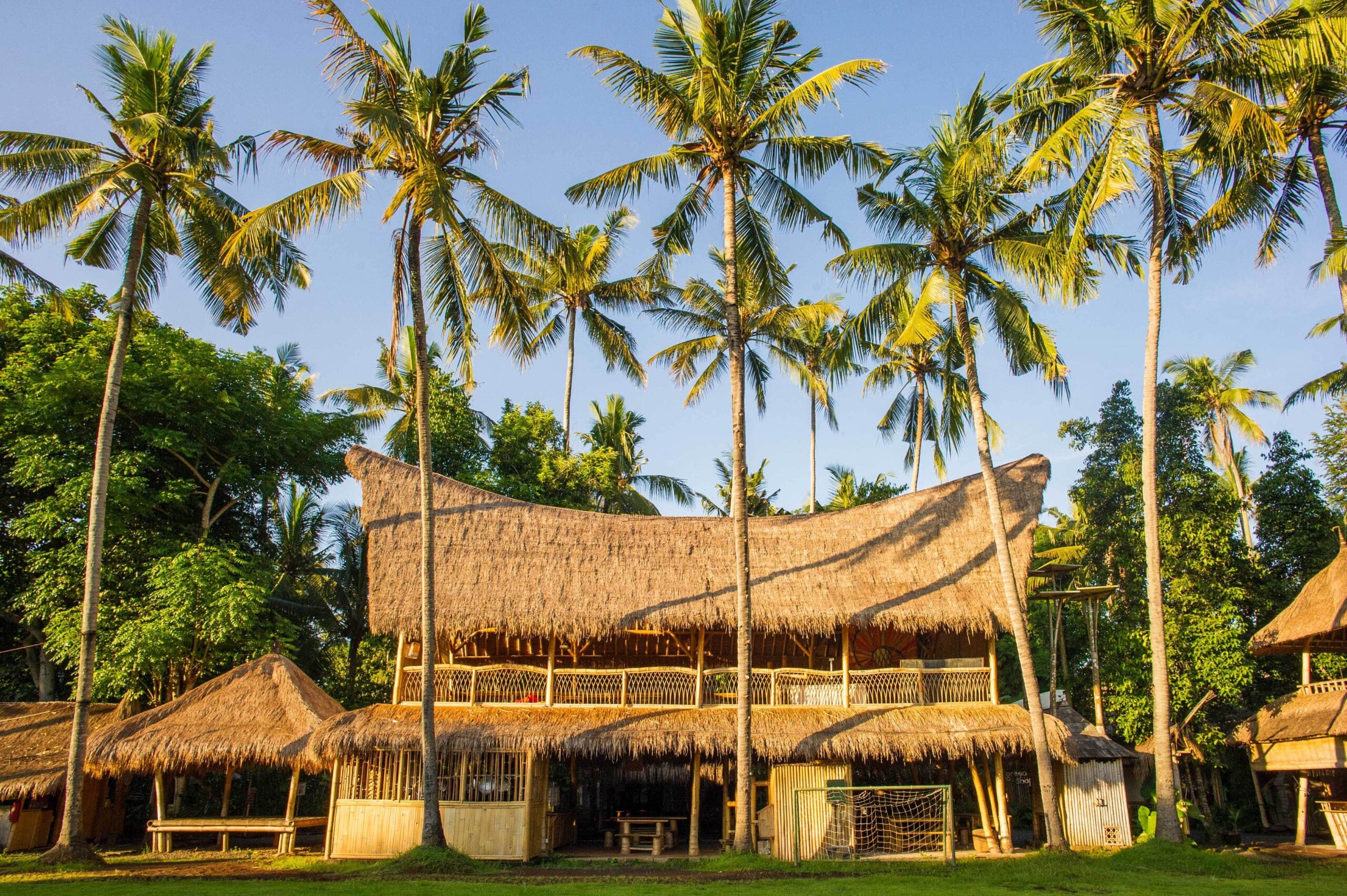
Green School Bali sits in a village in Abiansemal surrounded by palm trees. Photo: Green School Bali
Rethinking Education
Rama has been with Green School Bali for 3 years now. He describes Green School Bali as a living, breathing example of what education can be when it is rooted in purpose, community, and the natural world.
“It is not perfect, and it is always evolving, but that is exactly what makes it real. It is a place where ideas are tested, where students are empowered, and learning feels meaningful.”
Click here for discounted accommodations in Bali
Join the community!
Join our community to receive special updates (we keep your private info locked.)

