

How Sustainable Tourism in Kenya Is Moving Toward Destination Stewardship

A woman stands in a dry mountain landscape in Kenya. Photo: David Murphy/NOTM.
Posted August 6, 2026
Editor’s Note: Tonya Fitzpatrick reviewed and updated this article on July 31, 2026, to provide current context on Kenya’s tourism performance, sustainability standards, locally led tourism and the country’s evolving approach to destination stewardship. The writer’s original observations, interviews and message have been retained.
Kenya has long been a fascinating destination for domestic and international travelers. The East African nation offers savannahs, lakes, mountains and an Indian Ocean coastline that includes the historic port city of Mombasa. It is also home to many living cultures and traditions. It is easy to see why the country is promoted as “Magical Kenya.”
I first set foot on these lands in 2013 during an overland safari with twenty other wandering souls. We created unforgettable moments, and I began to understand what makes Kenya so appealing to travelers like me.
Since then, tourism has expanded and evolved. Sustainable tourism in Kenya now forms part of a larger conversation about supporting communities, protecting culture and conserving nature. The challenge is not simply attracting more visitors. It is ensuring that tourism leaves the destination stronger.
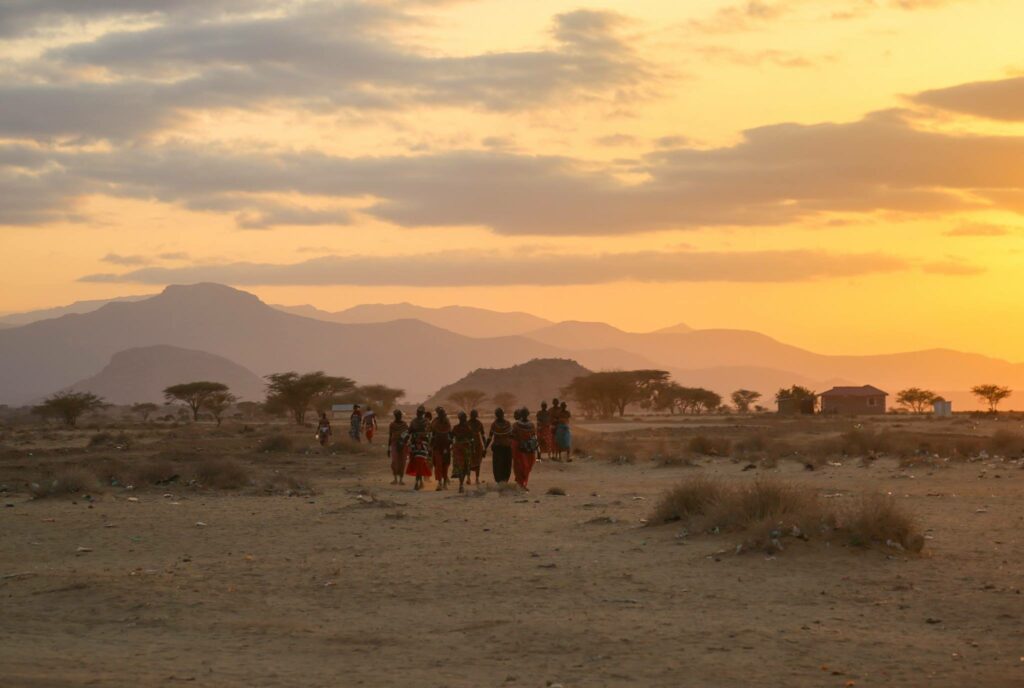
A group walks across the landscape near Ngurunit as the sun sets behind the mountains. Photo: David Murphy/NOTM.
From Tourism Growth to Destination Stewardship
Kenya’s tourism industry did not begin on equal terms. Research on wildlife conservation and safari tourism in Kenya traces many policies to colonial-era systems. National parks and tourism programs often excluded Indigenous and local communities from decisions involving land, wildlife and development.
That history still raises difficult questions. Who shapes tourism? Who benefits economically? Does visitor spending remain within local communities? Are cultural traditions represented with respect? Are wildlife, water and land better protected because tourism exists?
These questions move the conversation toward destination stewardship. Sustainability often focuses on reducing environmental and social harm. Destination stewardship looks at the entire place, including governance, community voice, cultural integrity, local value retention and long-term accountability.
These are also the questions explored in Tonya Fitzpatrick’s book, Destination Stewardship: Drive Sustainability, Economic Renewal, and Cultural Integrity. The book looks beyond visitor numbers and examines whether tourism strengthens communities, protects identity and supports the long-term health of a place.

Two cheetahs survey the landscape of the Maasai Mara in Kenya. Photo: David Murphy/NOTM.
The Growth of a Social-Purpose Approach in Tourism
Progress takes time. It also requires people willing to pioneer a different way forward.
Colin Murray of One Horizon Africa knows this firsthand. One Horizon began with community programs and later developed a tourism arm to help fund and expand them.
“At the time, One Horizon’s social-purpose approach was deemed a ‘head scratcher’ by the travel industry,” Colin explains. A profit-focused industry had not fully embraced socially and environmentally driven experiences.
“We are now in a position where travelers are requesting social-purpose experiences,” Colin continues. “In other words, the demand for sustainable tourism is being driven by consumers.”
He adds, “Through our socially-conscious tours, we aim to be an example of how tourism can promote positive social change through the use of authentic and respectful human-to-human engagement.”
Recognizing Ecotourism and the Risk of Greenwashing
Growing interest in sustainable tourism in Kenya also raises questions about greenwashing. This happens when a company makes misleading environmental claims or presents its work as more sustainable than it is.
Ecotourism Kenya helps set standards for responsible tourism. Founded in 1996, it was the first ecotourism society established in Africa. Its Ecorating Certification Scheme began in 2002.
The voluntary program evaluates accommodation facilities on environmental, economic and sociocultural performance. Qualifying properties receive Bronze, Silver or Gold certification. Ecotourism Kenya says more than 100 accommodation facilities have joined the scheme since it began.
Certification is a useful starting point, but stewardship requires more than certifying individual businesses. It requires coordination among government, tourism operators, communities, conservation groups and cultural custodians.
Travelers can also ask whether a company publishes measurable progress, explains community benefits and holds current certification. Independent reviews may offer further clues. Transparency helps travelers distinguish genuine sustainability practices from greenwashing.
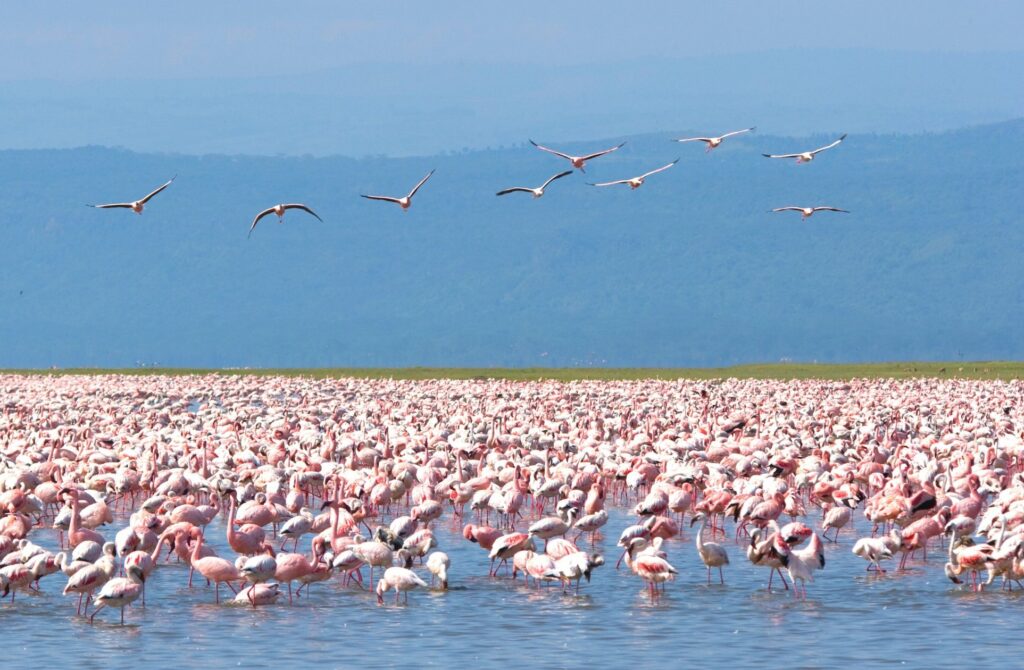
Thousands of flamingos gather in the shallow waters of a Kenyan lake. Photo: David Murphy/NOTM.
More Opportunities for Locally Owned Operators
Changes in travel planning have created more room for locally owned operators. Many visitors want their spending to support local guides, businesses and communities.
This matters because tourism revenue can look impressive nationally while money leaves through foreign ownership, imported goods or outside supply chains. Kenya’s draft National Tourism Strategy says links with local suppliers, artisans, producers and small businesses remain underdeveloped, especially within wildlife tourism.
Travel4Purpose is one business trying to strengthen those connections. The Kenya-based company works with local people to create cultural and nature-based experiences. It describes itself as locally owned and community built.
“Sustainable travel is key to ensuring we can continue to enjoy the beauties of Kenya while being respectful to the culture, the land and its people,” founder Sham explains. “I believe Kenya has great potential for sustainable travel and inclusive growth.”
Locally led tourism can give communities a stronger role in deciding what visitors experience. It may also keep more tourism income near the people providing those experiences.
Local ownership does not guarantee responsible practices. However, it can bring tourism decisions closer to those affected by them.
From Pandemic Recovery to Long-Term Stewardship
COVID-19 brought Kenya’s tourism industry to a near standstill. International arrivals fell from more than two million in 2019 to 567,848 in 2020.
The industry has since moved beyond the immediate recovery period. Kenya reported an estimated 2.7 million international visitors and 5.2 million domestic travelers in 2025.
Those figures show a strong rebound. However, they do not reveal whether residents feel heard, local businesses retain more income or ecosystems can withstand additional pressure.
Kenya’s draft National Tourism Strategy for 2025–2030 reflects many destination stewardship principles. It calls for communities to become active participants and primary beneficiaries of tourism. It also proposes benefit-sharing frameworks, support for local enterprises and cooperatives, and free, prior and informed consent for development on community land.
The draft addresses cultural heritage and respect through curated cultural tourism, support for local artisans and performers, and protocols for visitors to sacred or sensitive sites. It also proposes enforcing carrying-capacity limits in sensitive destinations such as the Maasai Mara, Mount Kenya and coastal marine parks.
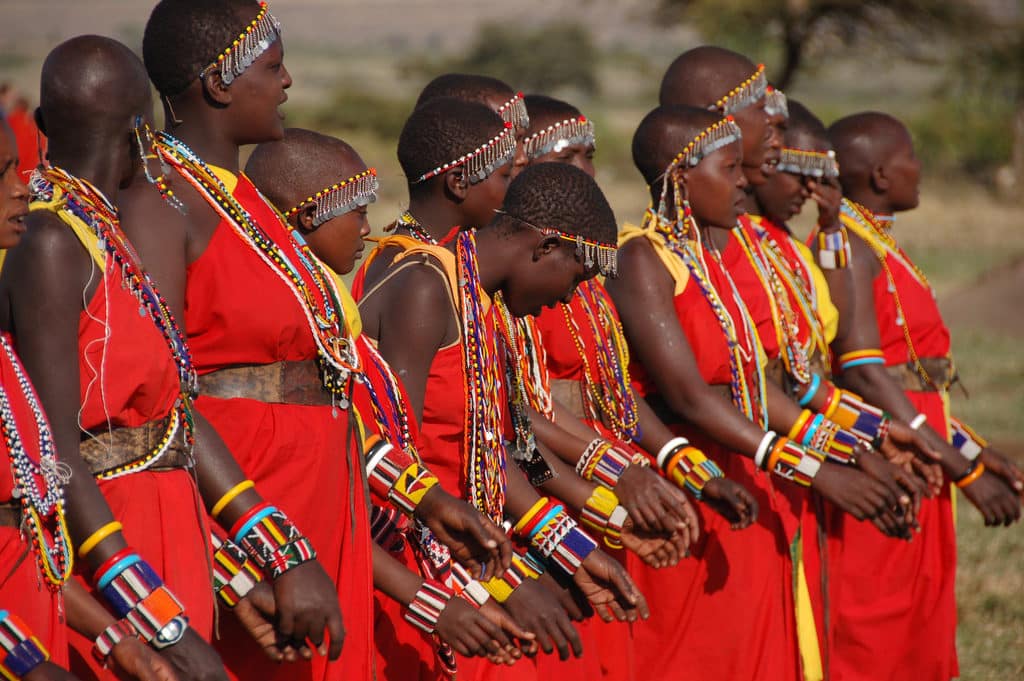
Maasai women in Kenya’s Maasai Mara. Photo: Dylan Walters.
Measuring What Tourism Leaves Behind
Perhaps the clearest connection to destination stewardship is the strategy’s attention to measurement.
The draft proposes establishing the Kenya National Tourism Observatory and county observatories to monitor tourism’s effects. Suggested indicators include local satisfaction, employment, energy and water use, waste, emissions, accessibility, visitor flows, carrying capacity, local economic benefits and effects on cultural and natural heritage.
That moves beyond measuring success through arrivals and receipts. It asks whether tourism improves the destination and the lives of the people who call it home.
Policies and draft strategies do not guarantee results. Stewardship depends on implementation, transparent data, shared decisions and accountability.
What has changed since my 2013 visit is the visibility of sustainability standards, locally led tourism and a broader discussion about who should benefit. Kenya’s next test is whether those commitments become consistent and measurable practice.
Book Your Stay in Kenya
Search the map to compare hotels and rentals across Kenya. Find the stay that best fits your trip and budget. You can also use the filters to locate restaurants, tours, attractions and other points of interest.
Join the community!
Join our community to receive special updates (we keep your private info locked.)