

Baguio – The Summer Capital of the Philippines
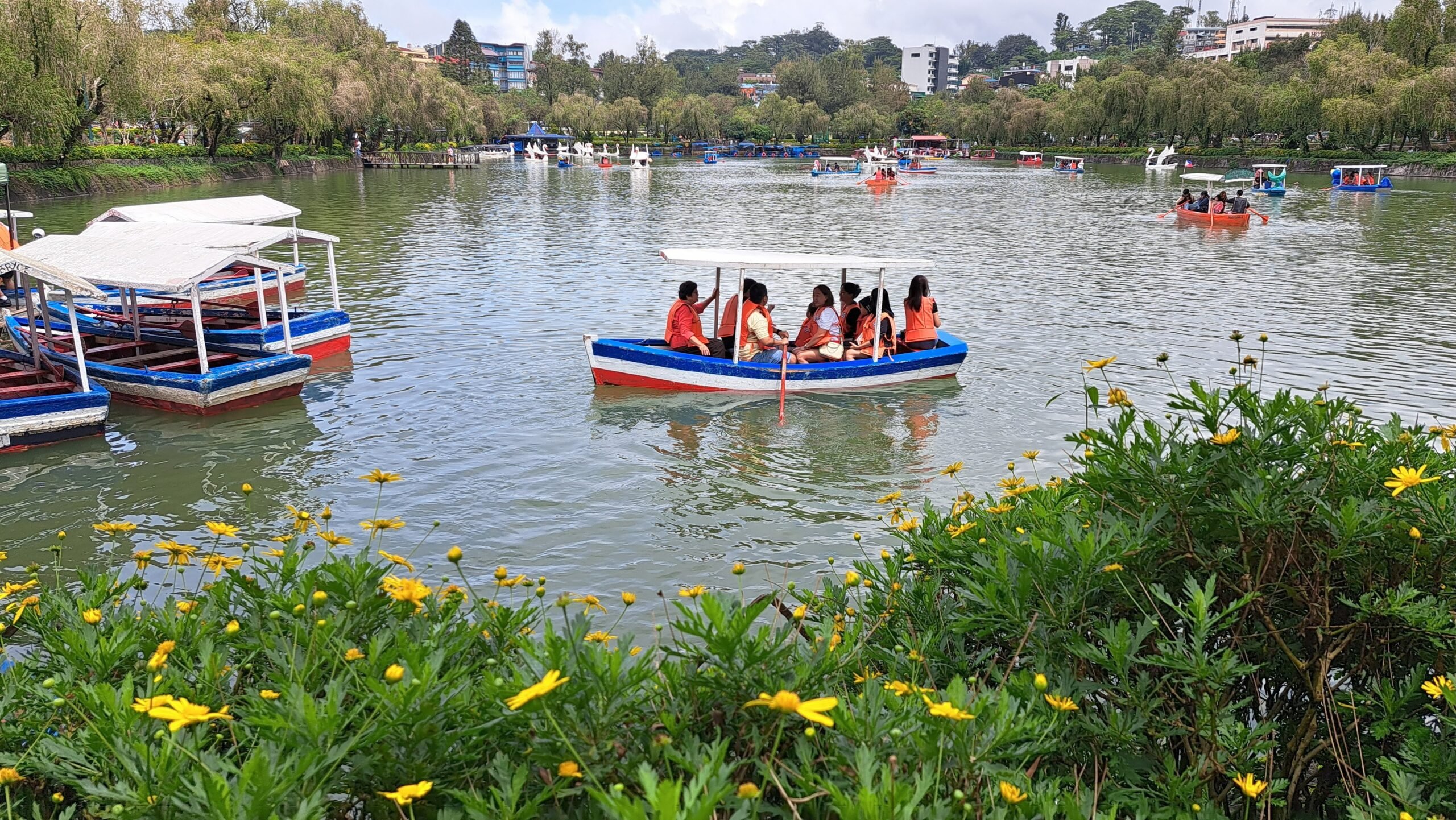
Baguio Burnham Park is a US designed urban park Photo: Teh Chin Liang
Posted November 28, 2025
Baguio is a mountain town located on the pine-dotted plateau of the Cordillera Administrative Region in northern Luzon, Philippines.
I took a weekend jaunt to Baguio from Manila. After nearly six hours northbound, the bus started ascending through the mountain loops. Outside my bus window, the sun-drenched plains reeled away into ranks of tapering pines, and the sweltering heat dissipated into cooler mountain air.
An Always Misty City
The heavy afternoon downpour added an extra layer of mist to the already foggy streets. The visibility almost dropped to zero. In the evening, the rain reduced to light drizzle, and the mist lifted. Finally, hours after my arrival, Baguio slowly revealed itself to me.
Up on the hill, the evening mass echoed from the Baguio Cathedral —an early 20th-century church in pastel pink and gray, flanked by twin spires looming in Neo-Gothic grandeur.

Ili Likha Artists Village Photo: Teh Chin Liang
A Whimsical Art Village
Down a short staircase from the church sits Ili-Likha Artists Village. The whole village is cobbled together from recycled wood and metal scraps, twisting and welding into a chaotic work of art that runs from walls to walkways. At first glance, you would wonder how even to find your way around. Creepy carved figures stare back at you in the dim light—a scene straight out of a Guillermo del Toro movie.
The place gives off a vibe like a labyrinth of dreams. For local artists, it is their “watering hole.” Local artists run everything from crafts and paintings to vegan cafés and knick-knack shops.
Maze-like walkways zigzag into a quirky little cinema designed with a Stone Age vibe. Seats are carved from stone and wood. The cinema plays indie short films, but when not in use, sitting in darkness, surrounded by tangles of vines hanging down from a tree and a grotesque creature looming over you provides a gothic sensory treat.

Girls break into a wild Line dance at the county fair Photo: Teh Chin Liang
Country Fair in the Highlands
I followed the sounds of the festival and came to the main street of Baguio – Session Road. A large stretch of the street was closed for a county fair. Old western props decked the street out for the occasion.
Performances and competitions popped up from alleys to open squares. In the middle of the crowd, a group of young teenage girls in red plaid shirts and blue stomped and clapped their way through a western line dance.
Behind them, arm‑wrestling and a beauty pageant were going head-to-head.
Further down, a local singer belted out Neil Diamond’s “Sweet Caroline” on a makeshift stage, and the audience, from toddlers to old people, seemed to know every word of the lyrics and sang along without missing a beat.

Strawberries La Trinidad Photo: Teh Chin Liang
Strawberry Capital of the Philippines
The next morning, I braved the drizzle to La Trinidad, a nearby village dubbed the Strawberry Capital of the Philippines. A vast strawberry farm spans the rolling acres. White canopies sheltering the plants rippled across the farm. Walking around the farm is challenging after the rain. Several times, I slipped ankle‑deep into the mud and struggled to pull myself out.
The passing farmers nodded at me, trying not to laugh. He broke the awkwardness with small talk, telling me how the harvest season, from the end of the year to May, is their busiest, and they start working as early as 4 am.
Stalls lined the dirt road outside the farm, selling fresh strawberries from the farm and oranges from Sagada, a pristine mountain highland about a 5-hour drive from Baguio.
After a long walk around the farm, I craved a sweet treat, and nothing beat the Taho. Taho is a Filipino snack made of tofu processed into a silken texture, topped with brown sugar syrup and crushed strawberry bits.

Valley of Colors Photo: Teh Chin Liang
Valley of Colors
On the way to La Trinidad, I found it hard to take my eyes off the houses tumbling down the hill slopes, painted in a striking mix of colors. It is almost like Cinque Terre in Italy, but with a contemporary spin. Some describe the scene on social media, “God must have spilled the paint over the houses.”
The “Valley of Colors” is an urban renewal project by the local government and artists. It aims to bring new life to a once‑dilapidated hillside settlement and boost economic opportunities for its residents. Most people come to take quick Instagram photos and videos.
For a truly local experience, I crossed the suspension bridge and climbed the steep staircase to the heart of the village. The residents, especially children, gave me a curious stare, probably wondering why a village that people once avoided suddenly drew foreigners in. An hour spent in the village showed me how the power of art can redefine a community.

igorot stone kingdom Photo: Teh Chin Liang
Igorot Heritage
Igorot Stone Kingdom is an imaginative castle complex inspired by the heritage of the Igorot people. From above, the complex looks like life-sized sandcastles. Most of the statues represent Igorot myths and legends. The walls, terraces, and towers were built using a traditional stone‑stacking method, without cement, much like the way the Cordillera rice terraces were built. Talk about an ancient architectural marvel reborn in modern days!
Baguio is the ancestral land of the Igorot people. In the early 1900s, the Americans were in search of a cool mountain refuge and found it in Baguio. To this day, you can still see American influences in the city, especially Burnham Park and Camp John Hay.
American Footprints Remain in Baguio
Burnham Park was designed by an American architect, Daniel Burnham, who introduced American-style urban planning to Baguio. The park includes distinct features of a typical US public park – landscaped gardens, tree-lined paths, and a man-made pond. It sits right smack in the middle of Baguio, close to everything, and a green oasis for people to take a quick breather from the city.
Camp John Hay epitomizes what Baguio is all about: the cool mountain air and endless pine trees. A large open park dotted with hotels, a museum, and old cottages, it also includes an eco-trail where visitors can immerse themselves in forest bathing—shinrin‑yoku, the Japanese practice of mindful walking among trees.
If you are short on time, take a free shuttle to the different stops across the park. The Bell House inside the park was once a vacation residence of the Commanding General. A green gabled roof, a veranda that runs the length of the house, and, inside, the woodwork and early-1900s furniture give a peek into American colonial life.

The cemetery of negativism Photo: Teh Chin Liang
The Cemetery of Negativism
A small patch of lawn filled with cartoon characters lies next to the Bell House. It seems like a children’s corner at first, but on closer look, you will see tombstones scrawled with negative epitaphs, in a playful manner.
“I wanna die. Born on a blue day and stayed that way.”
“Born in gloom, lived without bloom, buried in this tomb.”
“Died before he started.”
In this Cemetery of Negativism, all the world’s most negativism was laid to rest.
Camp John Hay was the last stop before I left Baguio. I ran my finger across the soil of the cemetery, wistfully thinking that the gesture might somehow bury all my negative thoughts. Perhaps it didn’t. But as the bus slowly pulled away from Baguio, I realized it was not goodbye. It felt more like saying “I will be back”, and I supposed that was a quiet sign of optimism.
Click here for discounted accommodations in Baguio, Philippines
Join the community!
Join our community to receive special updates (we keep your private info locked.)

