

Sochi 2014 Winter Olympics: A Different Side of Russia

The Olympic cauldron at Sochi Olympic Park during the 2014 Paralympic Games. Photo: Ian Fitzpatrick / World Footprints.
Posted March 20, 2014
When Ian and I traveled to Sochi, Russia, in March 2014 to cover the Winter Paralympic Games for World Footprints, we knew we would witness some remarkable athletic performances. What I didn’t expect was how much this Russian resort city would surprise me.
The Winter Olympics had ended just weeks earlier, and Sochi was welcoming Paralympic athletes from around the world. Palm trees, relatively mild temperatures and a beautiful Black Sea coastline weren’t exactly what I expected from a Winter Games destination.
But Sochi is full of surprises.
Our experience was also unfolding against an unsettling political backdrop. Russia’s military intervention in Ukraine and its annexation of Crimea were making international headlines. Yet despite those tensions, we never experienced anything in Sochi that caused us to fear for our safety. Quite the opposite. Everywhere we went, we felt welcomed, and the spirit of the Games was very much alive.
That contrast stayed with me.
Discovering Sochi Beyond the Olympic Venues
Most Americans associate Russia with cold weather, vast landscapes and snow-covered cities. Sochi challenges that image.
Located in southwestern Russia, Greater Sochi stretches approximately 145 kilometers (90 miles) along the Black Sea coast. Its subtropical climate, beaches and green surroundings have made it a popular summer holiday destination for generations of Russians.

Tonya Fitzpatrick looks toward the Olympic rings along Sochi’s Black Sea waterfront. Photo: Ian Fitzpatrick / World Footprints.
The nearby Caucasus Mountains offer a completely different landscape. Around Krasnaya Polyana, higher elevations provide the snow and terrain needed for skiing, snowboarding and other winter sports.
This contrast between coast and mountains made Sochi one of the more unusual host cities in Winter Olympics history.
Our introduction to Sochi actually began four years earlier. During our 2010 Winter Olympics coverage in Vancouver, we attended a Russian hospitality event that offered a preview of Sochi’s plans for the 2014 Games.
Now we had an opportunity to experience the destination ourselves.
Sochi’s Olympic Transformation
Since winning the Olympic bid in 2007, Sochi had undergone an enormous transformation. New sporting venues, hotels, roads, rail connections and other facilities were built to accommodate athletes, spectators and international media.
The Games were divided between two main areas.
The Coastal Cluster near Adler included Fisht Olympic Stadium, the Bolshoy Ice Dome, the Iceberg Skating Palace and other ice-sport venues. Meanwhile, the Mountain Cluster around Krasnaya Polyana hosted skiing, snowboarding and other outdoor competitions. It was this latter area where we set up our home base during our time in Sochi.
Seeing Olympic Park and the infrastructure developed for the Games gave us an appreciation for the scale of the undertaking. The Olympic flame, international flags and Olympic rings along the Black Sea waterfront also provided some memorable photographic opportunities.
But as impressive as those facilities were, I was interested in the Sochi that existed long before the world arrived for the Games.

Sochi’s Black Sea coastline reflects the city’s rapid development, with new construction rising against the backdrop of the Caucasus Mountains. Photo by Tonya Fitzpatrick
Sochi’s Cultural Heritage and History
Long before the Olympics brought international attention to Sochi, the city was known as a holiday destination for Russia’s elite.
During the Soviet era, Sochi became an important health resort, with sanatoriums, grand hotels and summer residences. Joseph Stalin even maintained a summer home here, contributing to the city’s reputation as a retreat for the Soviet political leadership.
Many of Sochi’s cultural landmarks reflect different periods in its history.
The neoclassical Winter Theatre, Riviera Park, the Sochi Art Museum and the History Museum offer glimpses into the city’s past. The Cathedral of St. Michael the Archangel is another reminder of its historical and religious heritage.
I find the Tree of Friendship particularly interesting. What began as an experiment in citrus cultivation in 1934 eventually became a symbol of international goodwill. Visitors from different countries grafted branches onto the tree, creating a living expression of friendship across cultures.
The Sochi Arboretum, also called the Dendrarium, showcases the area’s subtropical vegetation through its collection of trees and plants.
The region’s history also reaches much further back. The ruins of Loo Temple, a medieval Christian site, and Godlik Fortress provide reminders of earlier civilizations and the different cultures that influenced this part of the Black Sea coast.
Beyond the city lies the Western Caucasus, recognized as a UNESCO World Heritage Site in 1999. Its mountain forests, alpine landscapes and rich biodiversity make it one of Russia’s important natural areas.
These cultural and natural treasures give Sochi an identity that extends well beyond the Olympics.
The Olympic Games and Sochi’s Residents
The investment in Olympic infrastructure certainly changed Sochi, but what did that transformation mean for the people who lived there?
That was an important question in our reporting.
A World Footprints article examining the Olympics from a local perspective featured interviews with residents who described years of construction, interruptions in utility services, traffic problems and concerns about what would happen after the Games.
Some were understandably frustrated. Others welcomed the improved roads, shopping facilities and economic opportunities that came with the development.
The people who call Sochi home had experienced the preparations for much longer than the athletes, journalists and spectators who came for a few weeks.
Their perspectives reminded us that hosting an international event has consequences that extend far beyond the competitions.
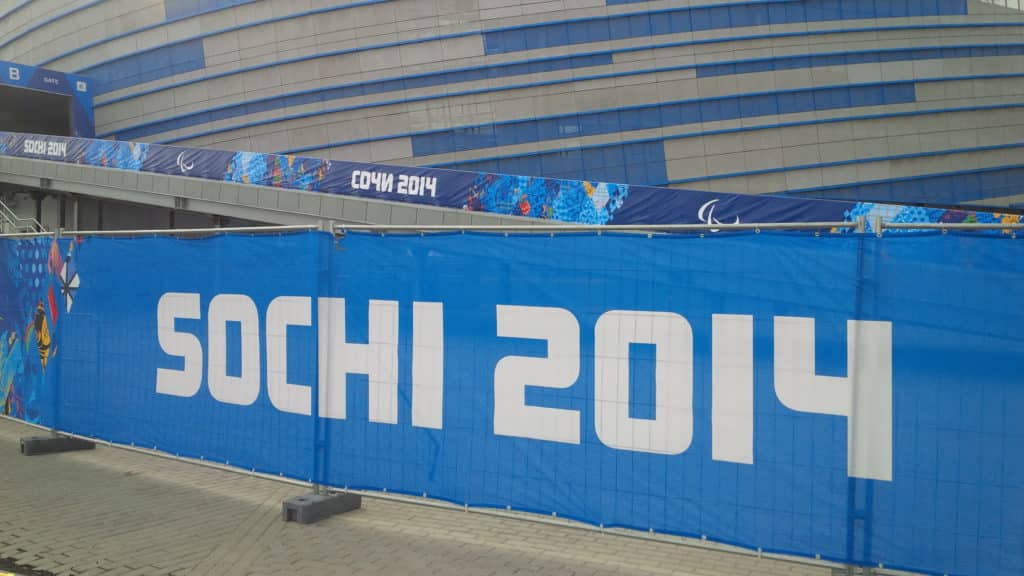
Sochi’s sporting venues welcomed Paralympic athletes from around the world following the 2014 Winter Olympic Games. Photo taken by Ian Fitzpatrick/WorldFootprints
Covering Team USA at the Sochi Winter Paralympics
Our primary reason for being in Sochi was to cover the 2014 Winter Paralympic Games as accredited media for World Footprints.
One of the most meaningful parts of that experience was the opportunity to share the stories of American athletes who had worked incredibly hard to reach the Paralympic stage.
Our coverage included interviews with Alpine skier Stephanie Jallen, sled hockey player Nikko Landeros and Stephanie’s mother, Deb Jallen.
Stephanie’s journey was particularly compelling. She had devoted much of her childhood to competitive skiing, giving up many of the activities other teenagers enjoy while training to become a world-class athlete.
Speaking with Deb also gave us a better understanding of the sacrifices and family support behind Stephanie’s accomplishments.
Stephanie earned two bronze medals in Sochi, including one in the women’s standing super-G and another in the super combined.
Nikko was part of the U.S. sled hockey team that defeated Russia 1–0 on March 15 to win Paralympic gold. It was Team USA’s second consecutive gold medal in the sport.
These were impressive achievements. But for World Footprints, the opportunity to tell the athletes’ personal stories was just as important as reporting their results.
We shared those conversations in our World Footprints feature, Inspiring Stories from the Sochi Paralympic Games.
The Games also reinforced the importance of accessibility and inclusion. Watching talented athletes compete was inspiring, but accessibility shouldn’t be limited to sporting venues. Transportation, accommodations and public spaces should allow people with disabilities to travel and participate fully in the world around them.
The Spirit of the Games Amid Political Tensions
It would be impossible to reflect on Sochi in March 2014 without acknowledging what was happening in neighboring Ukraine.
As the Paralympic Games unfolded, Russian forces had moved into Crimea, a Ukrainian territory. On March 18, Russia signed a treaty to annex the peninsula, intensifying the international crisis.
Those events cast a shadow over the Games, particularly for Ukraine’s athletes, who chose to compete despite the turmoil affecting their country.
What we personally experienced in Sochi, however, was an atmosphere of hospitality and international friendship.
We never encountered a situation that made us feel unsafe. Instead, we met welcoming people and experienced the camaraderie that international sporting events can encourage.
I don’t believe those experiences diminish the seriousness of what was happening in Ukraine. Both realities existed at the same time.
For me, it was another reminder of why travel and personal connections matter. Governments may be at odds, but the people we encounter often reveal a more complicated and human story.
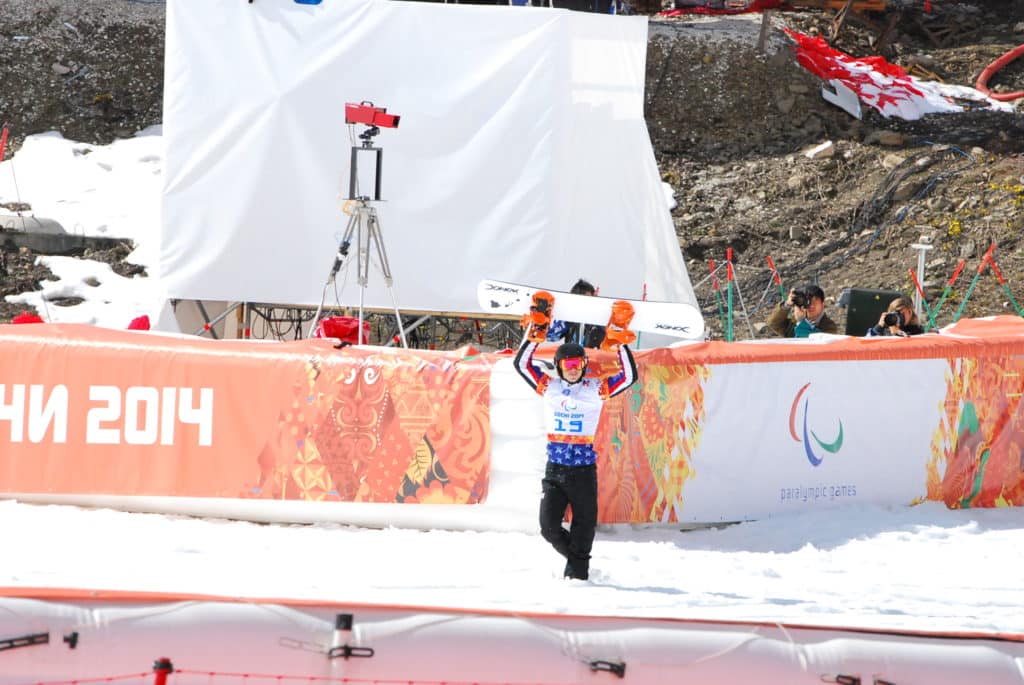
A Paralympic athlete celebrates at a snow-covered competition venue during the Sochi 2014 Winter Paralympic Games. Photo: Tonya Fitzpatrick
A Different Side of Russia
Sochi surprised me. We traveled there to cover the Paralympics, but I also discovered a Russian resort city with an interesting history, beautiful surroundings and a future that would be shaped in part by the Games.
Our experiences reminded us that there is often much more to a destination than the headlines suggest.
We came home with stories of remarkable athletes, memorable encounters and a different perspective on Russia.
And I’m glad we had the opportunity to experience that side of Sochi for ourselves.
Book Your Hotel in Sochi, Russia
Use the interactive map below to search, compare and book hotels & rentals at the best prices that are sourced from a variety of platforms including Booking.com, Hotels.com, Expedia, and more. You can move the map to search for accommodations in other areas.
Join the community!
Join our community to receive special updates (we keep your private info locked.)
