

Inside the World’s Largest Open-Air Laundry in Mumbai
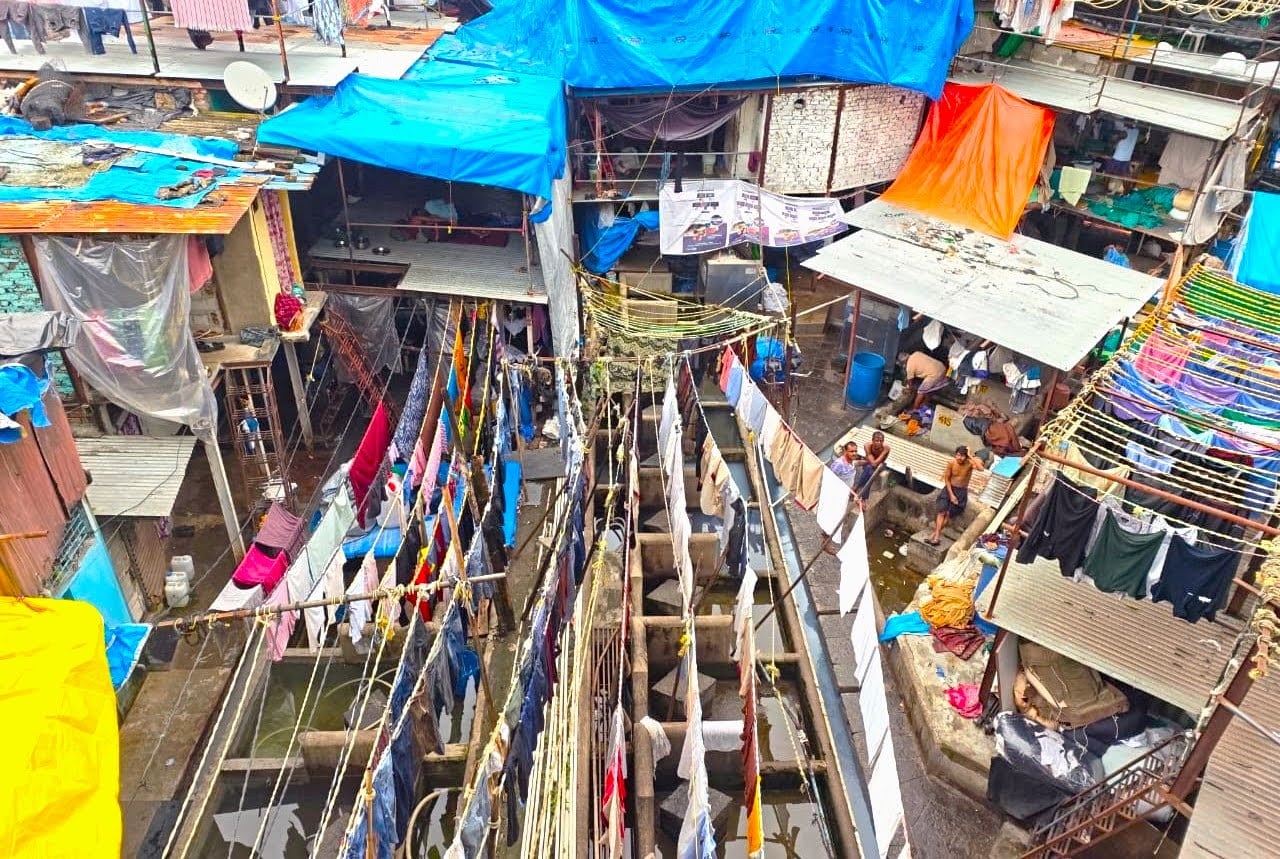
The view from the top of Mahalaxmi Dhobi Ghat. Photo: Mohammad Sadique
Posted October 17, 2026
Mahalaxmi Station in Mumbai has always been a hubbub of horns, the metallic screech of trains on the rails, and the buzz of commuters and announcements crackling over the speakers. But outside the station, one sound cuts through the noise, and it doesn’t belong to the railway station. Tangled in the chaotic morning rush, it sounds like the rhythmic whack of wet fabric against the hard concrete, sometimes muffled, sometimes intense.
A 100% Human-Powered Laundry Complex
The sound leads you to Mahalaxmi Dhobi Ghat, a human-powered open-air laundry complex next to the railway station. Inside, wash pens barely eight by four feet tessellate across the yard in an interlocking rectangular grid. Each pen is a trough of soapy water.
Just looking at the size of the entire complex, it is not hard to imagine Mahalaxmi is the largest open-air laundry in the world.
In a pen, a young man bends over the stone slab, his soaked denim shorts matted against his thighs. He scrubs, wrings, and rhythmically beats what looks like a bedsheet on the concrete.
“One of the most recognizable sounds at Dhobi Ghat is the repeated slapping of wet clothes against the concrete stones.”
Mohammad Sadique, the founder and tour guide of Inside Mumbai Tours, imitates the washer swinging a piece of cloth in a circular motion. Mahalaxmi is a regular stop on his tours.
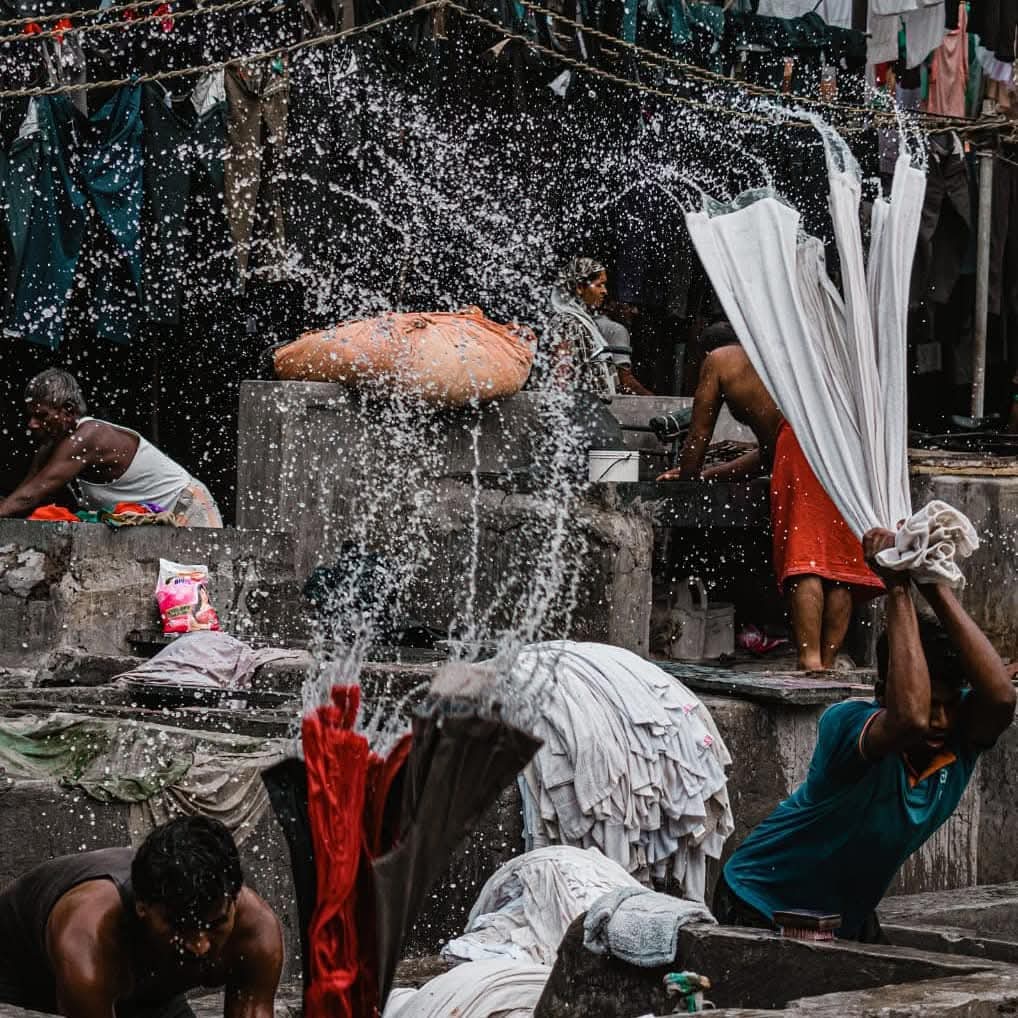
Water flies in all directions as workers beat wet laundry against the stone. Photo: Mohammad Sadique
Built in the Late 19th Century
“’Dhobi refers to a traditional laundry guy. Ghat means a place near the water or with water access,” Mohammad explains. “In other words, it is an outdoor facility built specifically for professional washermen.”
Mahalaxmi Dhobi Ghat was founded in the late 1800s during British colonial rule. Historical records say a group of about 50 Dhobis started it.
By the late 19th century, Bombay (the former name of Mumbai) was becoming a major port, industrial center, and commercial city. The population was booming, and so was the demand for laundry from households, businesses, hotels, and hospitals. That was an era before laundromats and modern washing machines. Everything required grit and muscle.
Endless Loop of Hard Labor
“As early as dawn, Dhobi families and workers are already out picking up laundry from customers around Mumbai,” Mohammad notes. “Before the washing begins, large volumes of garments must be sorted and logged. We are talking hundreds, even thousands of them!”
Sorting may look less dramatic than washing, but it is one of the most important steps in the operation. After all, it is how every garment eventually finds its way back to the right customers.
“But workers have been doing this long enough to develop a sharp eye for making sure every piece gets sorted right.” He points to his eyes and smiles.
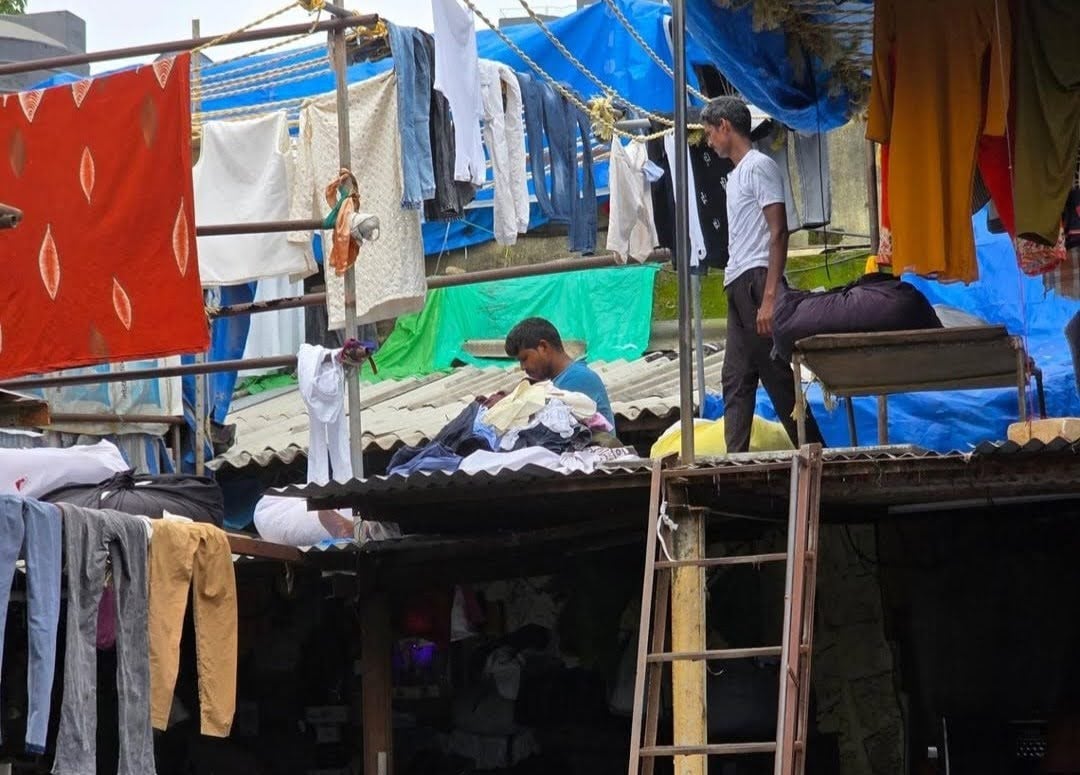
Two workers pull laundry off the clotheslines on a rooftop. Photo: Mohammad Sadique
Grit, Muscle, and Soapy Water
Then, the washing begins.
The laundry is soaked to loosen sweat, grime, and stubborn stains. Then detergent and other cleaners are added based on the fabric material. Next comes one of the iconic scenes of Dhobi Ghat. At a wash pen, workers grind through a cycle of scrubbing, wringing, and slamming—a process that sends water splattering into looping trails.
After washing, the sudsy laundry is dunked in and out of the water to rinse off the soap. Before they make their way to the clothesline, workers twist the heavy cloth into tight ropes until the last droplets drip.
“Wet loads can get really heavy. It takes hours of non-stop work, lifting, wringing out, and hauling them from stage to stage,” Mohammad says. “Traditionally, much of the twisting, squeezing, and wringing was done by hand. Today, depending on business, modern machinery can do much of the job.”
A Quilt of Color in the Sun
Then comes the drying when Dhobi Ghat transforms into something Mohammad describes as spectacular. All the garments and linens are strung along clotheslines that crisscross the yard in an array of colors.
“That was when the Dhobi Ghat takes on a whole new character!” He says, snapping his fingers as if the scene changes just like that, in an instant. “From above, it looks like a giant patchwork quilt of color.”
Before delivering back to the customers, the laundry is ironed and folded.
“Charcoal irons are traditionally used, but today they are also using electric irons,” Mohammad explains.
The pulse at Dhobi Ghat never stops. Just as one batch of laundry carts back the customers, another comes in. The concrete pens, almost dried off under the intense Mumbai sun, are wet again, and the laborious cycle starts all over again.
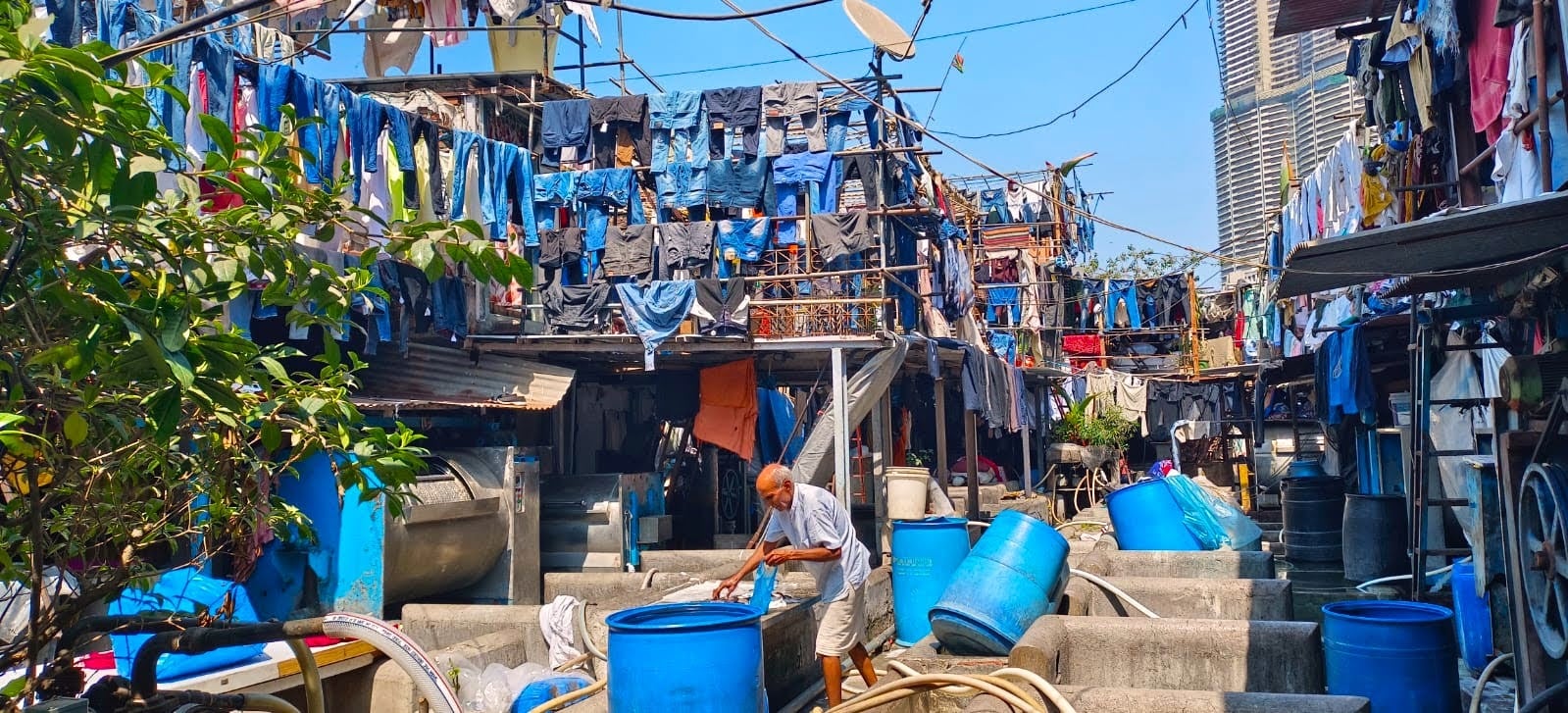
A sea of blue jeans hangs from the clotheslines. Photo: Mohammad Sadique
A Massive Human Network
Nowadays, this living heritage attracts tourists in search of an authentic slice of everyday Mumbai life. Whenever Mohammad brings visitors to Mahalaxmi, the thing that surprises people most is the scale of the complex.
“The thing that blows people away is just how massive this place is. Mahalaxmi isn’t just Dhobis doing a load of laundry. It is a huge and very organized laundry network!”
“For me, the most interesting part is the people behind the laundry. For many families, they have been doing this for generations. The way they sort, wash, dry, iron, and pack everything up is a hard-earned skill and their actual livelihood, not just a show put up for tourists.” he continues.
What looks traditional from the outside is a high-efficiency business network. Over 100,000 pieces of clothing and linen pass through here every single day, bringing in about $12 million a year.
Dhobi Ghat Beats Modern Tech
People are always curious how Dhobi Ghat continues to survive despite the presence of self-service laundromats and automated laundry technologies everywhere. But Mohammad doesn’t worry at all.
“Look, modern technology isn’t necessarily replacing the traditional way of work. Dhobi Ghat has what a self‑service laundromat doesn’t: An enormous and very well-established human network, multi-generations of hands-on skill, big commercial clients, and the muscle and sweat to churn out crazy amounts of laundry every single day!”
Click Here for Discounted Accommodations in Mumbai
Join the community!
Join our community to receive special updates (we keep your private info locked.)

