

Olkhon Island: Sacred Buryat Homeland
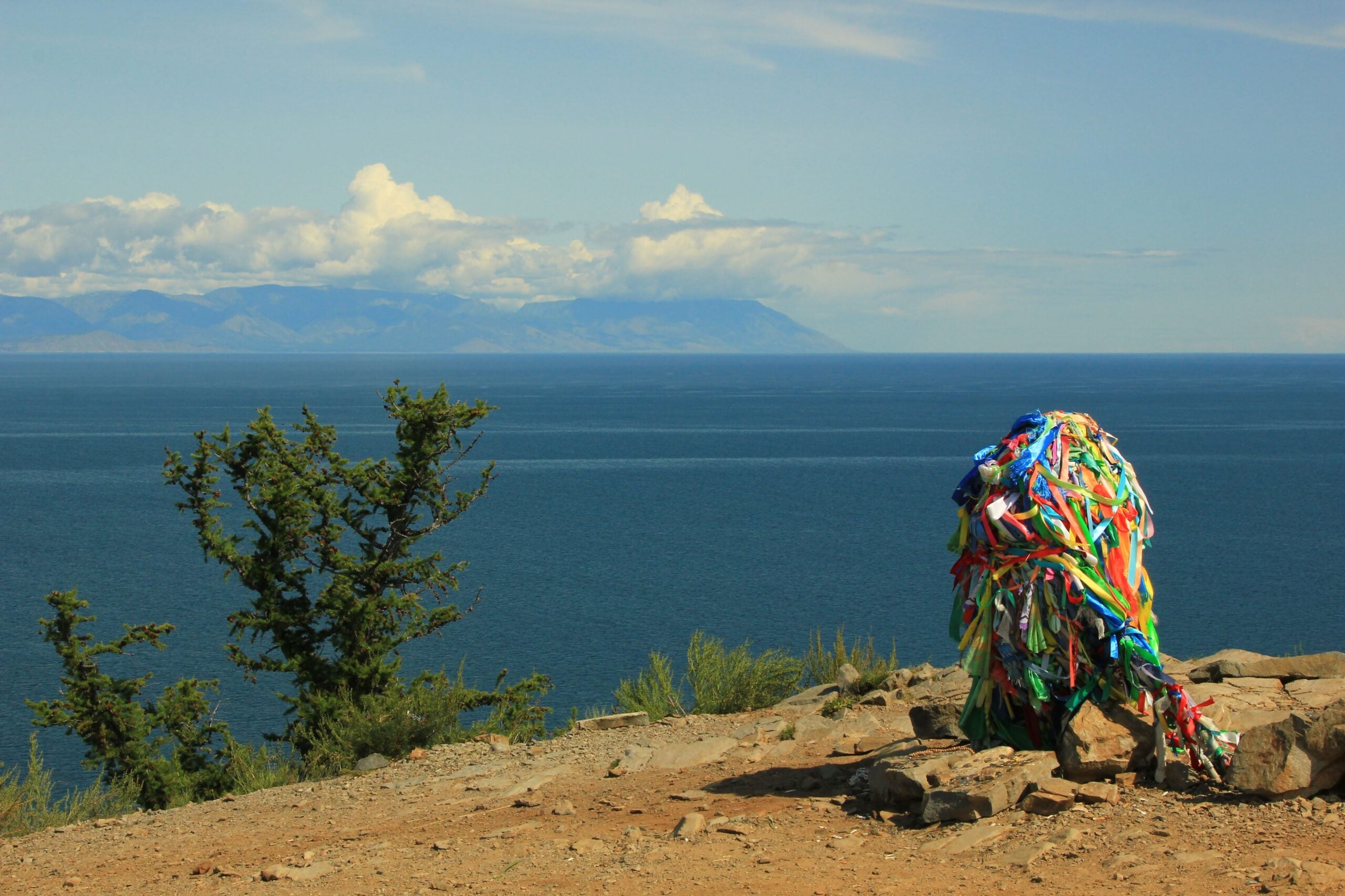
Olkhon Island is deeply tied to Buryat shamanic traditions. Photo Baikal Majestic Tours
Posted July 7, 2026
In Lake Baikal in southern Siberia, Olkhon Island dwarfs the other rocky islets with its elongated spine. From the map, it looks like a small, narrow peninsula extends off the mainland. At Cape Khoboy on the northern tip of Olkhon. Maxim Oksyutik stands atop a rock. Before him, an endless ripple of water opens up in an indefinite spectacle.
Maxim is an Irkutsk-born tour guide of Baikal Majestic Tours. Cape Khoboy has been his favorite since he first set foot on the island in 2009.
Nature-sculpted rocks fringe the cape. Among them, one stands out like a woman’s silhouette. The Buryats, the indigenous people of Olkhon Island, call the rock “The Maiden”. Legend has it that she is the daughter of the master of Baikal, frozen in stone, waiting for her father to return.
Buryats and Shamanism
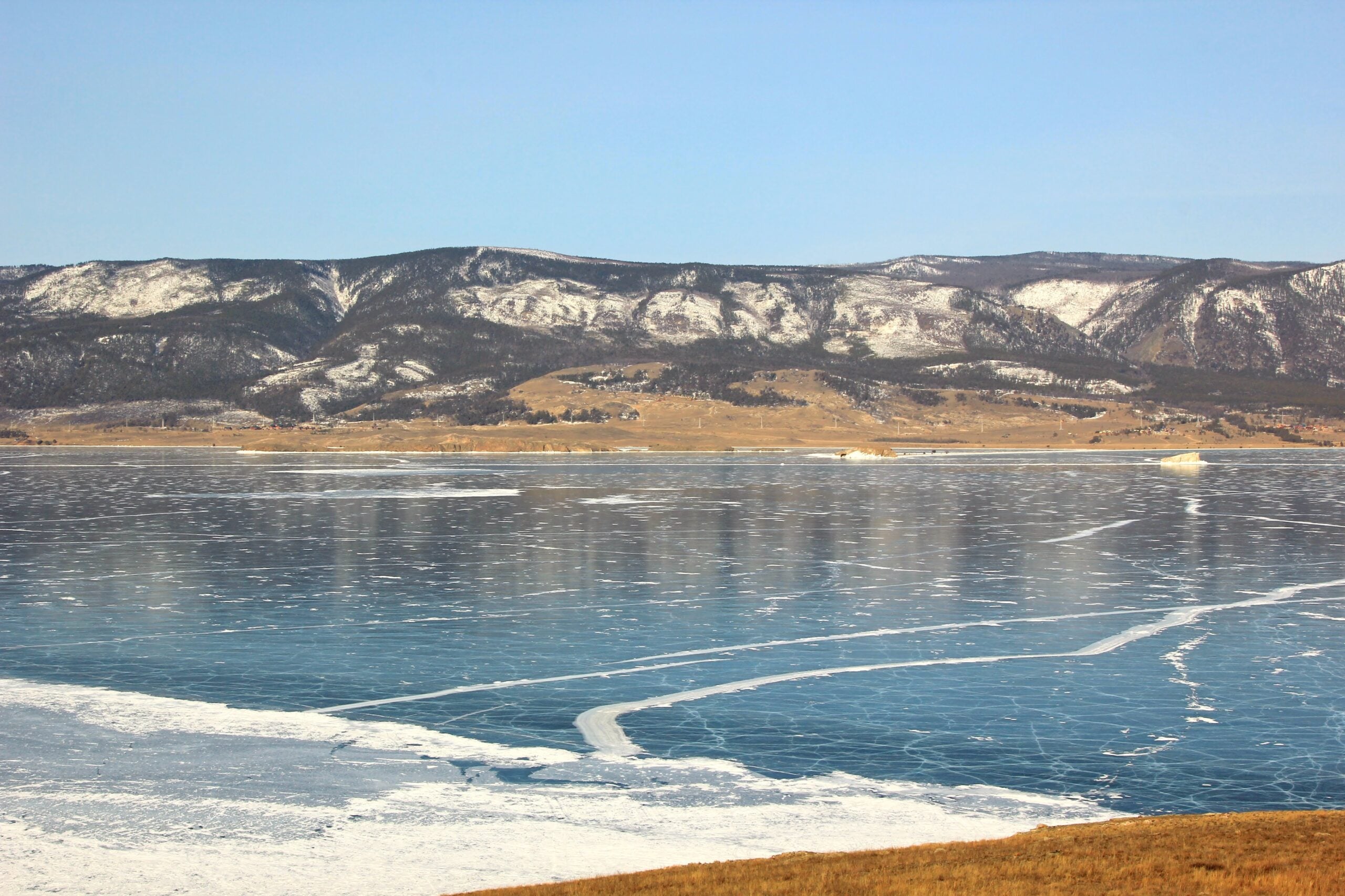
View from the island to the mainland. Photo Baikal Majestic Tour
The Buryats have lived on Olkhon Island for centuries. Genealogically, they have Mongol roots and are deeply tied to shamanism. “In shamanism, they are believed to have the ability to talk to spirits of ancestors and spirits of nature — masters of mountains, wind, water, and forest. They could heal sickness, predict weather, find lost things,” Maxim explains.
The rituals usually take place in secluded caves, up on the rocks, under sacred trees and throbbing with the drum, beating in rhythm to the dancing and singing — until finally the shaman goes into a state of trance. A state the Buryats believe is when spirits enter his body.
The spirit has a name – Khan Khoto Babai. He lives on Shamanka Rock in Cape Burkhan. Back in old times, people offered him livestock sacrifices in prayers for good luck, protection, or good weather. But throughout history, shamanism hasn’t had smooth sailing.
Shamanism under Soviet Rule
“During Soviet times, shamans were persecuted and rituals were banned. In 1993, after the USSR collapsed, shamans from all over Asia gathered on Olkhon and officially declared the island a sacred land,” Maxim recounts the turn of events.
At Cape Burkhan, you will see colorful ribbons loosely spiraling around 13 wooden poles, whipping in the wind. They are “Serges”, the sacred poles. Each pole represents the son of the master spirit. Sometimes, people leave offerings like milks, sweets and coins at the poles.
“Ribbons are gifts to the spirits. But remember you can only tie ribbons at sacred places, like near to springs or on special poles. You should not tie them to a living tree — the tree will get sick and die,” Maxim warns.
Modern Shaman
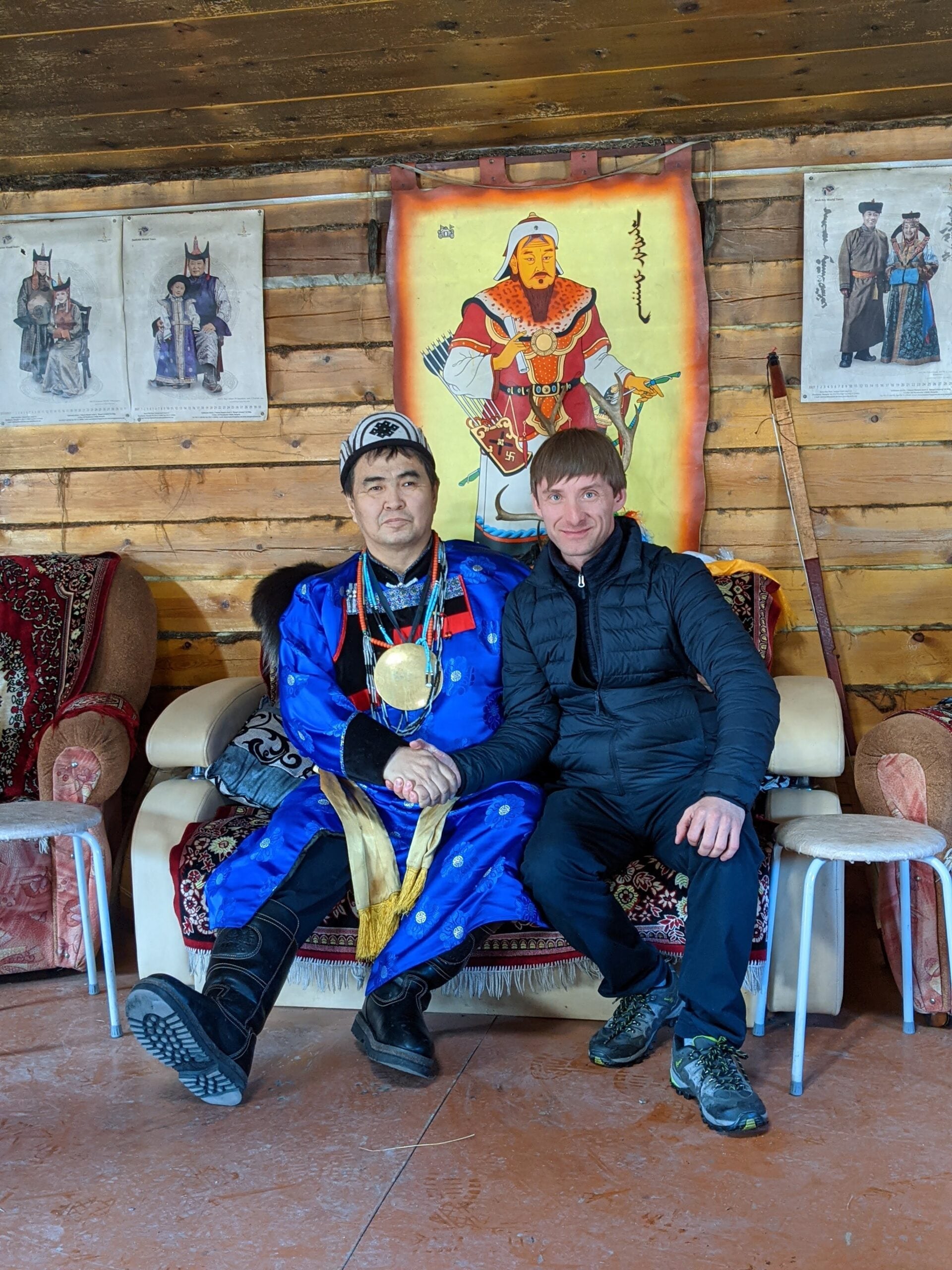
Shaman Valentin Khagdaev and Maxim Oksyutik, tour guide for Baikal Majestic Tours. Photo: Baikal Majestic Toursof
Valentin Khagdaev is a hereditary shaman, or what most people call him, a modern shaman.
His family line goes back nine generations. He was born with a split thumb on his right hand, a sacred deformity that older shamans say appears only once in a hundred years. Valentin completed graduate school, wrote a book on shamanism and world religions and worked as museum director in Yelantsy. His work in shamanism led him to speak around the world and earned him two Mongolian orders and the title of Doctor of Philosophy in Mongolia.
He has a unique wooden yurt in his yard where he performs rituals for his guests. His famous quotes include “Science and shamanism get along just fine,” and “Ancient shamans were known not for their titles, but for their wisdom and kindness to people.”
Sacred Animals and Plants
Olkhon itself is a mosaic of ecosystems. Nerpa, the Baikal seal, is a sacred animal for Buryats. In ancient belief, the nerpa is the reincarnated spirit of a drowned fisherman.
The omul is a native fish in Lake Baikal. The locals believe that if you mess with the lake, like littering or showing disrespect, the omul will leave, and fishermen will be left with nothing to catch.
Steppe wormwood is common in the steppe grasslands. Buryats use it in purification rituals.
“They burn wormwood and smoke a house or a person with it. The smoke is believed to get rid of bad energy,” Maxim says.
In May and June, Rhododendron dauricum paints the island in shades of pink. According to Maxim, the blooming rhododendron is a symbol of spring and renewal. Sometimes people put ledum twigs in the corner of the house for protection.
Stars of the Spirit World
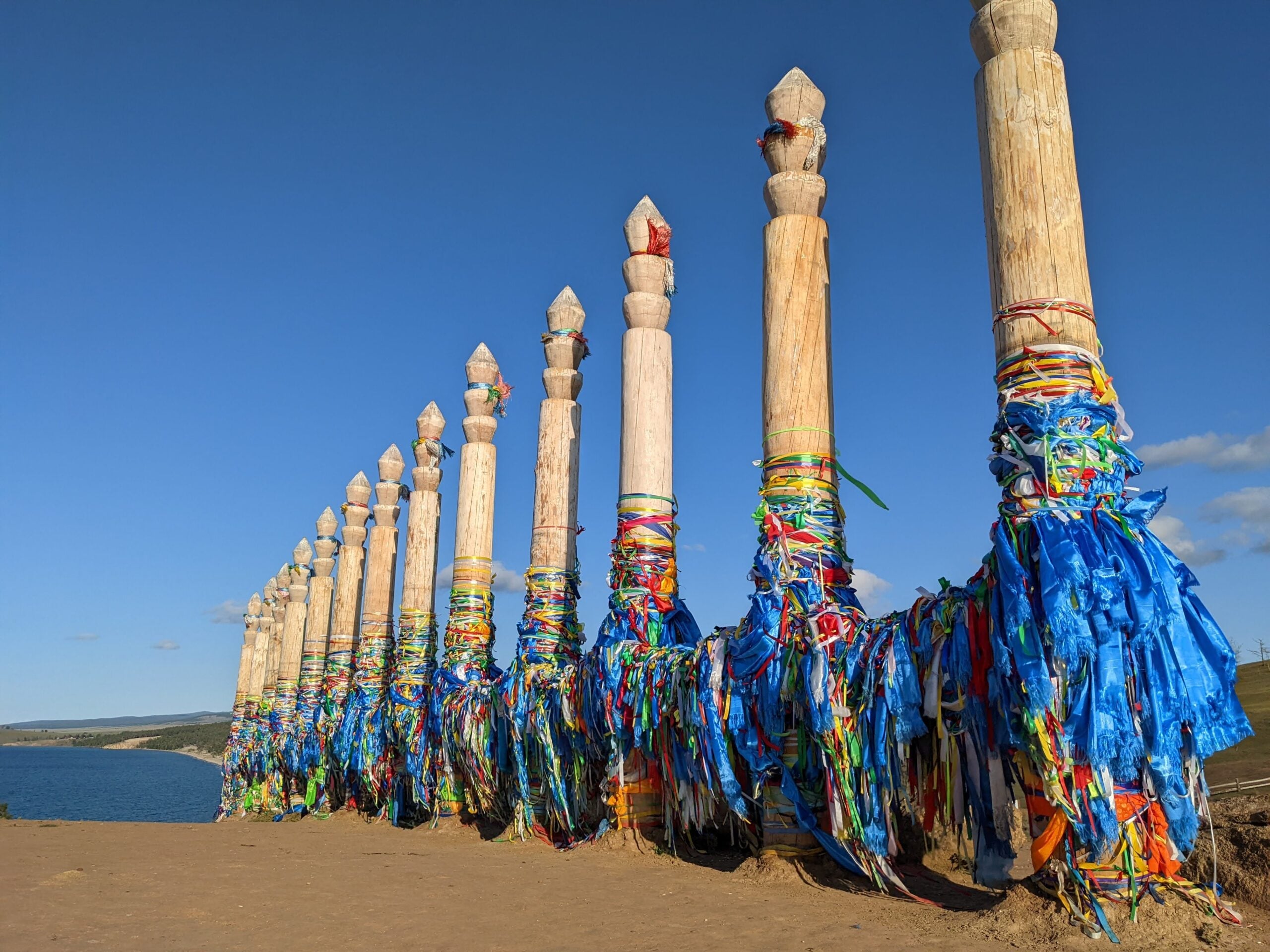
Serges are sacred poles wrapped with ribbons. Photo Baikal Majestic Tours
The night sky on Olkhon is not only something you see. It is something you feel. The absolute darkness consumes your every fiber. In Cape Khoboy, with no houses around, there is zero light pollution.
On Saraysky Beach, right by the main village of Khuzhir, you could lie down in the sand and watch the night sky turn into a celestial panorama. “We are talking about billions of stars. You will slowly get used to the darkness, and after a while, your eyes start making out even the faintest stars,” Maxim says, describing the spectacle. “And the Milky Way—it is not just a band of light. It looks like a river made of stardust.”
“Buryats believe that stars are the souls of ancestors. A bright star is the spirit of a strong shaman or a respected hunter. A falling star means a soul is reborn into the human world,” Maxim continues.
Buryats are Everyday People
Most people associate the Buryats with shamanism and rituals. But they are just like you and me, living a normal life. “In the morning, they go to work. They work in cafes or run guesthouses. Some drive tourists in UAZ vehicles, boxy Soviet‑era 4x4s,” Maxim says. “In the evening, they watch TV, play with their phones and help their kids with homework.”
Before the 90s, many of them worked at the fish factory in Khuzhir, catching and processing omul. When the factory closed in the 1990s, almost all of them went into tourism. Those who don’t work in tourism make a living through raising livestock.
Buryat Villages Across Olkhon
Most Buryats live in Khuzhir, the only big village on Olkhon, but some reside in smaller villages spread across the island.
For example, Kharantsy — about 6 kilometers from Khuzhir — is a quiet place with beautiful beaches. It even has a small airstrip for light aircraft.
Yalga, not far from Khuzhir, is a quiet village. The Buryats from Irkutsk know it by heart. It is where they come to relax.
Uzury is another of their settlements, sitting at the northernmost tip of Olkhon, almost at Cape Khoboy itself, wedged in a hollow between two rocks. It is as far north as people live. Beyond that, there is only water and wind.
Experience the Traditions
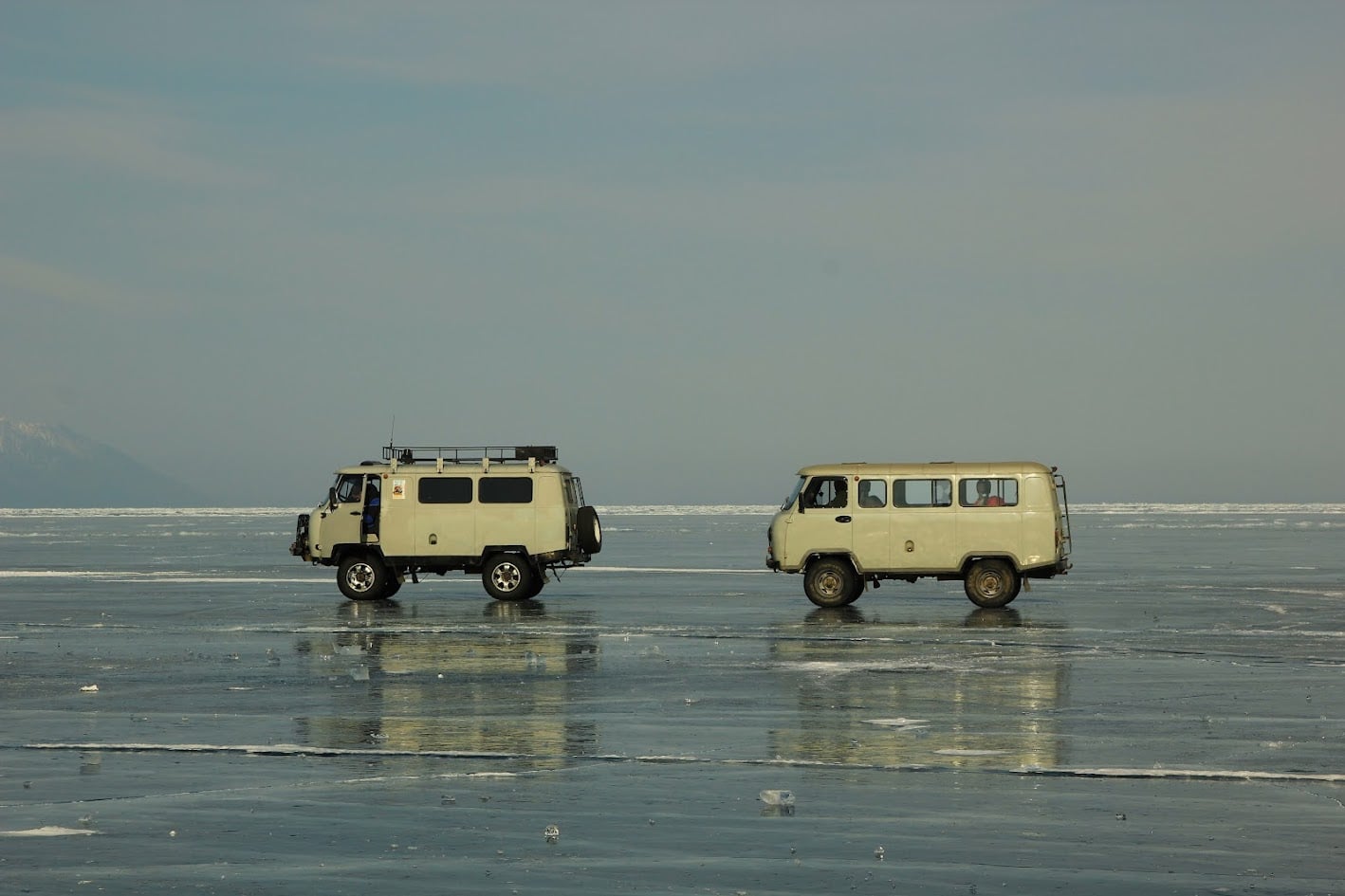
Buryats drive tourists in UAZ vans. Photo Baikal Majestic Tours
One of the questions Maxim always gets from visitors is, “Can we do this? Where can’t we go? What will happen if…?”. They are talking about taking part in Buryat rituals.
His answer has always been watch, listen, respect and everything will be fine
“You can tie the ribbons. Do it correctly and it is a beautiful tradition,” Maxim says.
Here is what you can do: Walk up to a serge, make a wish in silence. Don’t ask for money or material things. Pray for good luck and good health. Tie the ribbon with two knots. Use only natural fabric, silk or cotton. No synthetics.
Don’t turn around or look back after you leave. Walk away calmly, knowing you have done everything right.
Click the map below for discounted accommodations around the world!
Join the community!
Join our community to receive special updates (we keep your private info locked.)

