

Remembering 9/11: Memorials That Preserve Its Stories

The 9/11 Memorial reflecting pools mark the footprints of the former Twin Towers at the World Trade Center site in Lower Manhattan.
Posted September 8, 2026
I’ll never forget the bright blue skies in the images from the morning of September 11, 2001. At 8:46 a.m., American Airlines Flight 11 struck the World Trade Center’s North Tower. The blue sky remained as United Airlines Flight 175 struck the South Tower at 9:03 a.m. By then, we knew—this was no accident.
News reports flooded the airwaves. At 9:37 a.m., American Airlines Flight 77 struck the Pentagon outside Washington, D.C. Then came news that a fourth plane, United Airlines Flight 93, had crashed into a field in rural Pennsylvania after passengers and crew fought back against the hijackers. Nearly 3,000 people were killed that morning. Under those same blue skies, people around the world watched in horror and disbelief.
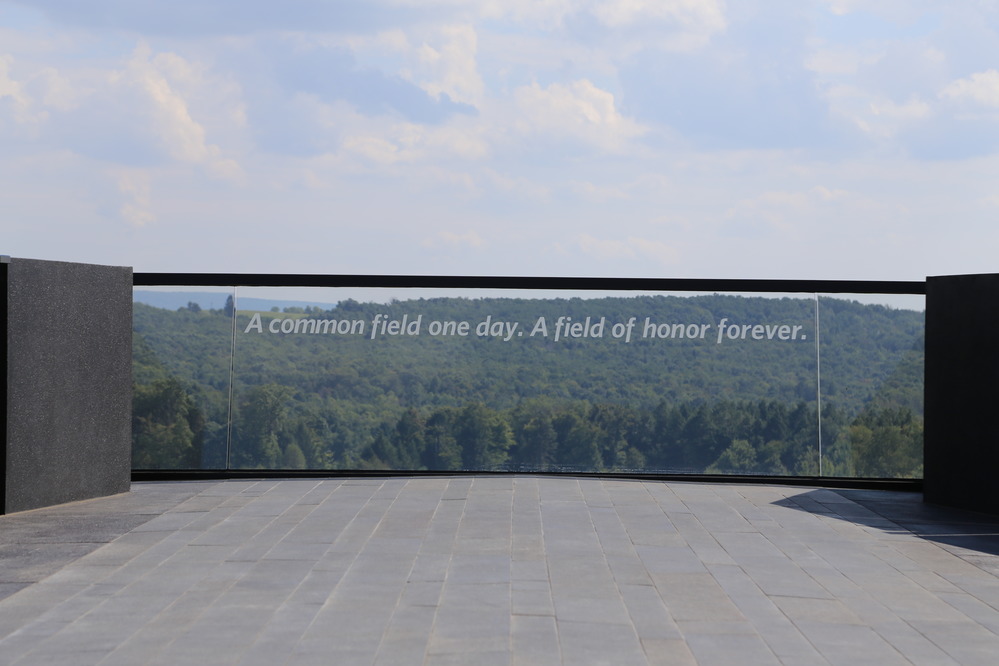
The Flight 93 National Memorial overlooks the Pennsylvania field where United Airlines Flight 93 crashed on September 11, 2001. The inscription reads, “A common field one day. A field of honor forever.” Photo: NPS/Public Domain
9/11 Memories Remain
New York City wasn’t my home in 2001. At the time, I lived in Orlando and watched these events unfold on my desktop computer after a friend called and said, “Log in to CNN, a plane crashed into the World Trade Center.” It was the same friend that had traveled with me to New York the previous summer. We considered going to the top of the World Trade Center while there but decided to save it for another day. That day never came.
I moved to New York seven years after the attacks. Over the years, my New York friends shared their memories of that fateful day. I met my husband in the city a few years later. As a train operator for the New York City subway system, the sights, sounds and smells of that day—and the months and years that followed—are permanently etched in his memory.
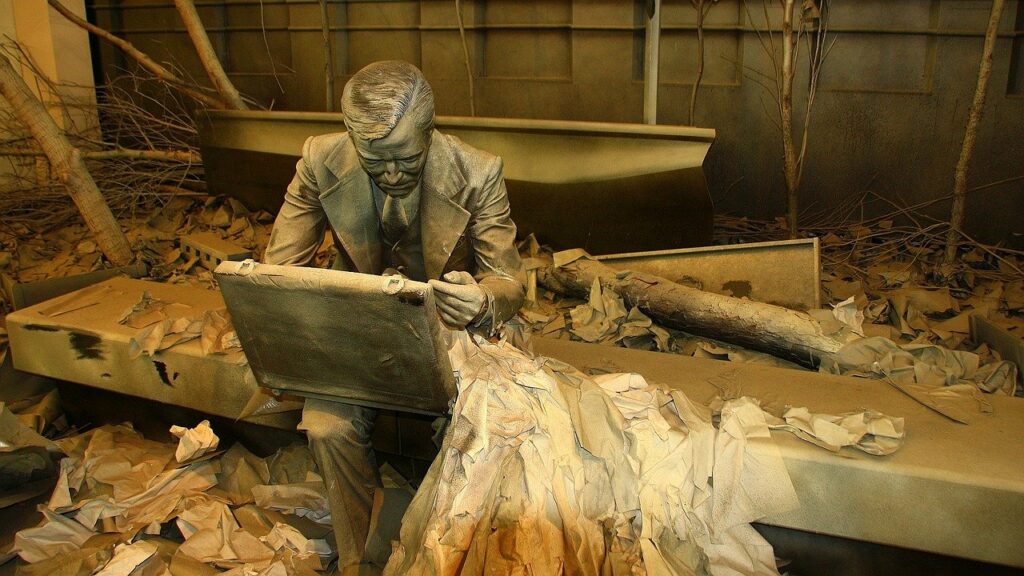
An exhibit inside the 9/11 Memorial Museum helps convey the human impact and devastation of September 11, 2001. Photo: Pixabay
None of us will ever forget. We won’t forget the scenes of massive buildings collapsing into piles of rubble, of smoke billowing through the streets of lower Manhattan and of thousands of missing person flyers displayed by desperate loved ones. We won’t forget the gaping hole in the side of the Pentagon. And we’ll never forget the words “Let’s roll,” forever associated with Flight 93 passenger Todd Beamer and the passengers’ decision to fight back.
These memories are preserved at three of the country’s most important September 11th memorial sites. Each offers a different perspective on the events that unfolded beneath that bright blue sky.
Flight 93 National Memorial
Passengers and crew members fought back against the hijackers aboard United Flight 93, preventing the aircraft from reaching Washington, D.C. The U.S. Capitol is believed to have been the hijackers’ intended target. The plane crashed into a field in Somerset County, Pennsylvania. Everyone on board perished. Today the heroic efforts of those brave souls are documented and honored at the Flight 93 National Memorial.
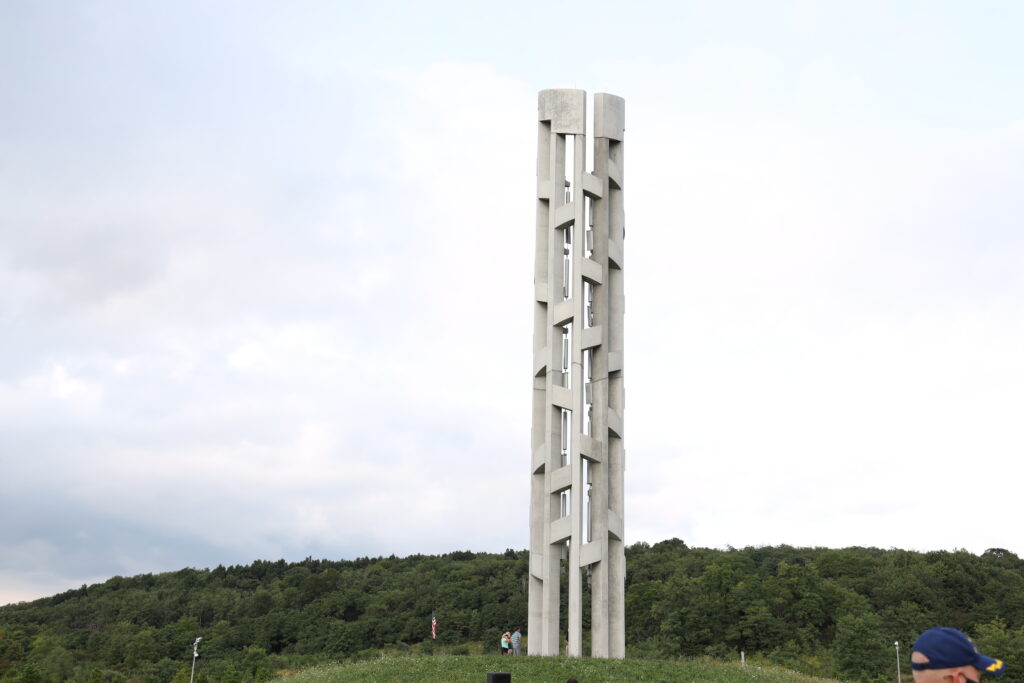
The 93-foot Tower of Voices contains 40 wind chimes representing the passengers and crew members of United Flight 93. Credit: NPS Photo/C. Claycomb
Near the entrance, a landmark Tower of Voices stands 93-feet high and holds 40 wind-activated chimes—a visual and audible living memorial to the 40 crew members and passengers. An angular walkway marking the aircraft’s flight path leads to a glass railing overlooking the aircraft debris field below. Only family members are permitted beyond the gated area to the point of impact. There, a white marble Wall of Names stands near a large boulder marking the crash site.
Inside the Visitor Center, artifacts tell the story of that fateful morning. The reality of the intensity of those final moments before the crash comes to life at the wall of phones. Here visitors can listen to messages left by the passengers and crew members for their loved ones on answering machines. I will never forget the voice of flight attendant CeeCee Lyles as she calmly delivered an emotional farewell to her husband.
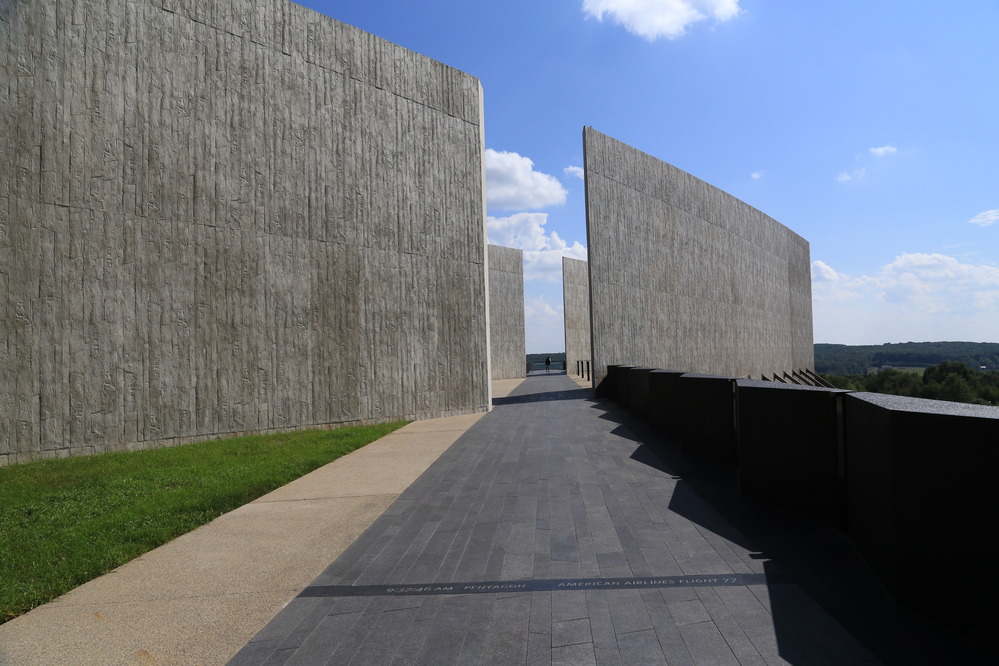
The Flight Path Walkway leads visitors through the Flight 93 National Memorial toward an overlook of the crash site. Photo: NPS/Public Domain
The Pentagon Memorial
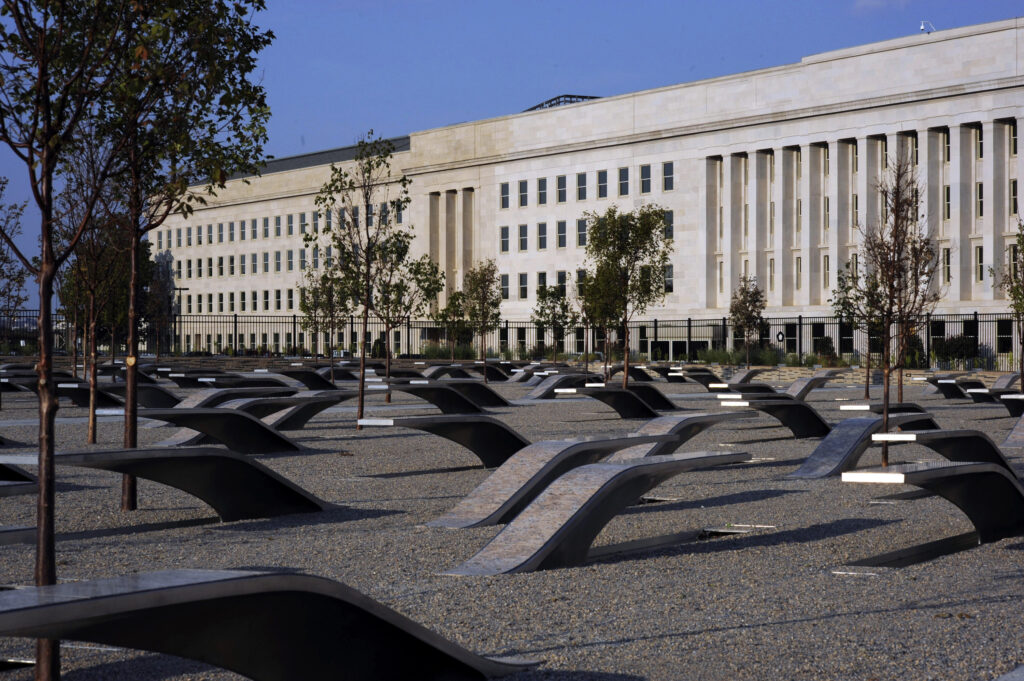
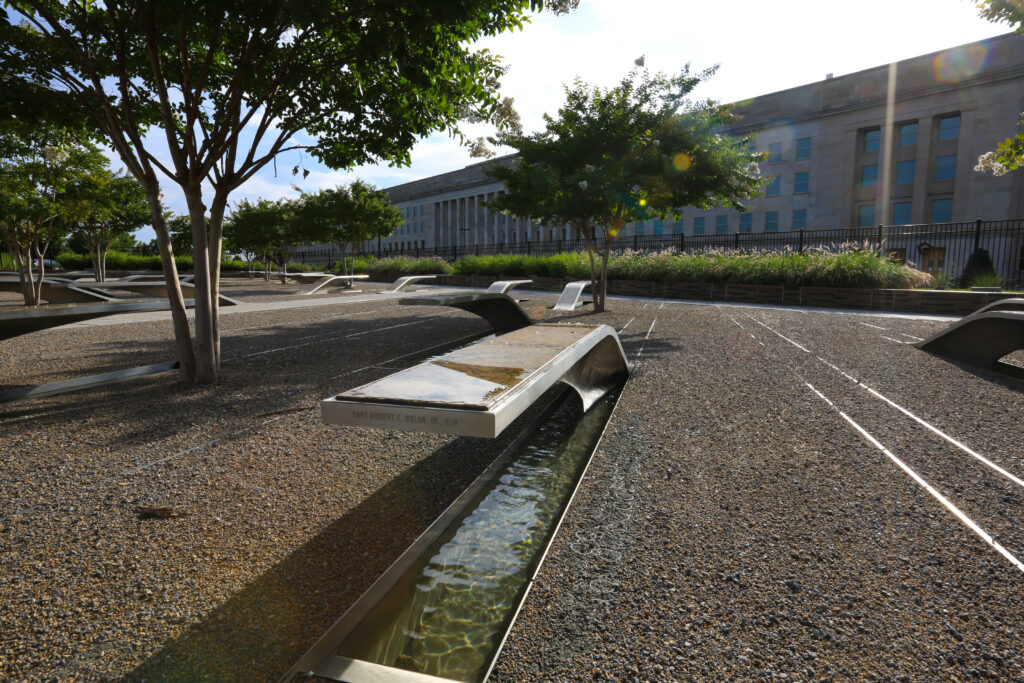
An aircraft struck the Pentagon at 9:37 a.m. killing 184 people. Situated on two acres outside the Pentagon where the tragedy occurred, the Pentagon Memorial features 184 memorial benches dedicated to each of the victims. The cantilevered benches engraved with each victim’s name feature lighted pools of flowing water. The organization of the benches chronicles the ages of the victims from 3-year-old Dana Falkenberg to 71-year-old John Yamnicky.
Memorial units for the 59 victims aboard Flight 77 face the sky, while those honoring the 125 people killed inside the Pentagon face the building. The moving display plays out again on the Age Wall, which increases in height to represent the victims’ ages from 3 to 71 inches. Maple tree clusters and ornamental grasses create a park-like environment. Audio tour guides are available to provide additional information.
-

The Pentagon Memorial’s 184 memorial units honor those killed inside the Pentagon and aboard American Airlines Flight 77 on September 11, 2001. Photo: U.S. Navy/Mass Communication Specialist 1st Class Brien Aho
-

Each cantilevered memorial unit at the Pentagon Memorial honors one of the 184 people killed at the Pentagon and aboard Flight 77. Photo courtesy of Stay Arlington
9/11 Memorial and Museum
Twisted beams of steel from the collapsed towers, an FDNY fire truck damaged in the attacks, the Survivors’ Stairs and thousands of deeply personal objects are among the artifacts preserved by the 9/11 Memorial Museum in New York. Personal stories from victims’ families, survivors and responders remind us that each person had a life, a family and plans for an ordinary September morning.
Is it sad? Yes, of course. But story after story of first responders, volunteers and the amazing dogs responsible for search and rescue reminds us of the heroes from this tragic event. The museum honors the fallen and those who tried to save them with dignity and grace.
Outside the 9/11 Memorial reflecting pools mark the footprints of the North and South Towers. Descending 30 feet into a square basin, the pools contain the largest manmade waterfalls in North America. From the basin, the water drops another 20 feet disappearing into a central void. Architect Michael Arad’s design represents “absence made visible” as the pools represent voids that will never be filled. The names of the 2,983 people killed in the September 11 attacks and the 1993 World Trade Center bombing are inscribed on bronze parapets surrounding the pools.
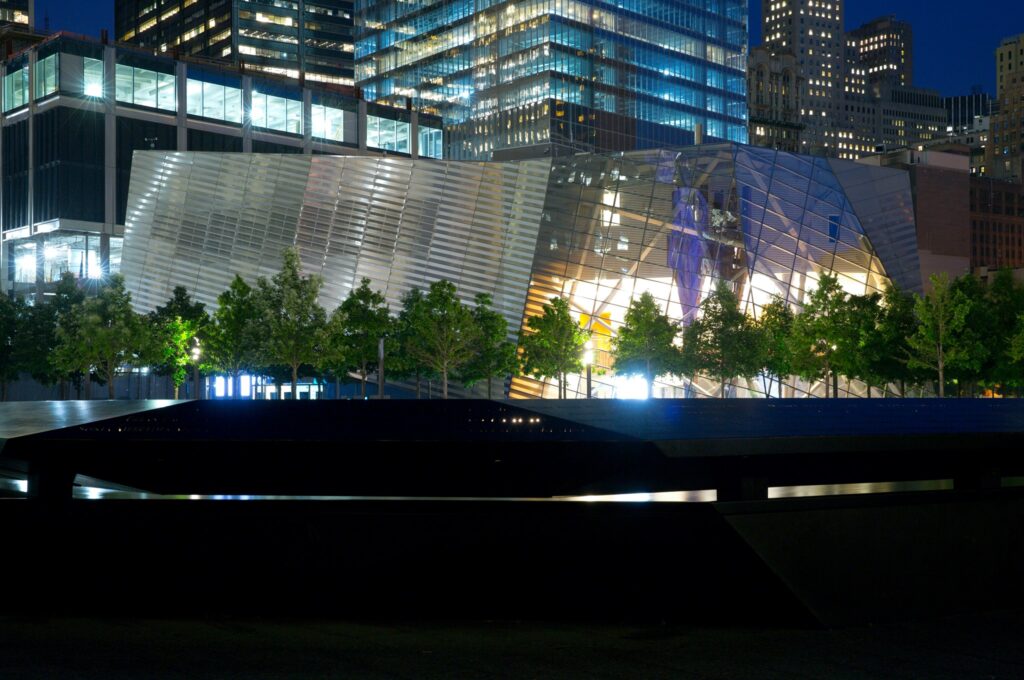
The 9/11 Memorial Museum at the World Trade Center site preserves artifacts, personal histories and accounts of the September 11 attacks. Photo: 9/11 Memorial & Museum/Facebook
Heroes Live Among Us
The terrorist attacks of September 11th brought us much sorrow, but it also illuminated the many heroes that live among us. First responders risked everything to save lives that day and in search and rescue efforts in the weeks that followed.
Strangers from around the world volunteered resources and time to do whatever possible to help those directly impacted by these horrific events. There was a sense of unity throughout the country—unity born from desperation.
Each year, as September 11 returns, so does the responsibility to remember those who were lost, honor those who responded and preserve the individual stories behind a day that changed history.

A remembrance of those who lost their lives on September 11, 2001, and those whose lives were forever changed.
Book Your Stay in New York
Search, compare and book hotels & rentals at the best prices that are sourced from a variety of platforms including Booking.com, Hotels.com, Expedia, and more. You can move the map to search for accommodations in other areas and also use the filter to find points of interest!
Join the community!

Join our community to receive special updates (we keep your private info locked.)