

Walking in the Footsteps of Elizabeth I

The gardens at Hatfield House surround the estate’s surviving Old Palace, where Elizabeth I spent part of her childhood.
Posted September 26, 2026
Prior to moving to England, I, like many Americans, held a strong fascination with Britain’s royal family, past and present. When I settled into my new life in London, I embarked on a journey to learn more about one of its most memorable monarchs—Elizabeth I. Living there allowed me to visit places tied to her life rather than simply read about them.
More than 400 years after her death, Elizabeth remains one of England’s most recognizable rulers. She was the daughter of the boisterous Henry VIII and his ill-fated second wife, Anne Boleyn. Her mother died on the scaffold before Elizabeth turned three, and the uncertainty that followed taught her early that royal blood offered no guarantee of safety.
Elizabeth was not the first woman to rule England in her own right, as the original article stated. Her half-sister, Mary I, became England’s first queen regnant. Elizabeth followed her as the second and became the last Tudor monarch.
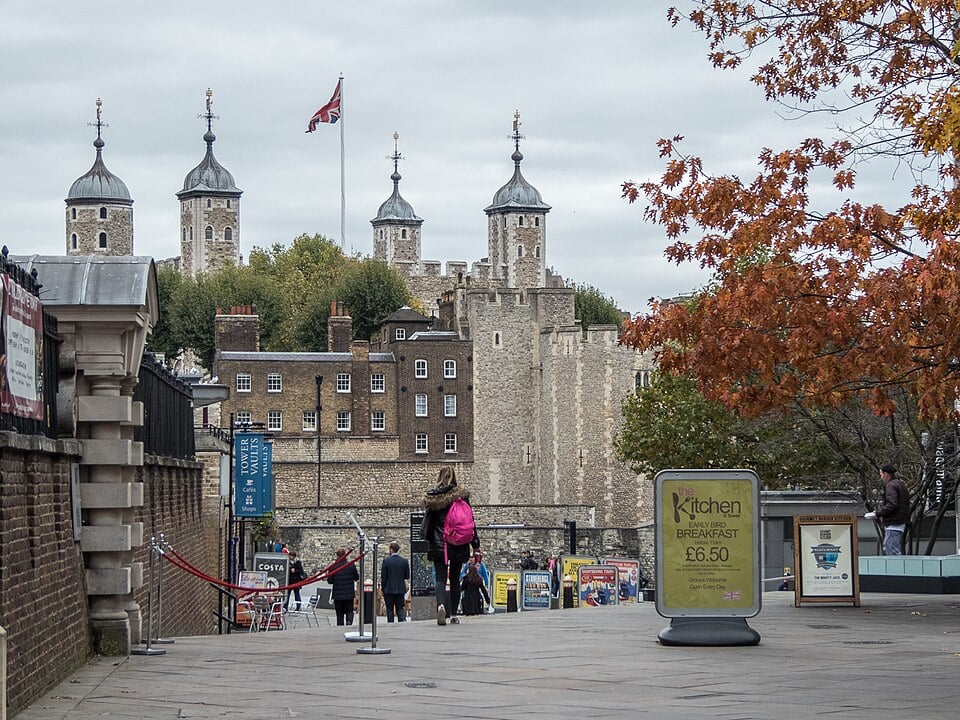
The White Tower rises above the Tower of London, where the future Elizabeth I was imprisoned in 1554. Photo: Christine Matthews/Geograph Britain and Ireland via Wikimedia Commons, licensed under CC BY-SA 2.0.
The Tower of London and Westminster Abbey are natural places to begin following her story. Mary’s government held Elizabeth at the Tower in 1554 on suspicion that she was involved in a rebellion against the queen. Five years later, Elizabeth returned under happier circumstances to prepare for her coronation procession. Westminster Abbey, where she received the crown in 1559 and where she was buried in 1603, marks both the beginning and end of her reign.
Those two London landmarks tell the most dramatic parts of Elizabeth’s public story. Hatfield, Kenilworth and Bath reveal different sides of her life.
Hatfield House and the Old Palace
To understand Elizabeth before she became queen, begin at Hatfield in Hertfordshire.
The name Hatfield House can cause some confusion. The grand Jacobean mansion visitors see today did not exist during Elizabeth’s lifetime. Robert Cecil completed it in 1611, eight years after her death. Elizabeth’s story belongs mainly to the surviving Old Palace beside it.
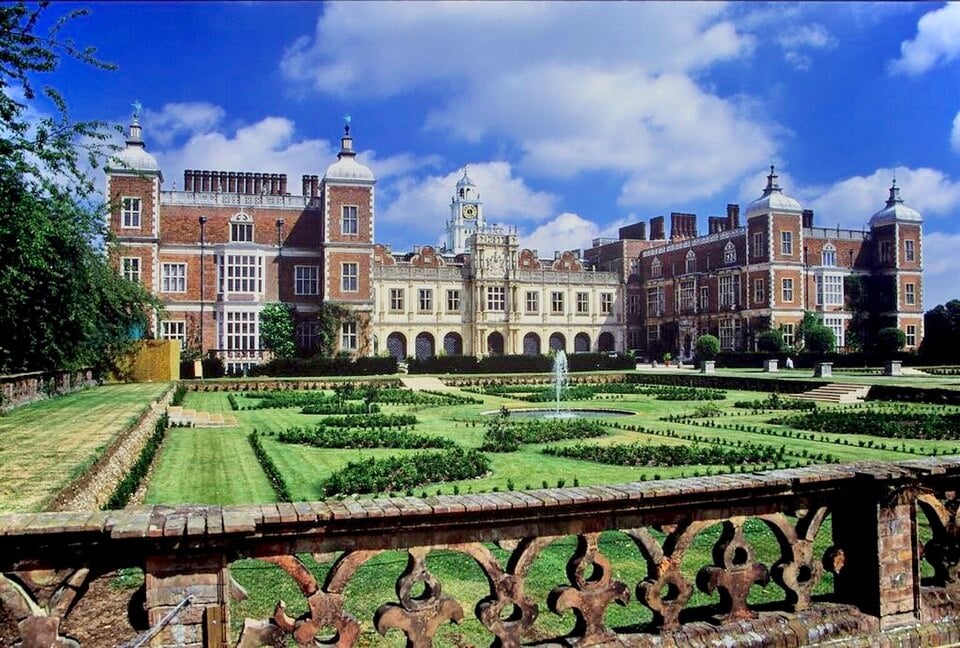
The present Hatfield House overlooks its formal gardens. Completed in 1611, it stands beside the surviving Old Palace associated with Elizabeth I.
A Childhood Shaped by Uncertainty
John Morton, Bishop of Ely, built the Old Palace around 1485. Henry VIII acquired it in 1538 and used it as a home for his three children: Mary, Elizabeth and Edward.
During those turbulent years, Henry had a difficult time deciding which children he considered legitimate and, at times, which wife he was married to. At Hatfield, Elizabeth shared in her younger brother Edward’s education. Those lessons later helped prepare her to govern a court and country divided by politics and religion.
Hatfield was not always a comfortable refuge. When Mary became queen in 1553, she viewed her Protestant half-sister with suspicion. Mary’s opponents could rally around Elizabeth whether Elizabeth encouraged them or not. As a result, Mary kept her under effective house arrest at Hatfield.
From an Oak Tree to the Throne
According to Hatfield’s history, Elizabeth sat beneath an oak tree in the park in November 1558 when news arrived that Mary had died. Elizabeth was now queen.
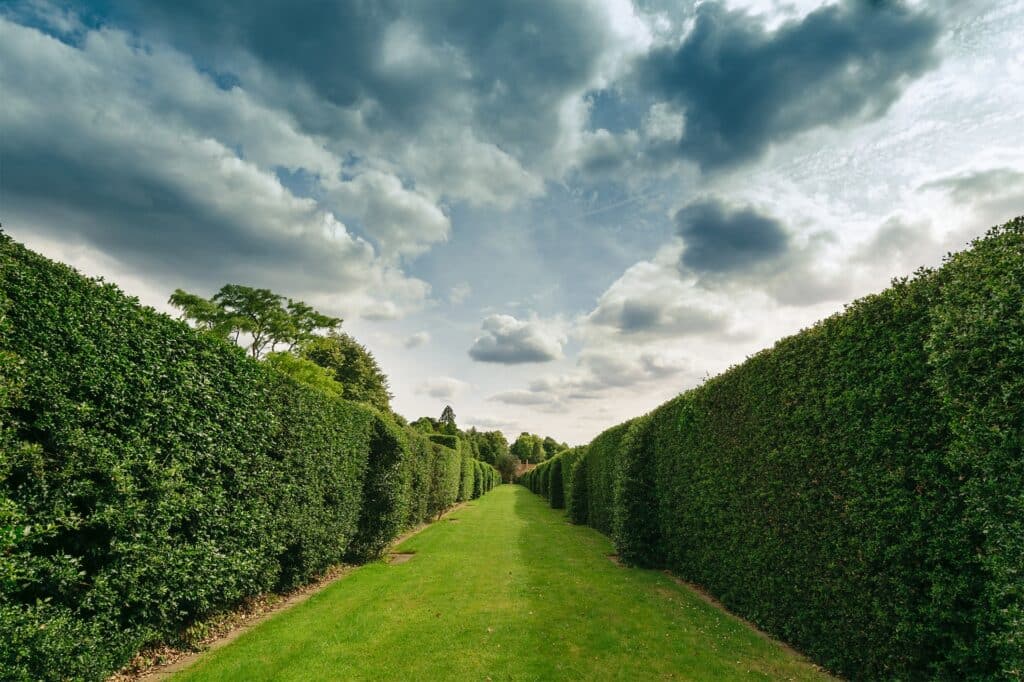
Hatfield Park’s gardens have evolved over centuries. An oak in the park marks the traditional site where Elizabeth learned she had become queen.
It is easy to picture the scene, even though no one can know exactly what she thought in that moment. The sister who had kept her under watch was gone, and Elizabeth suddenly carried responsibility for the country.
She soon called her trusted advisers together for her first Council of State in the Old Palace’s Banqueting Hall. After James I exchanged Hatfield for Robert Cecil’s estate at Theobalds in 1607, Cecil demolished three-quarters of the palace. One wing, including the Banqueting Hall, survives.
The gardens have changed over the centuries, so visitors are not walking through an untouched Tudor landscape. Still, the Old Palace and its Tudor-inspired knot garden offer a connection to Elizabeth before the elaborate gowns, royal progresses and carefully managed image of the “Virgin Queen.”
Kenilworth Castle and Robert Dudley
If Hatfield introduces Elizabeth before the crown, Kenilworth Castle offers a glimpse into one of the most discussed relationships of her reign.
The castle began as a Norman stronghold in the 1120s. By Elizabeth’s time, it belonged to Robert Dudley, her childhood friend, longtime favorite and the man many expected her to marry.
A Visit Designed to Impress
Elizabeth granted Kenilworth to Dudley in 1563 and made him Earl of Leicester the following year. He spent heavily to turn parts of the medieval fortress into a palace suitable for the queen and her traveling court.
Elizabeth visited Kenilworth four times. Her stay in 1575 became the most famous because she remained for 19 days, longer than she stayed with any other courtier. Dudley filled the visit with hunting, music, banquets, fireworks and theatrical performances. He was clearly trying to impress her and hoped to win her hand in marriage.
It did not work.
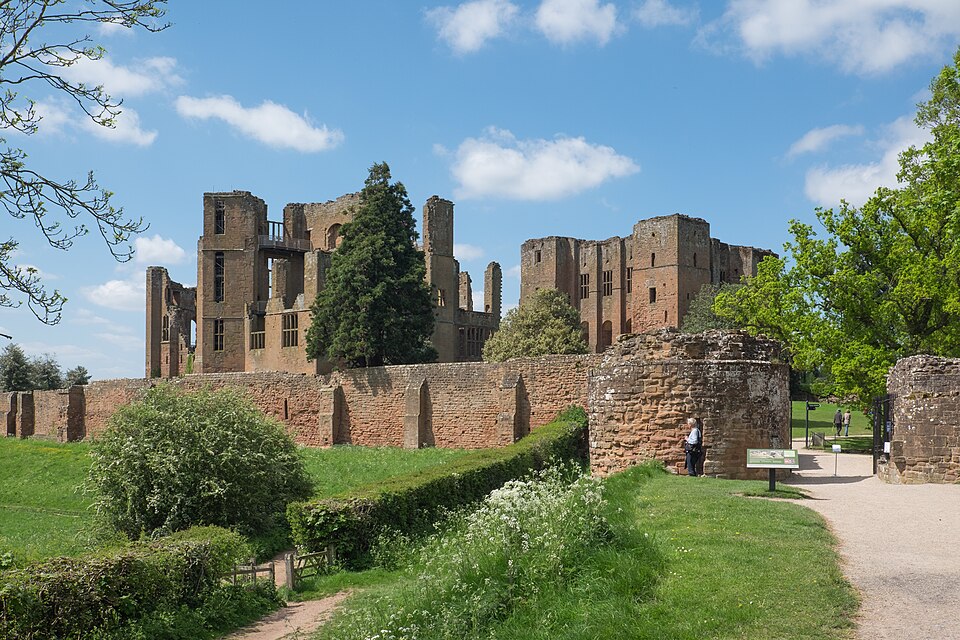
Robert Dudley transformed Kenilworth Castle for Elizabeth I, who stayed there for 19 days in 1575. Photo: DeFacto/Wikimedia Commons, licensed under CC BY-SA 4.0.
Historians still debate all the reasons Elizabeth never married. A husband could have complicated her authority, drawn England into a foreign alliance or strengthened one faction at court over another. Elizabeth also used the possibility of marriage as a political tool. Whatever she felt for Dudley, she never made him king.
Why Kenilworth Became a Ruin
Kenilworth did not simply crumble with age. Parliamentarian forces took the castle in 1642. Several years later, the government ordered that it be made indefensible. Workers destroyed part of the keep and breached the outer wall. In the years that followed, people drained the lake, felled trees and stripped interiors for building materials.
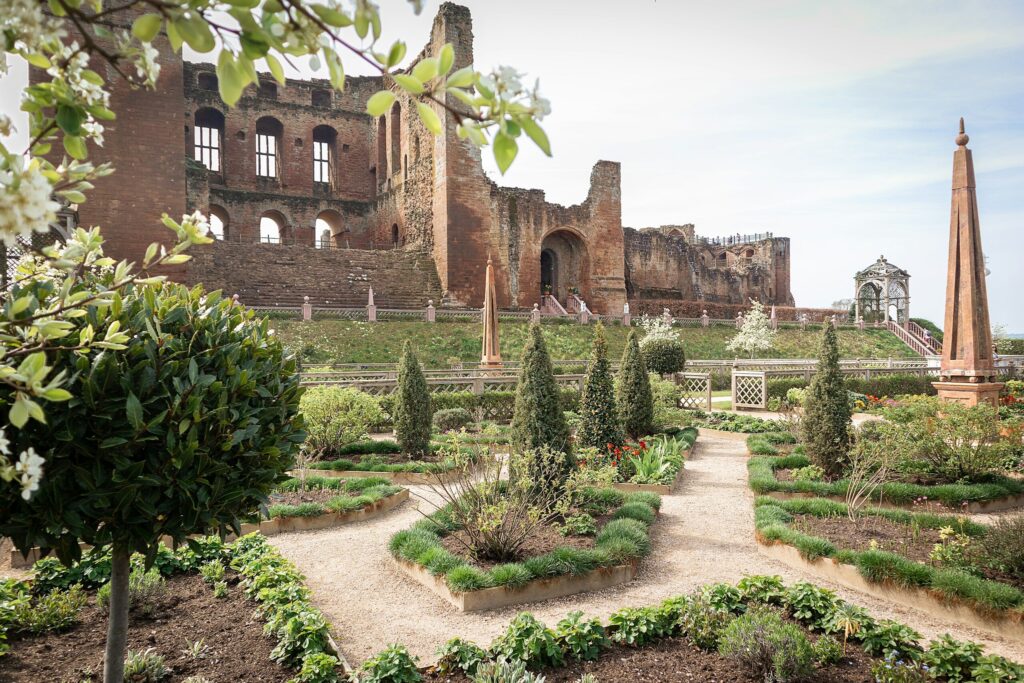
Kenilworth Castle’s reconstructed Elizabethan Garden evokes the private garden Robert Dudley created for Elizabeth I’s 1575 visit. Photo by Zina Howard
Even in ruins, Kenilworth remains impressive. Its red sandstone walls reveal layers of Norman, medieval and Tudor construction, along with the scale of Dudley’s ambition.
English Heritage recreated the Elizabethan Garden in 2009. Archaeological evidence and Robert Langham’s detailed account of the 1575 visit guided the work. The result is not the exact garden where Elizabeth walked, but it helps visitors imagine the private retreat Dudley created for her.
Bath Abbey and a Different Royal Connection
Bath Abbey is different. Elizabeth did not grow up there, face imprisonment there or visit because a hopeful suitor wanted to win her over. Her connection to the abbey came through a decision she made as queen.
From Dissolution to Restoration
Christian worship on the site reaches back more than 1,000 years. Edgar received the crown as King of all England at the Saxon abbey in 973. Much later, Bishop Oliver King ordered construction of the present church in 1499.
The builders had not finished when Henry VIII closed the monastery in 1539. His officials forced the monks to leave, and the unfinished church fell into decay.
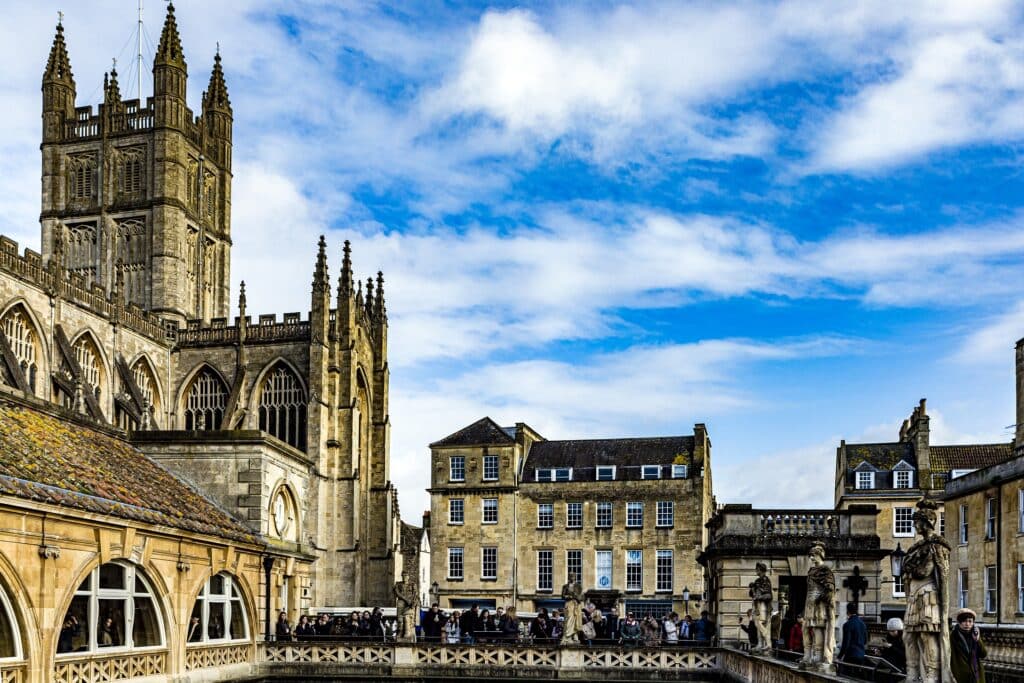
Elizabeth I authorized a nationwide collection in 1573 to help fund the restoration of Bath Abbey.
The city of Bath received the ruined building for use as a parish church in 1572. One year later, Elizabeth gave permission for a national collection to raise restoration funds.
She did not commission the abbey or supervise its reconstruction. Many donors supported the work, which continued long after her death. Workers completed the restoration in 1620.
Bath Abbey remains an active church rather than simply a historical attraction. Its connection to Elizabeth may lack the family drama of Hatfield or the romantic speculation surrounding Kenilworth. Still, her decision helped give the building another chance.
Following Elizabeth Beyond London
Elizabeth I’s story cannot be contained within one palace, castle or abbey.
At Hatfield, we meet the highly educated young woman who learned to survive a dangerous royal court. At Kenilworth, we see the queen balancing affection, politics and the expectations surrounding marriage. At Bath Abbey, we find a quieter example of how her reign influenced the religious and architectural landscape of England.
The Tower of London and Westminster Abbey may tell the most dramatic parts of Elizabeth’s public story. These other places bring us closer to the person behind the portraits.
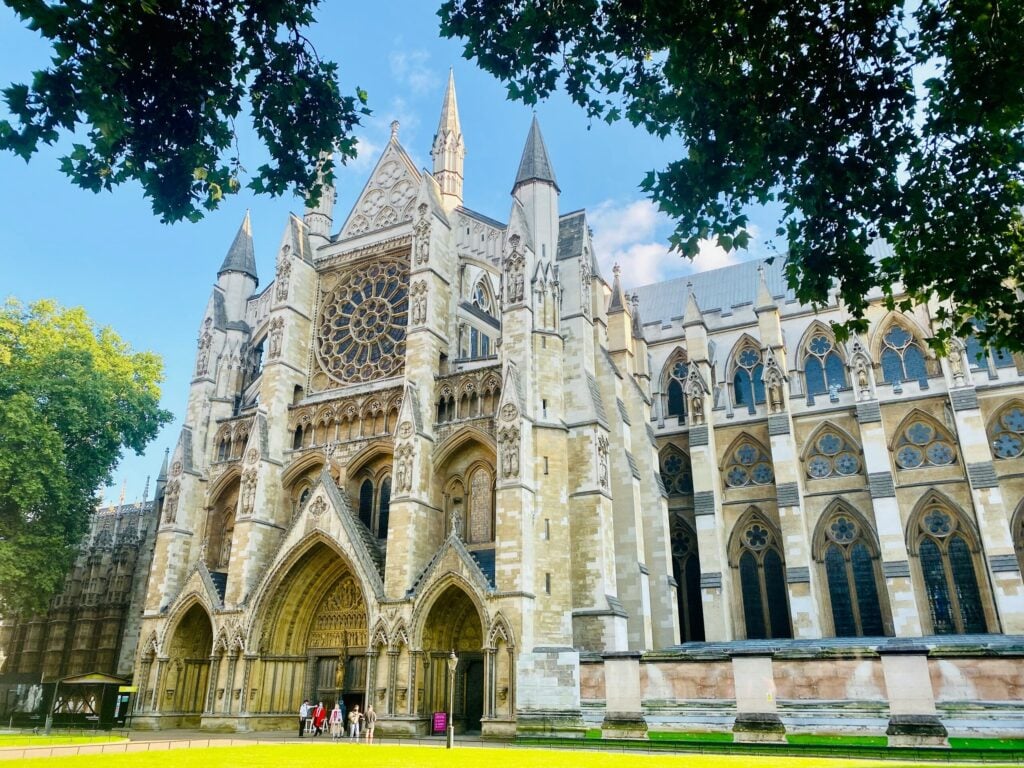
Westminster Abbey, where Elizabeth I was crowned in 1559 and buried after her death in 1603. Photo by Ian Branch
Book Hotels Near Elizabeth I Historic Sites
Search the map to compare hotels and vacation rentals near Hatfield, Kenilworth, Bath and London. Move the map to explore other parts of England, or use the filters to find restaurants, tours, attractions and nearby points of interest.
Join the community!

Join our community to receive special updates (we keep your private info locked.)