

Traveling the Underground Railroad: From Virginia to Canada

Unmarked graves at Yellow Hill, a historic Black community in Adams County whose story adds another layer to the region's Underground Railroad history. Photo: Tonya Fitzpatrick/World Footprints.
Aired on September 14, 2026
Editor’s note: This World Footprints episode originally aired on February 8, 2019. The original audio has not been altered. We have updated and expanded the accompanying story in 2026 with additional historical context, current information and a remarkable family connection we did not know existed when the interviews were recorded.
The Underground Railroad was never a single road, nor did every journey lead north to Canada. It was a shifting network of people, waterways, homes, churches, communities and secret routes used by enslaved people who took extraordinary risks to claim their freedom.
In this World Footprints episode, we follow one thread of that much larger story: an Underground Railroad journey from Virginia to Canada, beginning along the waterways of Norfolk, continuing through Gettysburg and Adams County, Pennsylvania, reaching the Niagara River at Lewiston, New York, and ending in the historic Black community of Buxton, Ontario.
Along the way, historians and descendants help us understand not only how freedom seekers moved, but how Black communities, abolitionists and ordinary citizens resisted slavery—and how the landscapes that witnessed those acts of courage continue to carry their stories.
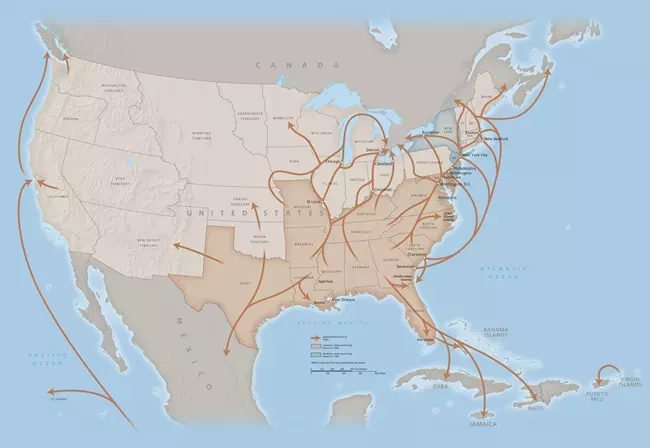
The Underground Railroad was not a single route. Freedom seekers traveled by road, rail and waterways toward destinations including northern states, Canada, Mexico and the Caribbean. Map: National Park Service.
Norfolk, Virginia: Freedom by Water
Norfolk’s waterfront tells an important part of the Underground Railroad story that is sometimes overshadowed by images of people traveling secretly over land.
As a major Atlantic port, Norfolk offered enslaved people another possible path toward freedom: the water.
Hundreds—and possibly thousands—of African Americans escaped through ships moving in and out of Norfolk’s busy harbor, according to the city’s own interpretation of its Underground Railroad history. Maritime workers, sailors and others could become part of clandestine networks that helped freedom seekers leave Virginia aboard vessels headed for northern ports.
In the episode, we speak with Dr. Cassandra Newby-Alexander, historian and longtime professor at Norfolk State University, whose scholarship helped illuminate this less familiar story. Her Waterways to Freedom work documented the Underground Railroad in Virginia and challenged the idea that organized resistance to slavery existed only in the North. The National Endowment for the Humanities supported the Norfolk State University project devoted to bringing that history into public view.
World Footprints has explored this history with Dr. Newby-Alexander in greater depth in our Waterways to Freedom episode. [Internal link this sentence to the existing Waterways to Freedom show.]
Norfolk also reminds us why the familiar image of an Underground Railroad running neatly northward is incomplete. Some freedom seekers hid aboard ships and traveled along America’s coastal waterways; others moved over land or followed completely different paths. The common thread was not a prescribed route. It was the determination to escape enslavement.
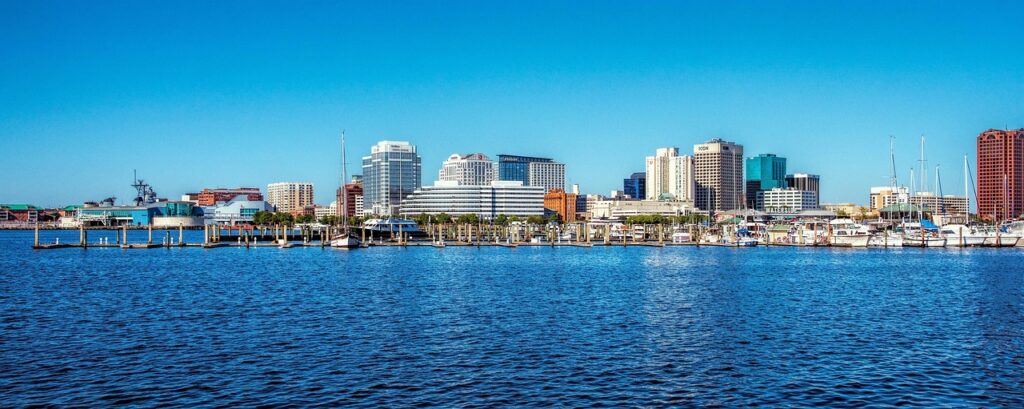
Norfolk’s maritime connections created another path to freedom. Enslaved people escaped aboard vessels leaving the busy Virginia port for destinations farther north. Photo: Tonya Fitzpatrick/World Footprints.
Gettysburg and Adams County: Beyond the Battlefield
Gettysburg is inseparable from the Civil War in the American imagination. But long before Union and Confederate armies converged there in 1863, Adams County was already part of the struggle over slavery and freedom.
The region was home to abolitionists, free Black communities and people willing to assist freedom seekers. The Adams County Anti-Slavery Society was organized at McAllister’s Mill in 1836, and local Quakers were among those involved in anti-slavery activity.
Historian and author Debra Sandoe McCauslin takes us beyond Gettysburg’s battlefield and into this lesser-known landscape.
During our drive through the Pennsylvania countryside, Debra introduces us to people whose histories are easy to miss when we look at Gettysburg only through the lens of three days in July 1863.
Among those stories is Yellow Hill, once a Black community in Adams County with ties to the Underground Railroad. Debra has spent decades researching the settlement and the people who lived there.
There is also the remarkable story of Catherine “Kitty” Payne, who successfully fought for her legal freedom in Virginia before eventually settling in Gettysburg. Her life illustrates something important about Underground Railroad history: these were not anonymous figures moving through a romanticized secret network. They were individuals with families, legal battles, livelihoods, fears and ambitions. The National Park Service now recognizes the site associated with Payne’s story as part of the National Underground Railroad Network to Freedom.
Our journey through Adams County asks travelers to look beyond what made a place famous and consider the histories that may be sitting just beyond the better-known landmarks.
Lewiston, New York: The Niagara River and Freedom Crossing
For freedom seekers who reached western New York, the Niagara River could represent one of the final—and most dangerous—barriers between the United States and Canada.
Lewiston, New York, became an important crossing point.
We speak with Eva Nicklas and Tim Henderson, longtime interpreters of Lewiston’s Underground Railroad history through the Lewiston Council on the Arts. Their storytelling brings to life the clandestine network of local people who offered shelter and assistance to people trying to cross the Niagara River. Nicklas and Henderson later became known for portraying Sally and Josiah Tryon while interpreting this history for visitors.
Josiah Tryon, a tailor and abolitionist, is remembered in Lewiston tradition as a “station master” who helped freedom seekers cross the river by rowboat. The community’s Underground Railroad history is commemorated today at the Freedom Crossing Monument on the Niagara River.
The geography makes the story visceral.
Canada is visible across the water, but seeing freedom and reaching it were very different things. The river’s currents could be treacherous, and the passage of the Fugitive Slave Act of 1850 made even northern U.S. communities less secure for people who had escaped slavery. Canada consequently became an increasingly important destination.
Lewiston also complicates the comforting notion that reaching the North meant reaching safety. Freedom seekers remained vulnerable to capture while still in the United States. The border mattered.
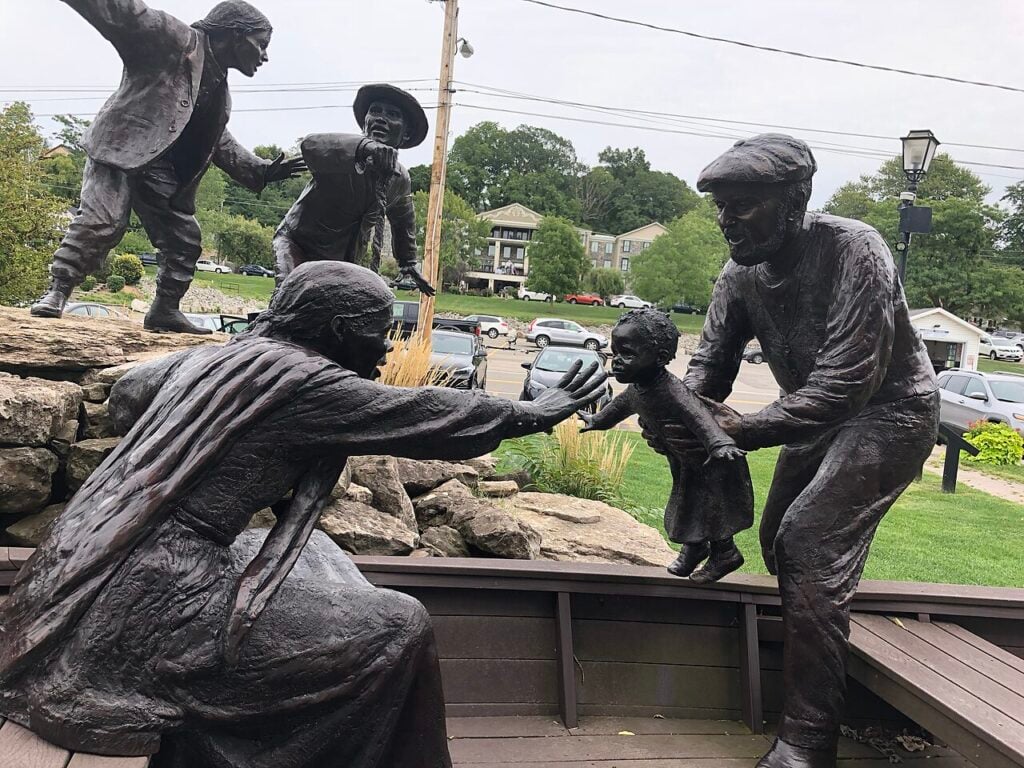
The Freedom Crossing Monument in Lewiston commemorates freedom seekers who crossed the Niagara River into Canada and the people who helped them. Photo: Marciam30/Wikimedia Commons, CC BY-SA 4.0.
Buxton, Ontario: Building a Life Beyond Escape
Crossing into Canada did not end the story.
For many Black freedom seekers, the next challenge was building a life.
That is what makes Buxton, Ontario, one of the most compelling stops on this journey.
The community, historically known as the Elgin Settlement, was founded in 1849. Reverend William King arrived with 15 formerly enslaved people, and additional Black refugees followed. Settlers cleared the land, established farms, built homes, churches and schools, and developed what became one of Canada’s most successful planned Black settlements.
The history deserves some nuance. King became a prominent abolitionist, but Parks Canada also records that he had previously owned enslaved people in the United States. His transformation is part of the history rather than something that needs to be written out of it.
And the land was not simply given away. Buxton’s settlers purchased 50-acre homesteads over time, transforming wooded and swampy land into farms and a functioning community whose landscape remains visible today. Parks Canada designated the Buxton Settlement a National Historic Site in 1999.
Here we meet historians and farmers Bryan and Shannon Prince, both sixth-generation descendants of formerly enslaved people who found freedom in the Buxton settlement. Their lives connect the Underground Railroad not simply to something that happened generations ago, but to families, land and community that continue today.
Shannon served for 25 years as curator of the Buxton National Historic Site and Museum, retiring from that role in 2023. Bryan’s work as an author, historian and researcher has similarly helped preserve Black Canadian history. Both were appointed Members of the Order of Canada in 2023 for their commitment to documenting, preserving and celebrating Black Canadian history, and were formally invested in 2025.
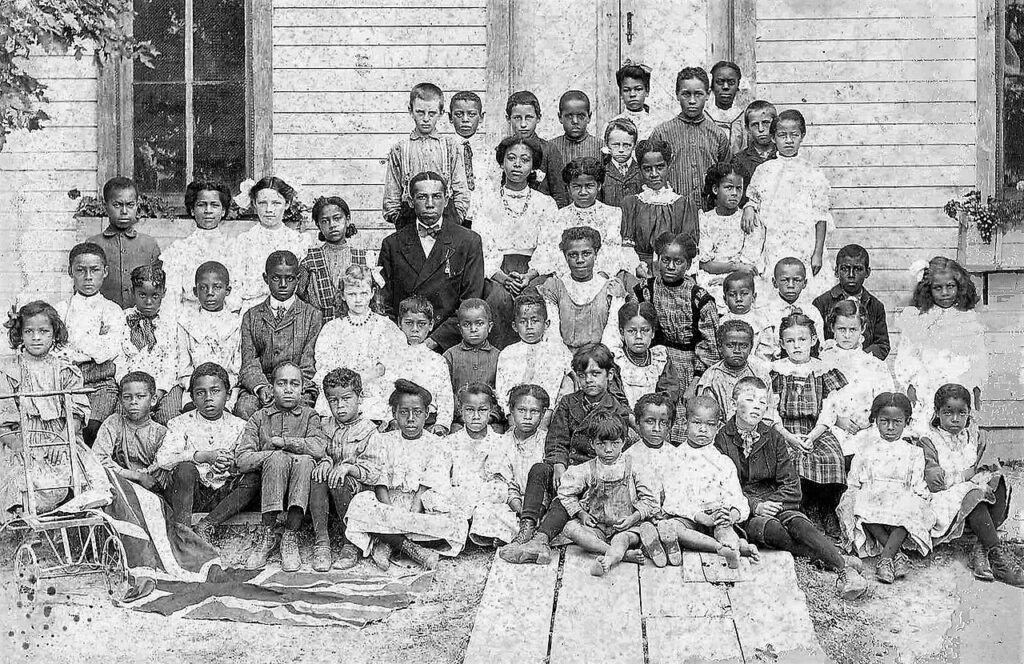
Students gather outside the historic Buxton school around 1909–1910. Education became central to the community established by Black settlers and freedom seekers in southwestern Ontario. Courtesy Buxton National Historic Site; public domain.
A family connection we never knew existed
There is another reason this interview means something very different to us today.
When we sat down with Bryan and Shannon Prince in 2019, Tonya had no idea that Shannon was a member of her own extended family.
We learned of the connection only recently. A relative traveled to Canada, met family members there and later told Tonya that Shannon had been in contact with Tonya’s great-aunt, who has since passed away. Until then, we had never connected the branches of the family.
So Tonya can now listen to this interview differently.
What began as a conversation with a historian and descendant preserving her family’s story turns out also to have been a conversation within Tonya’s own family—something neither woman knew at the time.
There is an unexpected symmetry in discovering that connection through Buxton, a place whose history is so deeply rooted in genealogy, migration, family and the determination to preserve the names and stories of people who came before us.
It is one of the reasons we are bringing this World Footprints episode back to the forefront now.
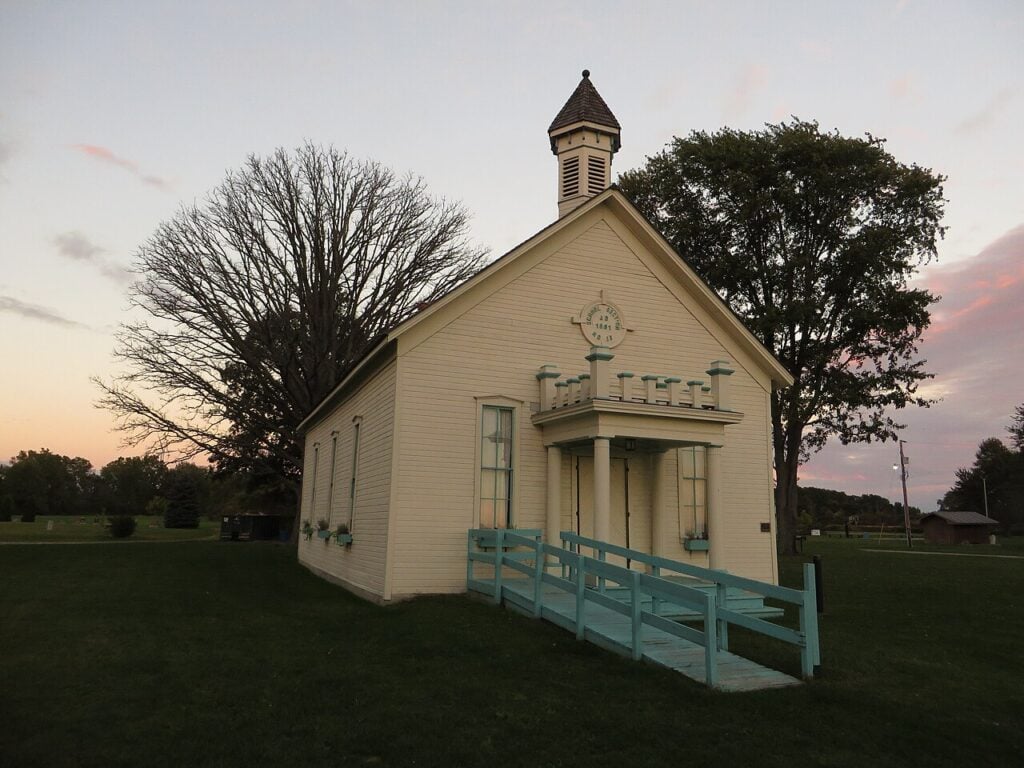
Buxton National Historic Site and Museum preserves the history of the Elgin Settlement, one of the most successful Black settlements established by freedom seekers in Canada. Photo: Ken Lund/Wikimedia Commons, CC BY-SA 2.0.
Canada Was a Destination for Freedom—but Its History Is More Complicated
It is tempting to tell the Underground Railroad story as a simple contrast: slavery in the United States and freedom in Canada.
History is more complicated.
Black and Indigenous people were also enslaved in the colonies that became Canada. Parks Canada documents more than 4,000 people of African descent held in slavery there between roughly 1629 and 1834. The British Slavery Abolition Act took effect on August 1, 1834, ending legal enslavement in most of the British Empire and making British North America an increasingly important refuge for African Americans fleeing the United States.
Canada offered legal freedom, but it did not offer freedom from racism.
Black newcomers encountered discrimination and segregation, which makes communities such as Buxton even more significant. Their residents were not simply escaping one place. They were creating institutions, businesses, farms, schools, churches and communities in another.
That story of what happened after freedom is an essential part of understanding the Underground Railroad.
Why Traveling These Places Matters
The Underground Railroad can become abstract when reduced to dates, maps and famous names.
Travel changes that.
Standing beside Norfolk’s waterways reveals how escape by ship was possible. Driving the backroads of Adams County puts distance and terrain into perspective. Looking across the Niagara River from Lewiston makes the Canadian shoreline tangible. And walking through Buxton reveals that the Underground Railroad did not simply end when someone crossed a border.
People built lives on the other side.
These places also remind us that some of North America’s most important history exists beyond its most famous landmarks—in cemeteries, farm fields, riverbanks, former Black settlements and stories preserved by descendants.
That is why heritage travel matters. Done thoughtfully, it does more than take us somewhere. It helps us understand who was there before us, what happened there and why the history still matters.
Also in This Episode: Romania and the Falkland Islands
The original 2019 program also includes two World Footprints Destination Spotlights that take us well beyond the Underground Railroad route.
We visit Romania and the Falkland Islands, exploring how history, cultural identity and place shape the travel experience in two very different parts of the world.
Because those segments are part of the original broadcast, we’ve retained them in the episode while keeping this updated show page focused on its central Underground Railroad journey.
Listen to the Original World Footprints Episode
Originally aired February 8, 2019 | Show page updated September 2026
Listen as World Footprints journeys from Norfolk, Virginia, through Gettysburg and Lewiston to Buxton, Ontario, meeting historians and descendants who illuminate this remarkable geography of resistance, freedom and community.
The original podcast audio remains unchanged.
Additional Resources
Norfolk and Virginia
Gettysburg and Adams County
-
Gettysburg College: Underground Railroad and Adams County Resources
-
Destination Gettysburg: McAllister’s Mill Underground Railroad Site
Lewiston and Niagara
-
Niagara Falls National Heritage Area: Freedom Crossing Monument
-
National Park Service: Underground Railroad Network to Freedom
Buxton and Black Canadian History
Book Your Travel to ANY Destination
Use the interactive map below to search, compare and book hotels & rentals at the best prices that are sourced from a variety of platforms including Booking.com, Hotels.com, Expedia, Vrbo and more. Search for ANY destination by clicking in the upper left corner of this map. You can also use the filter to fine tune your search, find attractions and more!
Join the community!
Join our community to receive special updates (we keep your private info locked.)
