

Samurai Castles in Japan: Power, Design and Preservation

Hikone Castle is one of Japan’s 12 surviving original castle keeps and one of five designated National Treasures.
Posted September 14, 2026
Japan’s samurai castles were built as military strongholds, seats of government and visible symbols of a lord’s authority—not as picturesque landmarks. Moats, stone walls, timber towers and carefully planned approaches helped rulers defend their territories during centuries of warfare. As conflict subsided, many castles became administrative centers, while the towns around them developed into important political and commercial hubs.
What visitors encounter today reflects very different histories of survival. Japan has 12 surviving original castle keeps; other sites feature restored wooden buildings or modern reconstructions. Knowing the difference helps visitors understand what endured, what was lost and what later generations chose to rebuild.
From Warring States to Castle Towns
Japanese castles changed dramatically during the Sengoku, or Warring States, period, which lasted from the 15th into the late 16th century. Rival daimyo, or feudal lords, competed for land and influence. They built fortifications on mountains, hills and plains according to the terrain and the threats they faced.
Samurai were not simply sword-carrying warriors. They served lords as military retainers, administrators and political leaders. Castles reflected those overlapping duties. A major complex could include a main keep, defensive towers, gates, storehouses, palaces, gardens and quarters for retainers.
After Tokugawa Ieyasu consolidated power in the early 17th century, many castles became centers of regional government. Merchants and artisans settled nearby, helping castle towns develop into important urban centers. That legacy remains visible in cities that grew around former castle grounds.

UNESCO-listed Himeji Castle preserves more than 80 early 17th-century buildings within one of Japan’s most complete surviving defensive complexes.
Built to Slow, Divide and Confuse
A Japanese castle’s defense began long before an attacker reached the main keep. Wide moats and high stone walls controlled access. Multiple baileys divided the grounds into defensible zones. Narrow gates, sharp turns and steep approaches forced intruders to slow down and made large groups harder to move.
Openings in walls allowed defenders to fire arrows or matchlock guns while remaining protected. Other features let them drop stones or objects on attackers below. Inside surviving keeps, visitors often encounter steep wooden stairs and compact spaces that remind us these structures were built for defense, not modern comfort.
Himeji Castle offers one of the clearest surviving examples. Its winding routes, gates and enclosed courtyards could disorient anyone approaching the central keep. UNESCO recognizes Himeji as a masterpiece of early 17th-century wooden castle architecture, with more than 80 surviving buildings and highly developed defensive systems.
Beauty was also part of the message. White plaster, sweeping rooflines, carved gables and decorative fittings displayed craftsmanship as well as authority. Architectural historian Jennifer Mitchelhill and photographer David Green explored that balance in Castles of the Samurai: Power and Beauty. Their later book, Samurai Castles: History / Architecture / Visitors’ Guides, adds a more practical resource for travelers interested in the history, design and military features of Japan’s major castles.
Why So Few Original Keeps Survive
Japan’s original castle keeps are exceptionally rare. In this context, “original” means that the main keep has survived from the feudal era, although repairs and conservation may have taken place. It does not mean that every wall, gate, palace or tower within the wider complex remains untouched.
Even so, many castle buildings were dismantled after samurai rule ended in 1868. Fire, earthquakes and wartime bombing destroyed others. Japan’s surviving originals include Himeji, Hikone, Matsumoto, Inuyama and Matsue, whose keeps are designated National Treasures. The remaining original keeps are Hirosaki, Maruoka, Bitchu Matsuyama, Marugame, Kochi, Uwajima and Matsuyama.
The surviving keeps vary greatly in appearance and setting. Matsumoto’s dark exterior contrasts with Himeji’s white plaster. Hikone overlooks Lake Biwa and combines several architectural styles within a compact complex. Bitchu Matsuyama sits high in the mountains, showing why elevation once mattered as much as grandeur.
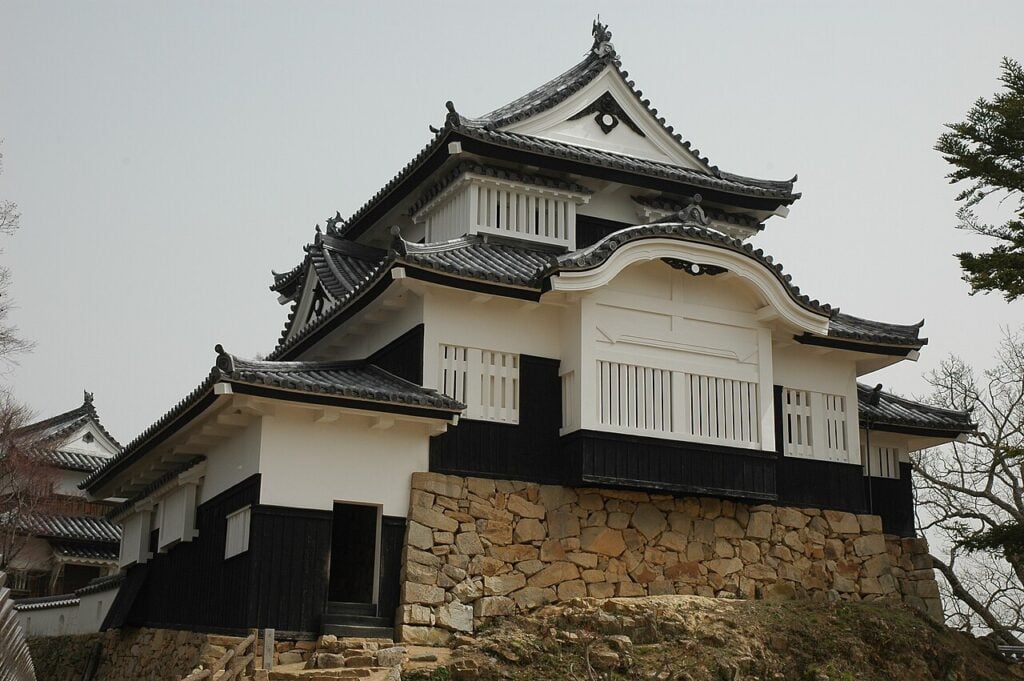
The original keep and two-story turret of Bitchū Matsuyama Castle reveal the timber construction, tiled roofs and stone foundations of a surviving feudal-era castle. Photo by Reggaeman via Wikimedia Commons, licensed under CC BY-SA 3.0.
To understand a Japanese castle, look beyond the main keep. Moats, stone walls, gate placement and winding approaches show how builders used the surrounding terrain to control movement and slow an attack.
Inside an original keep, exposed beams, steep stairways and compact rooms reveal a structure designed for defense rather than comfort. The keep was only one part of a larger complex that could also include residences, administrative buildings, storehouses and quarters for retainers.
Original, Restored or Reconstructed?
Wakayama, Nagoya and Kumamoto show how Japanese cities have responded when major castle structures were destroyed or severely damaged.
A July 1945 air raid destroyed Wakayama Castle’s keep. The city rebuilt it in reinforced concrete in 1958, while the Okaguchi Gate and sections of the historic stone walls survived.
Nagoya Castle’s towers were also lost in 1945. A reinforced-concrete reconstruction opened in 1959 but later closed because of age and earthquake-safety concerns. Nagoya plans to reconstruct the towers in wood using surviving drawings, historical records and prewar photographs.
Kumamoto Castle presents a more complicated case. Its main tower burned in 1877 and was reconstructed in reinforced concrete in 1960. The 2016 earthquakes damaged the tower, stone walls and other buildings. The main tower reopened after repairs in 2021, but restoration across the wider complex continues.
Restoration and access conditions at Kumamoto Castle can change following earthquakes or severe weather. Travelers should check the official Kumamoto Castle website before making plans.
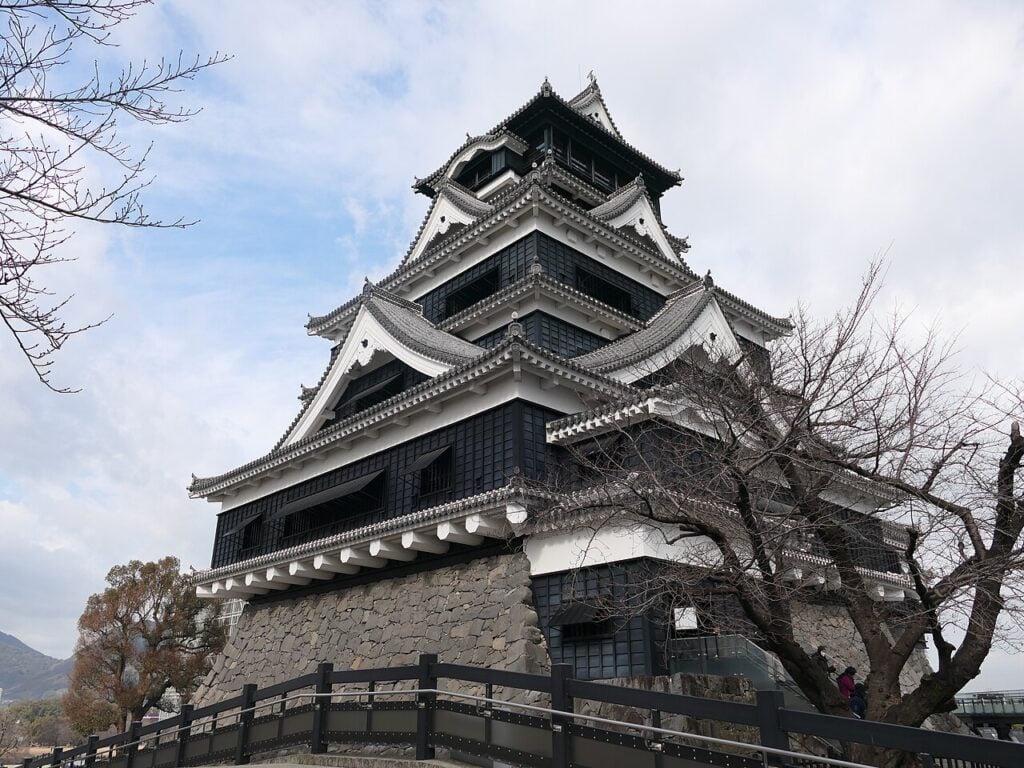
Kumamoto Castle’s reconstructed main keep reflects the fortress’s imposing design, while its massive stone walls remain among its most distinctive defensive features. Photo credit: Hyppolyte de Saint-Rambert via Wikimedia Commons, licensed under CC BY 4.0.
Why Preserving Samurai Castles in Japan Matters
Castle conservation involves difficult choices. Craftspeople must decide when to repair original material, replace damaged timbers or reconstruct a lost structure. Historians study plans, photographs, archaeological evidence and construction marks. Engineers must also address fire and earthquake risks without erasing the qualities that make the site important.
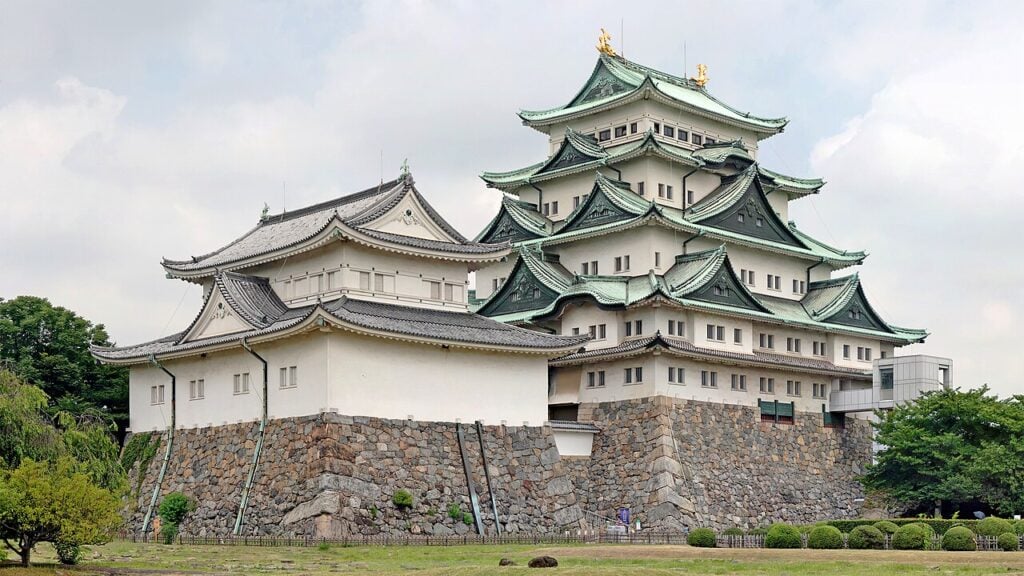
Nagoya Castle’s main keep was reconstructed in reinforced concrete in 1959 after the original burned in 1945. Surviving architectural drawings, photographs and historical records now support plans for a wooden reconstruction. Photo by Base64 via Wikimedia Commons, licensed under CC BY-SA 3.0.
At Himeji, conservation projects use tightly controlled materials and established techniques. Kumamoto’s restoration includes the painstaking work of cataloging damaged stonework and preparing fallen stones for reuse. Nagoya’s proposed wooden reconstruction draws on unusually detailed documentation that survived the destruction of the tower keep. Those records include measured drawings, historical documents and prewar photographs.
Japan protects major castles through its national system for safeguarding cultural properties, supported by conservation programs, skilled restoration and local stewardship. Travelers share that responsibility. Respect barriers, follow the rules inside fragile wooden buildings and avoid treating historic sites as stage sets. Museum visits, local guides and admission fees can support preservation while helping visitors understand what they are seeing.
That shared responsibility among governments, communities, caretakers and travelers is central to my book, Destination Stewardship: Drive Sustainability, Economic Renewal, and Cultural Integrity.
World Footprints readers can explore more stories about Japan, UNESCO World Heritage sites and the role of preservation in responsible travel.
A visit to a Japanese castle becomes more interesting once you stop looking only at the tower. The moats, gates, stone walls and routes through the grounds explain how the fortress worked. The restoration choices explain how Japan is deciding what parts of that history to carry forward.
Find discounted hotels in Japan
Join the community!

Join our community to receive special updates (we keep your private info locked.)