

Coral Restoration in the Great Barrier Reef
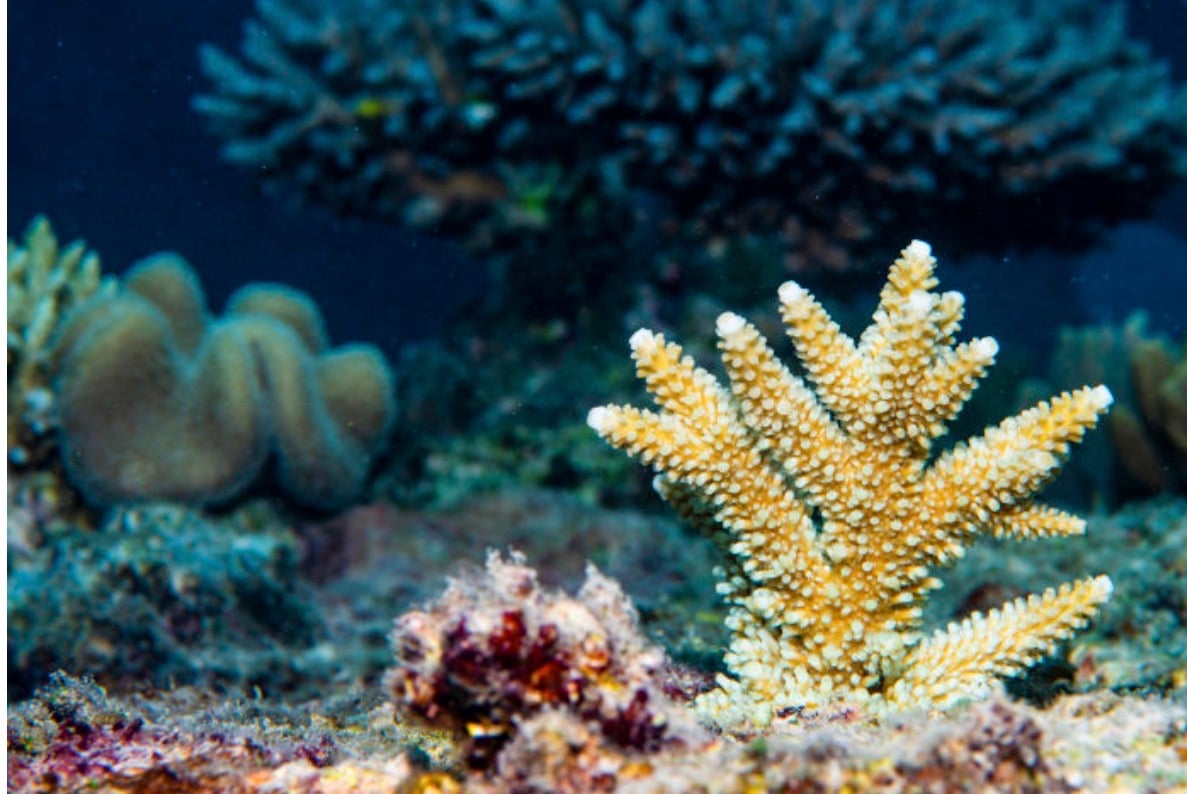
Climate action is the only way to ensure coral reefs can survive into the future. Photo: Courtesy of Great Barrier Reef Foundation
Posted November 19, 2026
Australia’s Great Barrier Reef, a UNESCO World Heritage Site, is the world’s largest coral-reef ecosystem. Each year, two million visitors come to scuba dive, snorkel, or otherwise immerse themselves in this unique geographical feature so large it is visible from outer space. Its 133,000 square miles contain nearly 3,000 individual reefs. These reefs serve as home to unparalleled marine life. About 2,000 species of fish, over 30 types of whales and dolphins, six breeds of turtles, and an abundance of sharks and rays live here.
In Queensland, protecting the great reef in this era of climate change and environmental uncertainty is crucial to survival, both as a source of nutrition and for the income generated by tourism. But its impact extends well beyond the islands. The importance of atolls and coastline communities cannot be overstated. Indeed, many medicinal compounds used in human medicines come from the sea. Some aid in treating cancer.
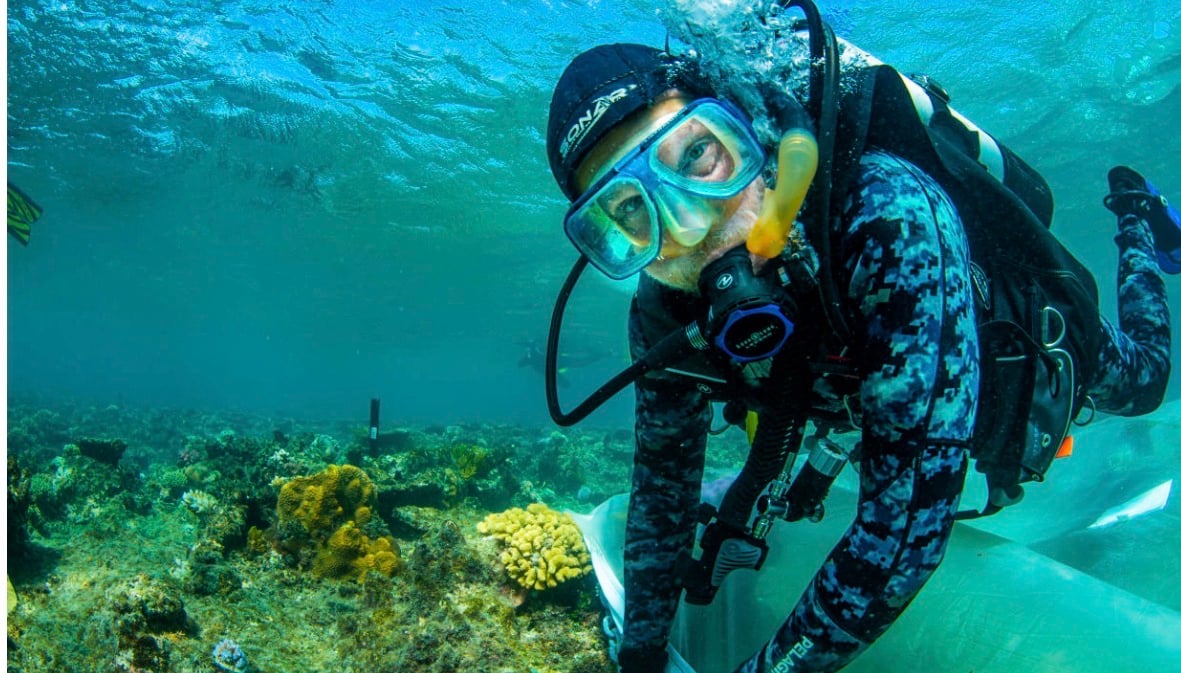
Professor Harrison at work on Heron Island Photo: Great Barrier Reef
Responsible Practices
Queensland’s tourism industry is committed to responsible practices. It actively participates in programs to protect and sustain the reef’s health and build stronger resilience. Vigorous efforts have been made to safeguard the fragile, vast marine ecosystem. Yet since 2016, the Great Barrier Reef has experienced repeated mass coral-bleaching events, most recently in 2025. This underscores the urgency of restoration efforts. Already, nearly a quarter of the living corals that comprise the reef have died.
Scientists are racing to outpace climate change. Although the reef is under severe stress, it is not dead. It is fragile but not lost; threatened but redeemable. Coral restoration, through active intervention and localized recovery, offers long-term hope.
At the forefront of conservation efforts is the Great Barrier Reef Foundation. Grants and funding for projects grounded in science, technology, and engineering uniquely position the foundation to lead collaborative efforts among government agencies, businesses, and philanthropists. Its projects fill gaps and accelerate the results needed to positively impact the Great Barrier Reef and other reefs worldwide.
Heron Island Research Station
At the Heron Island Research Station, on the Tropic of Capricorn east of Rockhampton, marine biologist Peter Harrison established a groundbreaking coral-reef experiment with the foundation’s support. Likened to an in-vitro fertilization procedure on an infinitely larger scale, this trial is attempting to regenerate damaged sections of the reef, itself a massive living organism.
As a professor at Southern Cross University, Harrison began studying the marine environment more than three decades ago. Today, as a pioneer of coral spawning research, he remains directly involved in larval reseeding trials and innovations.
“Australians are fortunate because we have spectacular natural landscapes found nowhere else on the planet,” Harrison said. “When I went up to the Barrier Reef for the first time, I was amazed at the different colors and shapes of the corals. Without healthy reefs, we lose millions of species on our planet.”
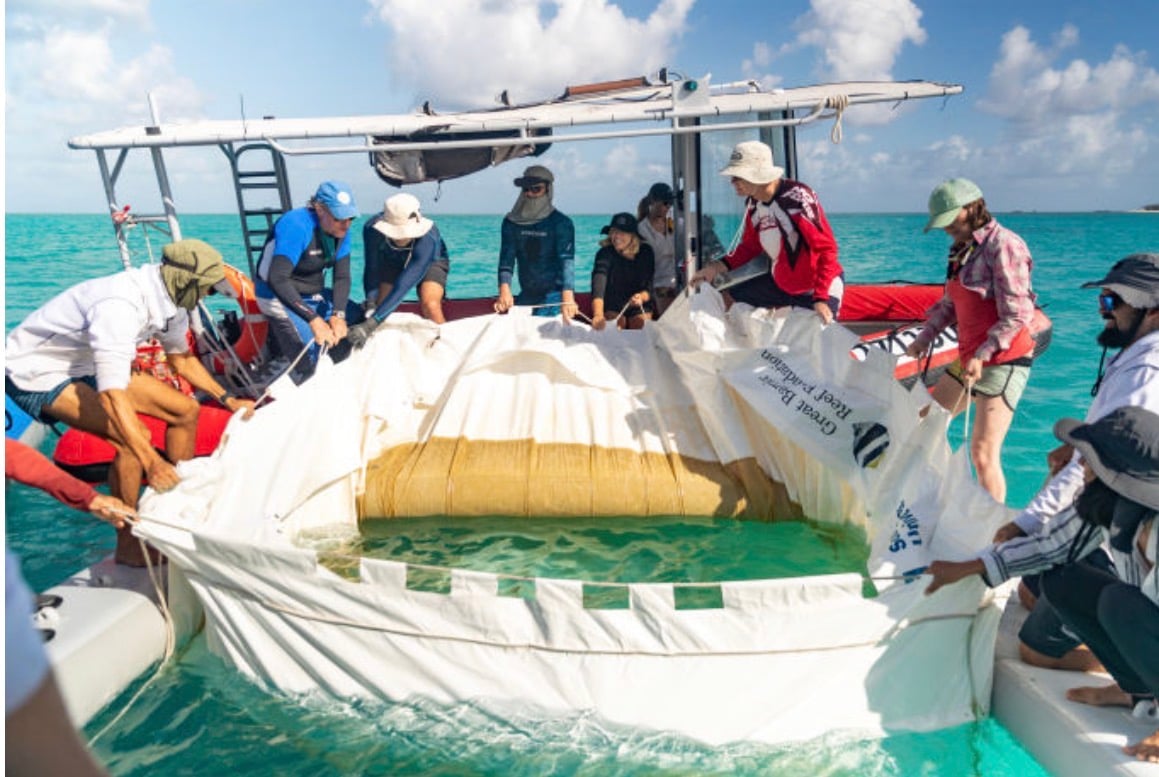
Coral restoration in Australia’s Great Barrier Reef Photo: Courtesy of Great Barrier Reef Foundation
Larval Coral
In synchrony with the lunar cycle, corals release billions of microscopic eggs and sperm into the sea in November. Heron Island scientists collect these spawn, fertilize them in giant tanks, and reintroduce the larvae back onto damaged sections of the Reef. Recent trials have shown an improvement in coral settlement as much as 50 times higher than before, Professor Harrison said.
“This was the first large-scale study of its kind, and our research showed that we could help corals reproduce successfully by increasing larvae settling on the Great Barrier Reef and allowing them to develop into juvenile corals,” he said. “Microscopic larvae, once settled, can grow into dinner plate-sized corals in just three years and become sexually reproductive.”
The success of the larval reseeding project is a marker of hope for areas of the Great Barrier Reef — and, indeed, reefs worldwide. Harrison’s early work remains deeply embedded in these efforts. Like an anxious parent-to-be, the professor monitors the growth of his coral colonies while refining techniques for future application to other areas of the Great Barrier Reef.
Today, the “coral IVF” program has evolved into industrial-scale magic. Organizations like the Reef Foundation and the Australian Institute of Marine Science have launched large-scale reef restoration initiatives. Their goal is to plant tens of millions of corals annually, employing such new techniques as heat-tolerant coral strains and larval “seed boxes” that can release larvae directly upon degraded reef systems.
In 2026, coral restoration efforts have advanced from small-scale science into something closer to ecosystem engineering. Scientists are even contemplating the deployment of AI and robotics.
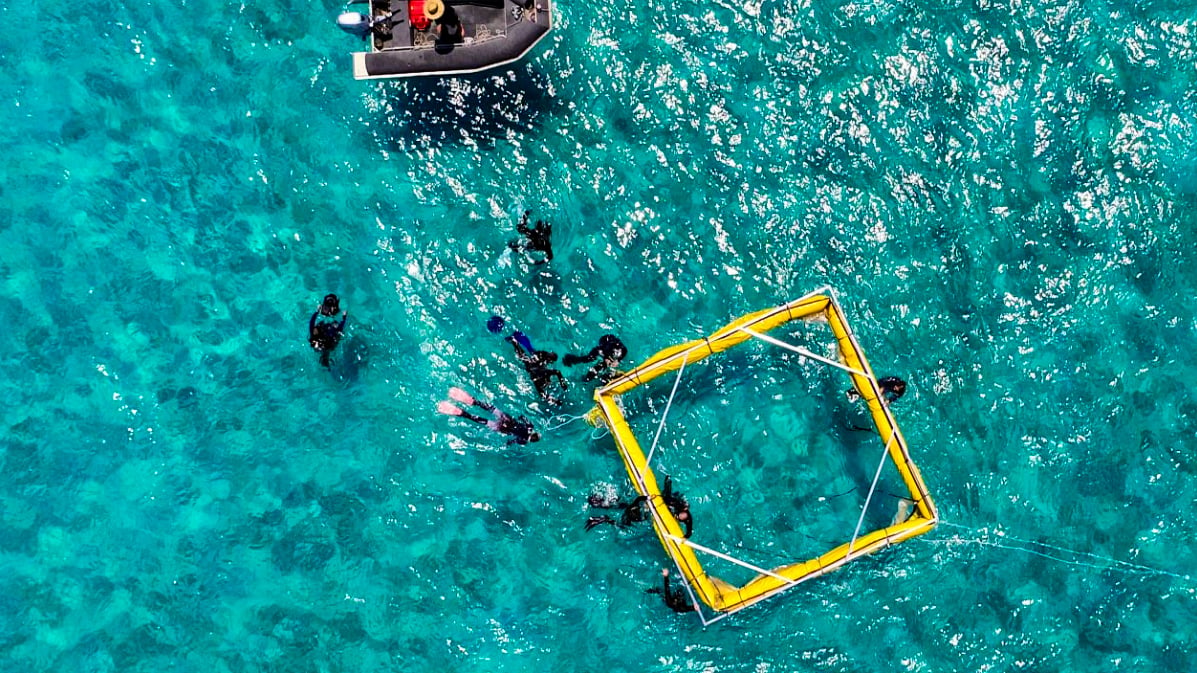
Restoring hundreds of square meters of coral Photo: Courtesy of Great Barrier Reef Foundation
Island Outpost
Contained within the Heron Island Resort, the University of Queensland research station welcomes visitors.
“There’s a technicolored underwater marine world just footsteps from the resort rooms,” said activities manager Alison Cross. “We get divers, snorkelers and first-time marine enthusiasts. Most are aware of the challenges facing the Great Barrier Reef, so they are fascinated to learn that studies are being done right here to protect its future.”
Indeed, pioneering oceanographer Jacques Cousteau once hailed Heron Island as one of the 10 finest dive sites in the world.
Beyond the Tourists
“It’s not just about tourists who visit us from around the world to acclimate into the sheer magic of the Great Barrier Reef at Heron Island,” said Anna Marden, managing director of the Great Barrier Reef Foundation. “Marine scientists also flock to the island to access one of the best state-of-the-art reef research laboratories in the world.”
Harrison and his Heron Island team coordinate their efforts with the Great Barrier Reef Marine Park Authority, a project made possible by a donation from Stephen Fitzgerald, former chairman of Goldman Sachs Australia and New Zealand.
In only a decade, Professor Harrison’s pioneering larval reseeding project has offered a glimmer of hope that coral reefs can rebuild, adapt and regenerate. If it’s ultimately successful, it is a groundbreaking achievement, an indication that the Great Barrier Reef might survive everything the world throws at it and thrive in the future.
Click here for discounted accommodations across Australia
Join the community!
Join our community to receive special updates (we keep your private info locked.)

