
Ethical Orangutan Trekking in Bukit Lawang: What Travelers Need to Know
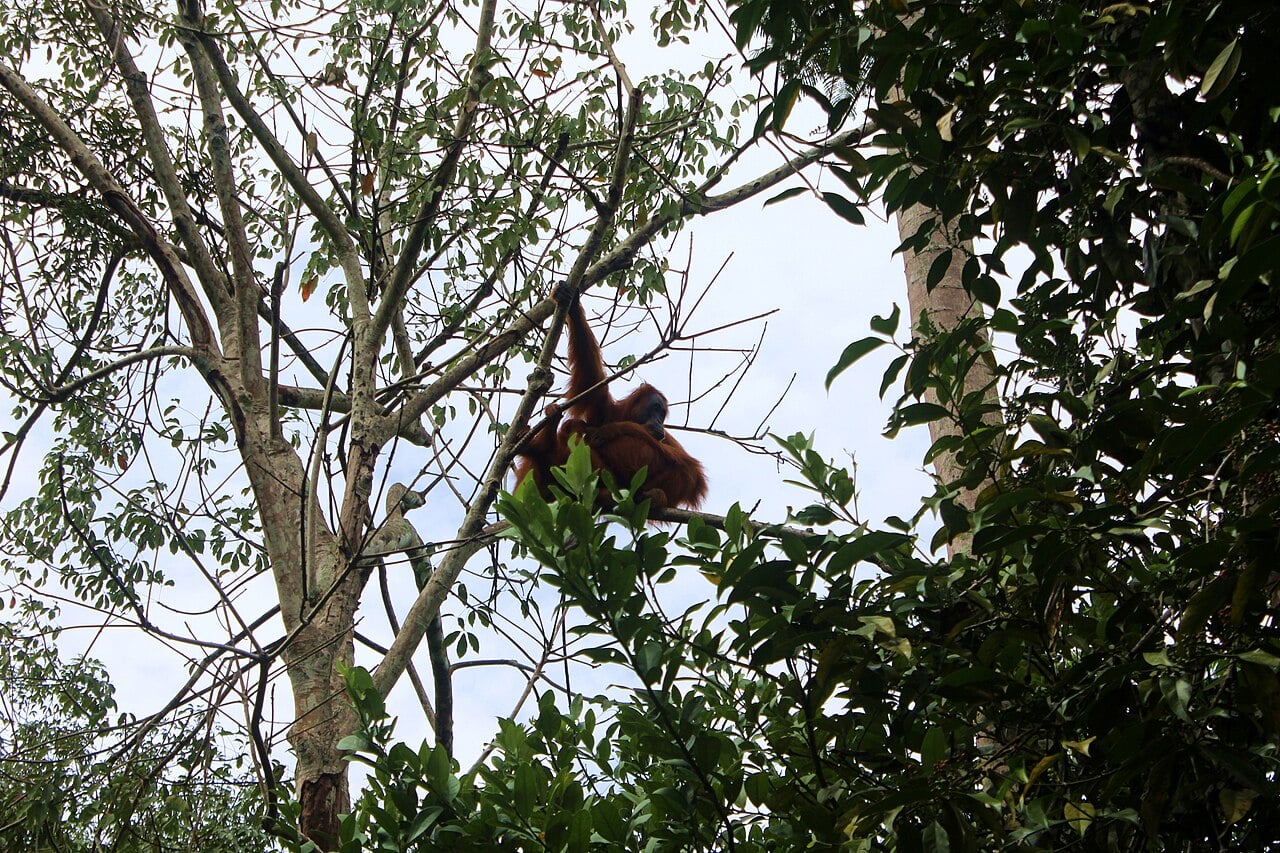
A Sumatran orangutan moves through the forest in Bukit Lawang, North Sumatra. Photo by HaidirAndiNovianto/Wikimedia Commons, CC BY-SA 4.0.
By Nayla Azmi
Posted September 17, 2026
Editor’s Note: This article has been substantially revised and fact-checked to reflect current guidance for orangutan trekking in Bukit Lawang. The author’s original reporting, photographs and conservation perspective have been retained. Wildlife rules and conditions can change, so travelers should confirm current requirements before entering Gunung Leuser National Park.
Seeing a Sumatran orangutan moving through the rainforest is an experience many travelers will never forget. But our desire to get closer, take the perfect photograph or guarantee a sighting can put pressure on the same animals we have come to admire.
Orangutans are Asia’s only nonhuman great apes. Scientists recognize three species: the Bornean, Sumatran and Tapanuli orangutans. The Sumatran orangutan is Critically Endangered, and fewer than 14,000 are believed to remain in the wild.
Bukit Lawang, on the edge of Gunung Leuser National Park in North Sumatra, is one of the most accessible places to look for Sumatran orangutans in the forest. Tourism supports guides, guesthouses, restaurants, drivers and other local businesses.
That income can give communities another reason to protect the forest. But tourism involving endangered wildlife cannot automatically be called conservation. We must also look at how the animals are treated and whether our presence is changing their natural behavior.
Bukit Lawang’s Orangutan History
Bukit Lawang became an orangutan rehabilitation and release site in 1973. Orangutans confiscated from illegal captivity were brought to the area and prepared for a return to the forest.
Bukit Lawang no longer operates as an orangutan rehabilitation center, but its legacy remains. Visitors may encounter ex-captive orangutans released into the forest as well as wild orangutans. Some individuals are more accustomed to people than others.
This history helps explain why an orangutan may come close to a trail or appear less afraid of visitors. It does not make the animal tame. It is never permission to approach, touch or feed it.
Gunung Leuser is one of three national parks within UNESCO’s Tropical Rainforest Heritage of Sumatra. Together, the three parks provide habitat for Sumatran orangutans, tigers, elephants, rhinos and many other species.
Visitors are entering a living rainforest ecosystem, not an outdoor orangutan exhibition.
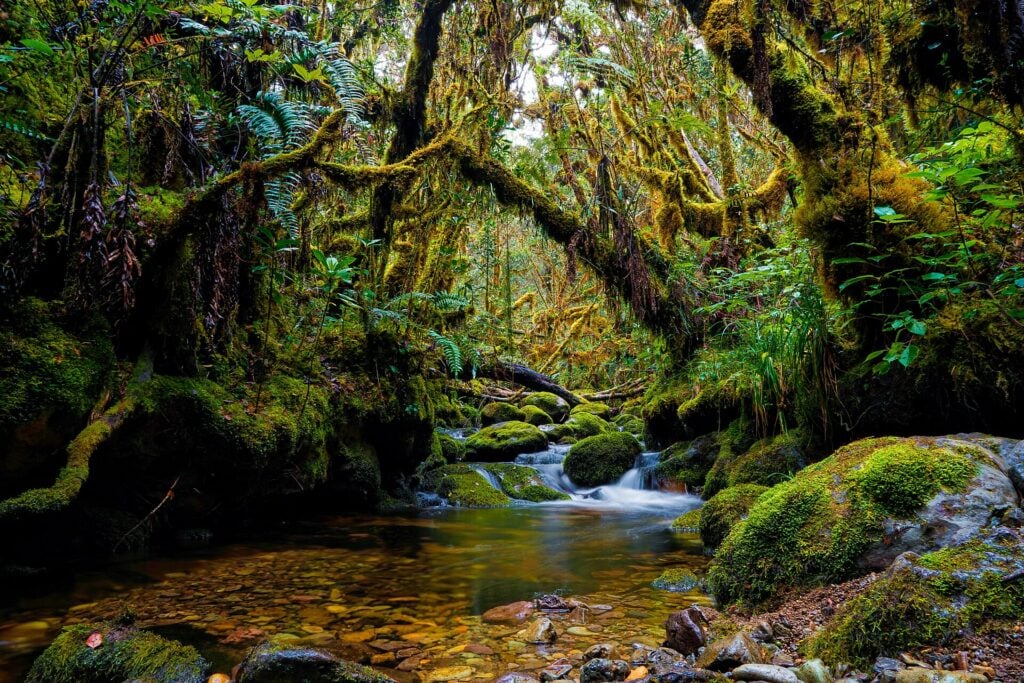
A forest stream runs through Gunung Leuser National Park, part of the orangutan’s remaining habitat on Sumatra. Photo by Ganjarmustika1904/Wikimedia Commons, CC BY-SA 4.0.
What I Have Seen During Orangutan Treks
During treks in Bukit Lawang, I have seen visitors gather beneath an orangutan, pose for close photographs and watch as fruit was used to draw an animal toward the trail.
Feeding or luring an orangutan is not harmless. It can interfere with natural foraging and teach the animal to associate people with food. That may increase competition and aggression while further disrupting natural behavior. Food or fruit peels handled by humans can also carry germs into the forest.
Close photographs create another problem when they appear online. A traveler sees someone posing beneath an orangutan and assumes the same experience is normal and available to everyone.
One irresponsible image can encourage more irresponsible encounters.
Travelers have more influence than they may realize. We should never ask a guide to call an orangutan, place food near the trail, move closer or position us beneath an animal for a photograph.
Some guides may feel pressure to satisfy visitors who expect a dramatic encounter. That is why tourists must make it clear that we want the wildlife-viewing rules followed. Pleasing a guest cannot take priority over the health of an endangered animal.

Visitors gather during an orangutan-viewing trek in Bukit Lawang. Crowding can make it difficult to maintain the minimum 10-meter distance from wildlife. Photo by Nayla Azmi.
World Footprints has examined how quickly animal tourism can become exploitation when photographs and entertainment become more important than animal welfare.
The Health Risk Did Not End With COVID
The COVID-19 pandemic forced more people to recognize that humans can transmit illnesses to great apes. That danger did not begin with COVID, and it did not disappear when international travel resumed.
Orangutans can contract human diseases. A cough or cold that feels minor to a traveler may be dangerous for an animal.
Gunung Leuser wildlife-viewing guidance tells sick visitors not to trek. Healthy visitors should stay at least 10 meters from orangutans.
That distance protects visitors, too. An orangutan that is familiar with humans may approach a bag or look for food, but it remains an immensely powerful wild animal.
If an orangutan moves toward the group, we should remain calm and follow the guide’s instructions. We should not remain in place for a selfie or prolong the encounter for photographs.
Rules Every Traveler Should Follow
The park’s published guidance is clear:
- Enter the forest with a guide and the required national park permit.
- Do not trek if you are sick.
- Remain at least 10 meters from orangutans.
- Keep groups to the recommended maximum of seven visitors.
- Never touch, feed, call or lure an orangutan.
- Do not eat, drink, smoke, cough, sneeze or spit near the animals.
- Remain quiet and avoid sudden movements.
- Do not clear plants to improve a photograph.
- Do not use flash photography.
- Never stand between a mother and her baby.
- Carry all food waste and rubbish out of the forest.
The rules also tell visitors not to pressure guides to get closer to wildlife or provide food for photographs. Anyone who sees a guide behaving irresponsibly can report the incident to the national park office or the guesthouse that arranged the trek.
We should not wait for a guide to explain these rules after the trek has begun. Read them before entering the forest and tell the guide that you expect them to be followed.

An orangutan carries an infant through the forest canopy near Bukit Lawang. Responsible wildlife viewing means respecting the animals’ space and observing without interference. Photo by Nayla Azmi.
Choosing an Ethical Orangutan Trek
Ask questions before paying a deposit.
A responsible operator should explain the permit process, group size and wildlife rules without being prompted. The company should clearly prohibit feeding, touching and staged photographs.
Ask what the guide will do if an orangutan moves toward the group. The answer should involve calmly creating distance, not gathering everyone beneath the animal.
Be cautious of any operator that guarantees a sighting. Orangutan encounters may be likely around Bukit Lawang, but wildlife should never be summoned or manipulated to satisfy an itinerary.
The cheapest trek is not necessarily the most responsible. Compare group size, guide credentials, permit arrangements and wildlife policies—not price alone.
Look for trained local guides, clear permit arrangements and an operator willing to discuss conservation practices in detail—not simply use the word “eco” in its marketing.
Make the Visit About More Than One Sighting
Bukit Lawang’s tourism economy should not depend entirely on how many visitors can be taken into the forest to see orangutans.
Stay in a locally operated guesthouse. Eat at community businesses. Spend time in villages surrounding the park. These choices spread tourism income and help travelers understand the connection between local livelihoods and forest protection.
In Conserving the Leuser Ecosystem through Slow Travel, I explored village stays, local food production and community-led experiences around Bukit Lawang.
The threats facing orangutans also extend beyond tourism. Saving a Species: Palm Oil, Orangutans, and the Leuser Ecosystem examines how habitat loss, agriculture and global demand affect the forest.
A successful trek should not be measured by how close we get to an orangutan. It may mean watching quietly from farther away than expected. It may mean putting down the camera when an animal appears disturbed. It may even mean leaving the forest without a sighting.

A Sumatran orangutan in the forest near Bukit Lawang. Responsible viewing means following park rules and respecting the animal’s space. Photo by Nayla Azmi.
That is not a failed trek.
The pandemic was an alarm, but the lesson is much larger than one disease. Everything we bring into the forest—our food, germs, voices, movements and expectations—can have an impact.
Ethical wildlife tourism requires us to appreciate orangutans as they are, without interfering. In Bukit Lawang, that means giving them the distance, dignity and protection they need to remain wild.
Find Hotels and Guesthouses in Bukit Lawang
Use the interactive map below to search and compare hotels and locally operated guesthouses in Bukit Lawang. Before reserving a trek, ask which operators the property recommends and whether those guides follow Gunung Leuser National Park’s orangutan-viewing rules.
Join the community!
Join our community to receive special updates (we keep your private info locked.)